
🚨Urgent: Missile Strikes Shelter in Ukraine! Rush Emergency Aid!
Big Cats Still Face Exploitation Through Public Contact Loopholes
Matthew Russell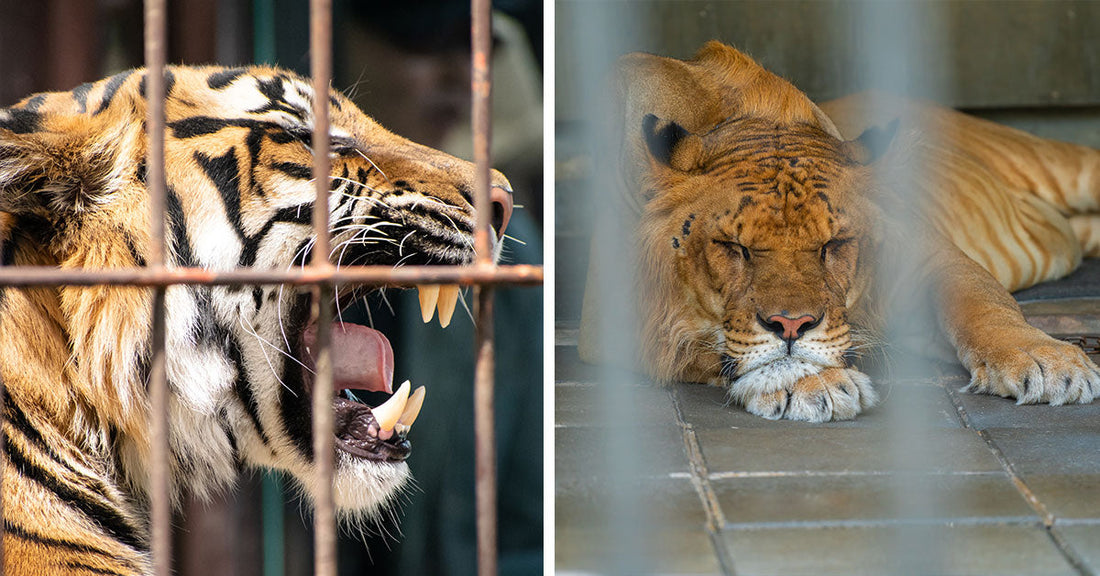
Big cats have long been used to sell close-contact experiences. A tiger cub in a bottle-feeding session. A lion cub passed to visitors for a photo. A young animal promoted as educational while the public pays for access.
These encounters may look controlled, but they place wild animals in a human entertainment setting. Lions, tigers, leopards, jaguars, cheetahs, cougars, snow leopards, clouded leopards, and hybrids have complex needs that cannot be met by turning them into photo props.
The U.S. Fish & Wildlife Service states that the Big Cat Public Safety Act was enacted in 2022 to end private ownership of big cats as pets and prohibit exhibitors from allowing public contact, including contact with cubs.

Big cats are wild animals with complex physical and psychological needs.
Cub Petting Creates A Short Term Market
Cub-petting depends on a narrow window. Young animals are small enough to handle only briefly. Once they grow, they become too large and dangerous for visitor contact.
That creates a welfare problem. The Animal Legal Defense Fund reports that some exhibitors charged visitors for activities such as bottle-feeding cubs and that cubs used for contact may face early separation from their mothers. The group also notes that young cubs still pose safety risks because of their teeth and claws.
Public contact can also encourage breeding. A facility that profits from cub encounters has a reason to produce more cubs. When the cubs age out of public handling, the business model no longer depends on them.

Direct public contact can endanger both big cats and visitors.
Federal Oversight Shapes What Happens Next
USDA APHIS administers Animal Welfare Act oversight for regulated exhibitors. According to APHIS, Animal Care inspectors conduct unannounced visits to licensed or registered facilities and review areas of care and treatment covered by law. APHIS says its Investigative and Enforcement Services staff may investigate alleged violations when regulated entities fail to correct compliance problems.
APHIS also maintains a public search tool for Animal Welfare Act records, including inspection and compliance information. That transparency is important when public contact takes place behind marketing terms such as education, ambassador encounters, volunteer experiences, or supervised sessions.
The PETA Foundation petitioned USDA APHIS in 2020 to suspend public contact with big cat cubs during the COVID-19 pandemic. The petition pointed to Animal Welfare Act regulations that require humane handling, conditions consistent with good health and well-being, barriers or distance to protect animals and the public, and protection for young animals from excessive public handling.

Cub-petting can create a financial incentive to breed more captive big cats.
Loopholes Threaten Progress For Big Cats
Legal and animal welfare groups continue to warn that narrow definitions and exceptions can weaken protections. Humane World for Animals has warned that proposed changes to federal law could reopen pathways for direct contact, private breeding, or trade. It specifically raised concern that a volunteer exception could allow public contact to return under another label.
The Animal Legal & Historical Center notes that AZA-accredited facilities may not engage in tiger cub petting or photo sessions, while other accrediting systems have allowed cub encounters. That divide shows why enforcement and clear standards matter.
Big cats should not be handled for paid photos, cub-petting, bottle-feeding attractions, or rebranded public-contact experiences. Strong rules need strong enforcement. USDA APHIS can help ensure that exhibitors do not use loopholes to place wild animals back into visitors’ hands.
Click below to make a difference.
