
💜 Thanksgiving Food Drive for Shelter Pets Help Us Feed 1 Million Shelter Pets!
Trained Divers Race Against the Clock to Save Coral Reefs Shattered by Hurricanes
Matthew Russell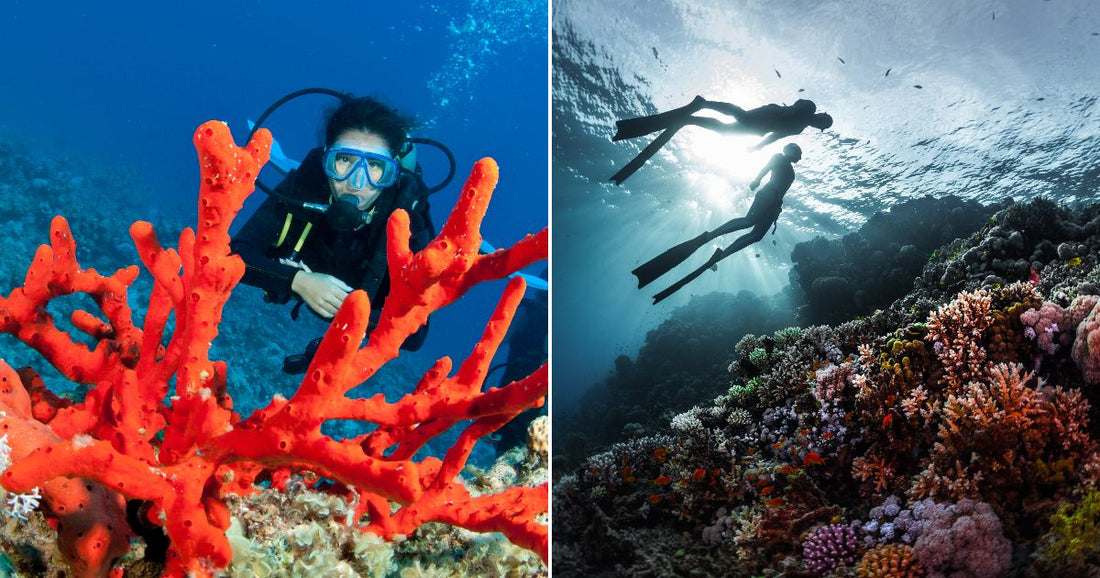
A hurricane tears through. The winds drop. The sea slowly clears. And somewhere below the surface, a countdown begins.
UNDP Climate Promise reports that everything — debris removal, fragment recovery, coral reattachment — must happen within two weeks of a hurricane's impact to prevent permanent damage to the reef ecosystem. Miss that window, and what could have recovered in months may instead take decades.
It is an urgency that has reshaped how conservationists, divers, and insurers think about one of the planet's most valuable natural defenses.

What Hurricanes Actually Do to a Reef
The destruction is not subtle. Storm surges bury living coral fragments under layers of sediment. Powerful currents snap off entire sections of reef. Debris and solid waste pile up across the coral structure.
In Hawaii, the damage from back-to-back storms was stark. Yahoo News relayed a stark description from Julia Rose, The Nature Conservancy's Hawaii Coral Restoration Program manager: the storms "turned entire areas of reef into rubble," with six- to eight-foot-wide colonies that took centuries to grow dislodged and thrown around, causing further destruction as they went.
Some areas saw coral suffocating under sedimentation. Others lost entire crest formations that could not simply be lifted back into place.

The Dive Brigades Going In First
Across Central America, UNDP Climate Promise describes how Honduras, Belize, Guatemala, and Mexico have established rapid-response repair teams. As soon as conditions allow, they descend to clear debris, dig out buried fragments, and begin reattaching whatever living coral they can find.
Most are experienced divers. The repair work, however, is an entirely different skill. Teams learn to identify still-living fragments, secure them to stable reef sections using marine cement, and move fragments that cannot be reattached directly into underwater nurseries nearby.
When an entire reef crest flips in a surge, the approach shifts: divers work to stabilize it against the sediment rather than attempt to move it. Every technique is calibrated to the biology of what can still survive.

An Insurance Policy for the Ocean
Funding emergency reef response after a disaster has historically been slow and unpredictable. Grant applications take time. By the time money arrives, the biological window is closed. The Mesoamerican Reef Fund (MAR Fund) tackled that problem head-on with a purpose-built solution: parametric insurance for coral reefs.
NOAA Fisheries notes that more than 20 coral nurseries operate throughout the Caribbean, together producing more than 40,000 healthy corals for reef restoration annually — but getting emergency funds to the right place fast enough has long been the missing link.
The MAR Insurance Programme covers 11 reef sites across the region. A payout triggers automatically when hurricane wind speeds cross defined thresholds near a covered reef. When Hurricane Lisa struck Belize's Turneffe Atoll, the programme paid out $175,000. Within 48 hours, MAR Fund transferred the money to brigade teams. Within a month, 13 certified responders had stabilized and repositioned 178 coral fragments — staghorn, palmata, and elkhorn — placing key specimens in nursery beds for future replanting.

The Model Grows
The Caribbean Biodiversity Fund has since adapted the same approach for island nations. Caribbean Biodiversity Fund announced the successful completion of reef emergency response training for 75 divers across four Caribbean countries, using a protocol developed by MAR Fund and adapted for island settings. The new parametric policy covers approximately 1,800 square kilometers of reef across Jamaica, the Dominican Republic, St. Lucia, and St. Vincent and the Grenadines.
North of the Caribbean, the model resonates too. In Hawaii, the state is investing in hybrid artificial reefs designed to absorb more than 80 percent of wave energy during extreme conditions, while dive teams continue working reef by reef, reattaching colonies ranging from 8 to nearly 40 inches across.
What Is at Stake
The numbers behind these reefs are hard to ignore. Caribbean coral ecosystems deliver nearly $6.2 billion in annual benefits — coastal protection, fisheries, tourism — to the region. "A strong coral reef and a healthy coral reef," Caribbean Biodiversity Fund CEO Karen McDonald Gayle has said, "is an important aspect to protecting the coastal areas of our islands in the Caribbean from storm surges and the effects of a hurricane." Scientists believe intact reefs helped reduce wave strength and storm surge during the most powerful storms in living memory.
The divers going in after each storm are not simply doing conservation work. They are, fragment by fragment, maintaining a natural barrier that millions of people depend on — whether they know it or not.
