
Coral Supports 25% Of All Marine Life And Its Collapse Is Putting Millions of Lives at Risk
Matthew Russell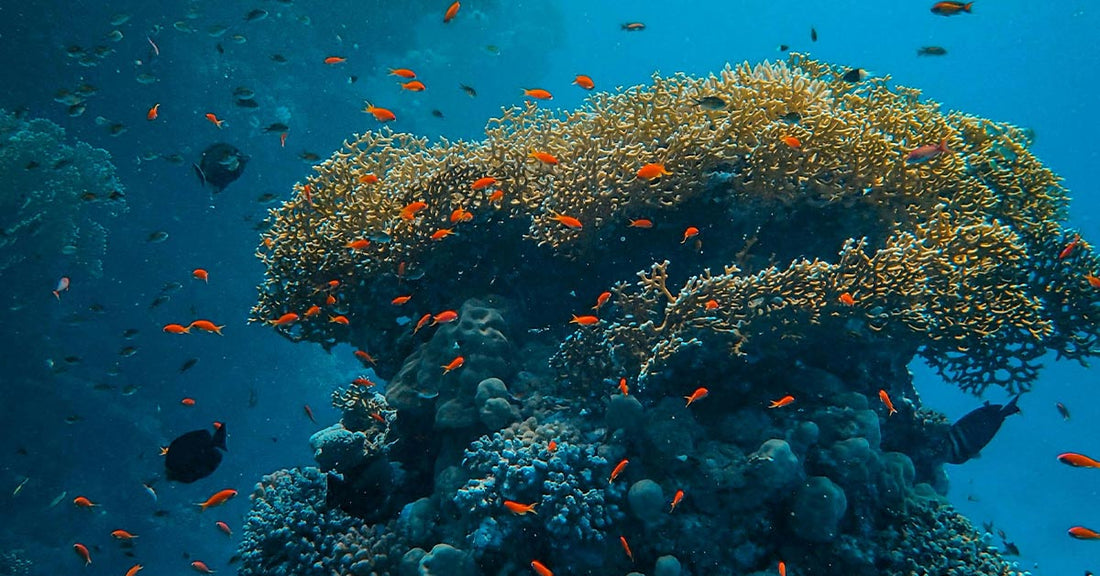
Coral reefs occupy less than 1% of the ocean floor, yet they support nearly a quarter of all marine species, according to NOAA.
That imbalance tells you everything about their importance.
Fish, crustaceans, and countless organisms rely on reefs for breeding grounds and shelter. Remove the reef, and the food web fractures. Coastal fisheries shrink. Families lose a steady protein source that has sustained communities for generations.
In a recent analysis, Forbes detailed how reef-based fisheries and tourism generate billions of dollars annually while supporting hundreds of millions of people worldwide. The economic footprint is vast, but the local impact is even more immediate.

Coral reefs support nearly a quarter of all marine species.
Reefs as Natural Storm Barriers
Coral reefs do more than feed people. They protect them.
Healthy reef structures absorb wave energy before it reaches land. Research highlighted by the Coral Restoration Foundation shows reefs can reduce wave energy by as much as 97%. That reduction can mean the difference between a damaged shoreline and a devastated one.
For low-lying coastal regions, this natural infrastructure functions like a submerged seawall. As NOAA explains, reefs help buffer storm surge, prevent erosion, and stabilize coastlines that would otherwise retreat inland.
When reefs decline, that protection weakens.

Millions of people rely on reef fisheries for protein.
Climate Change and Coral Bleaching
The greatest threat comes from warming oceans.
When sea temperatures rise beyond normal thresholds, corals expel the algae that provide them with nutrients. This process, known as bleaching, leaves them vulnerable and often leads to mass die-offs. National Geographic reports that repeated bleaching events have intensified in recent decades as global temperatures climb.
Ocean acidification compounds the damage by weakening coral skeletons. Stronger storms and sea level rise add further strain. The combined effect places entire reef systems at risk of collapse.
As Forbes notes, the loss of reefs would ripple outward — threatening biodiversity, food security, and coastal economies at once.

Coral ecosystems generate billions in tourism revenue annually.
What Works in Coral Conservation
There are proven paths forward.
Marine protected areas, when well managed and enforced, allow fish populations and coral communities to recover. The Coral Reef Alliance highlights evidence that targeted conservation zones increase fish biomass and ecosystem resilience over time.
Restoration efforts are also scaling up. Coral nurseries cultivate fragments that can later be transplanted onto damaged reefs. According to NOAA Fisheries, these programs aim to rebuild reef structure while preserving genetic diversity needed for future adaptation.
Reducing land-based pollution and overfishing remains critical. Without controlling local pressures, restoration alone cannot succeed.
The Stakes Are Immediate
Coral reefs are not abstract ecosystems in distant waters. They are food sources, storm shields, and economic engines.
Their decline is measurable. So are the benefits of protection.
The choice is not only environmental. It is practical.
