
Rescue Workers Find 14 Abandoned Cats Found Trapped Inside Taped Boxes
Guest Contributor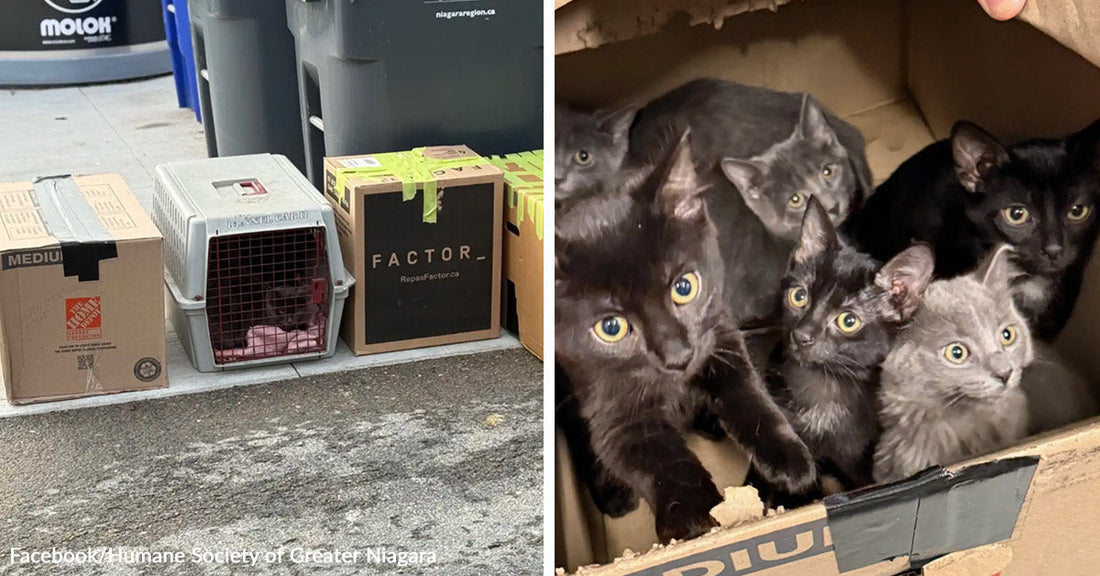
On an ordinary late October day in St. Catherines, Ontario, a routine task turned into a dramatic animal rescue. Staff at the Humane Society of Greater Niagara stepped outside to check their recycling area and stumbled on a heartbreaking sight. Three taped-up boxes and a small crate sat abandoned near the dumpsters. Inside those sealed containers, they discovered 14 frightened cats who had been left alone in the dark, waiting for someone to notice them. The discovery of cats abandoned in boxes so close to help was both shocking and deeply moving for the team.
Cortnie Welychka, the humane society’s senior manager of operations, described how jarring the moment was for everyone involved. The organization has long emphasized that they are available to help around the clock and encourages anyone struggling with pet care to reach out. Finding animals left outside in the cold, hidden away near the garbage, felt like a betrayal of that open invitation. It was not just a logistical issue of unexpected animals arriving without notice. It was an emotional blow to people who dedicate their lives to keeping animals safe.

That initial shock quickly gave way to action. Staff hurried the boxes inside, moved by urgency and concern for what they might find. They could not see or hear the animals clearly through the taped cardboard, and there was no way to know how long the cats had been there or what condition they might be in. Team members held their breath and carefully peeled away the tape, lifting each lid with a mix of dread and hope. This was not a planned intake or a prepared rescue, just a sudden crisis that demanded a calm, focused response.
To their relief, once the boxes were open and they could see each cat clearly, it became apparent that none of them were in immediate distress. The animals were frightened and confused, but they were alive and reachable. That small mercy allowed the team to pivot from urgent fear to practical care. Staff members quickly set up a comfortable space where the cats could recover from their ordeal. They provided warmth, quiet, and the basic needs that can make an enormous difference to an animal that has just survived confinement and abandonment.
For a brief moment, it seemed like the worst was over. The cats were indoors, safe from the cold, and in the hands of professionals who could assess their health and begin planning the next steps. Yet the story did not end that night. When staff returned to the recycling area the next morning, they found four more boxes waiting for them. Inside were four additional cats, bringing the total to 18 animals left in this hidden corner near the dumpsters over a very short period of time.
Once again, the rescuers moved swiftly. The emotional toll of discovering animals repeatedly abandoned in the same spot was heavy, and frustration would have been an understandable reaction. Still, the staff chose to center their efforts on the animals in front of them. Welychka explained that while such cases can drain a team emotionally, they stay grounded by focusing on the positive outcome. The cats were no longer outside in taped-up boxes near the garbage. They were inside, receiving care and given a real chance at a better future.
Supporting one another within the organization plays a central role in how the team copes with situations like this. Rescue work often involves sad or unsettling discoveries, and it can be challenging to witness neglect or abandonment and then return to daily tasks. According to Welychka, seeing animals begin to recover and thrive helps balance out that weight. Watching a fearful cat gradually relax in a warm bed, accept a gentle touch, or show curiosity about a toy can be a powerful reminder of why this work matters.
Over the following weeks, the humane society staff committed themselves to ensuring each cat received individualized care. This included medical attention as needed and patient handling to help them feel secure. Many of the younger and more outgoing cats adjusted quickly to their new environment. They were able to transition into adoptive homes relatively fast, where new families welcomed them and began forming lasting bonds. These successful adoptions offered tangible proof that rescue and rehabilitation can transform a dire beginning into something bright and stable.
Not all of the cats were ready for that step right away. Some needed more time, more reassurance, and more one-on-one support to feel safe. Those animals were placed in foster homes, where they could decompress in a quieter environment. Foster caregivers provide structure and gentle attention that help build trust, which is particularly important for animals who have been confined and abandoned. These cats will remain in foster care until they are confident enough to handle the activity of a shelter adoption floor and, eventually, the transition into a permanent home.
This incident has also become a reminder to the community that the Humane Society of Greater Niagara is always prepared to help animals in need, and that isolation is not necessary for people who find themselves overwhelmed. Welychka emphasized that there is no judgment when someone reaches out because they can no longer care for their pets. Life circumstances can change rapidly and unexpectedly. Jobs can be lost, housing can shift, health challenges can arise, and resources can become scarce. In these moments, people may feel ashamed or afraid to ask for help, yet early communication can make a crucial difference for both humans and animals.
The humane society’s message is simple: if caring for an animal becomes too difficult, there are compassionate options available. Rather than resorting to abandonment, especially in unsafe conditions like sealed boxes outdoors, individuals are encouraged to contact local shelters or humane organizations for support. These groups exist precisely to provide guidance, temporary care, or safe surrender when needed, and they can work with people to find solutions that protect animal welfare while honoring human dignity.
I found it striking that this entire story began beside a dumpster and a recycling area, places usually associated with refuse rather than rescue. What could have remained a hidden tragedy instead became a story of response, teamwork, and the power of community resources. The cats who started out frightened and sealed away are now being seen, cared for, and offered futures in loving homes. Their journey illustrates how prepared and compassionate rescue staff can change the outcome for vulnerable animals, even when those animals are found in the unlikeliest of places.
In the end, the abandoned cats in boxes behind the humane society have moved from darkness to safety, from uncertainty to the possibility of a stable life. Their story underscores a larger truth about animal welfare. When shelters and communities work together, when people are encouraged to ask for help without fear of judgment, and when dedicated rescuers respond quickly and kindly, animals in crisis are far more likely to find safety. These 18 cats now have that chance, and their presence in new homes and foster families stands as a quiet testament to resilience, compassion, and the importance of reaching out before desperation sets in. Read more at The Dodo