
🚨Urgent: Missile Strikes Shelter in Ukraine! Rush Emergency Aid!
Strange Shape In Backyard Turns Out To Be Exhausted Rare Bird
Guest Contributor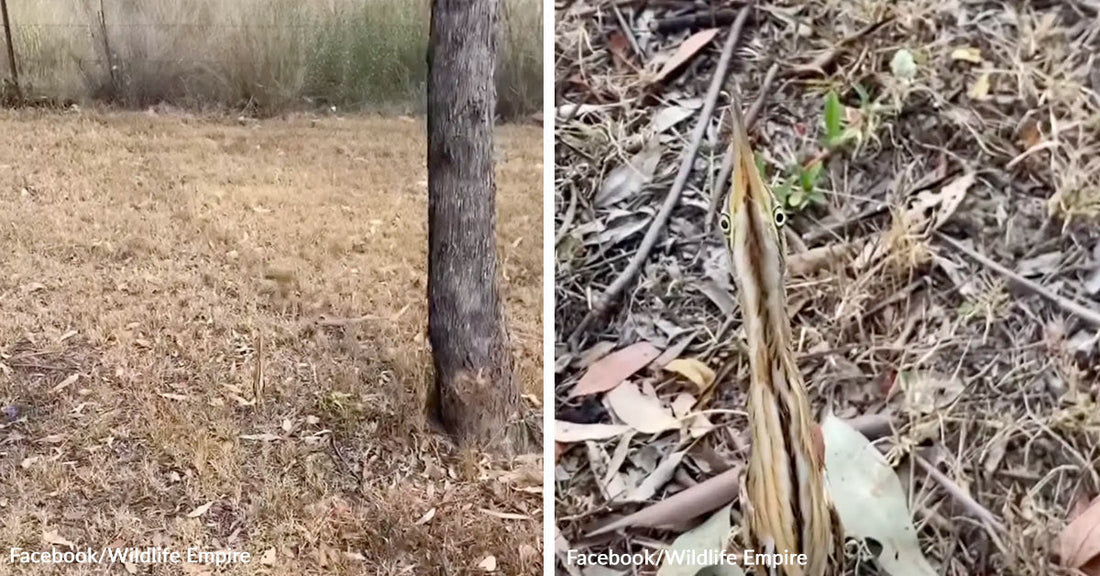
On a bright, drying day in rural Queensland, a parent stepped outside to check their child’s play area and caught sight of something that did not quite belong. At first, it appeared to be an odd, vertical shape, almost like a forgotten toy or a stray piece of playground equipment. Only on closer inspection did the homeowner realize that this “unusual shape” was, in fact, a living creature. It was a bittern in the yard, a large, beautifully camouflaged heron native to the wetlands of Australia and Tasmania, standing so still that it nearly disappeared into the backdrop.
According to Wildlife Empire Rescue and Rehabilitation director Tennille Bankes, the bird was so well blended into the environment that it was easy to mistake him for part of the scenery. The homeowner had first noticed an odd outline in the play area, a shape standing very still in the sunlight. From a distance, the bittern’s striped plumage and statue-like posture made it difficult to recognize that a wild animal was quietly waiting in the grass.

Curious and concerned, the property owner moved closer and realized something was not right. This was not a healthy, active bird visiting the yard. The bittern was barely moving and appeared drained of energy. Unsure of what to do, and recognizing that the situation might be serious, the homeowner reached out for expert help. They contacted Wildlife Empire Rescue and Rehabilitation, an organization experienced in caring for native animals in distress, and requested guidance.
Bankes responded to the call and headed to the property to locate the “unusual shape” that had caused concern. She later shared that spotting the bird was not simple. Because bitterns are known for their “stick mode” posture, with their bodies elongated and their heads pointed upward, their striped feathers line up with grasses, reeds, or any vertical shapes nearby. This natural camouflage is a powerful survival strategy in the wild, but it can also make it hard for people to see when a bird is in trouble.

Facebook/Wildlife Empire
On arrival, Bankes scanned the play area carefully. The bird’s vertical stance and patterned feathers made him look like part of the background, and she noted that it could genuinely take a moment to register what she was looking at. Eventually, though, the shape resolved itself into a living bittern, standing upright but clearly not well. Bankes later described the moment as “quite surreal,” a painted-looking figure suddenly revealing itself as a real, vulnerable animal.
Once she approached, it became obvious that the bittern was not simply resting. He was weak and exhausted, showing very low energy despite his upright posture. Bankes reported that the bird did not seem especially frightened. Instead, his stillness looked more like fatigue than fear, as if he simply did not have much strength left to react. The recent heavy rainfall in the area had only just begun to ease, and the conditions may have taken a toll on the bird’s ability to find food or shelter.
Recognizing that the bittern needed help, Bankes gently collected him and transported him away from the busy yard to a quiet, calm environment where he could safely recover. There, she focused on providing the basics that any exhausted animal needs. Hydration came first, allowing the bird’s body to begin regaining balance after what appeared to be a draining ordeal. She gave him time to rest in peace, without noise or stress, and watched carefully to see how he would respond.
Over the next few days, Bankes monitored the bird’s condition. At first, the focus stayed on fluids and rest, since he was too weak to do much more. When his strength improved enough, she began offering food, waiting until he was ready to eat so as not to push him beyond his limits. Gradually, the changes began to show. His posture, once only barely upright, started to look stronger. The bittern became more responsive to his surroundings and more alert to movement and sound, important signs in a wild bird’s recovery.
Another significant marker of progress came when his flight strength began to return. Where he had once seemed too depleted to move much at all, he slowly regained the coordination and power that a large heron needs to fly safely. According to Bankes, his improvement was steady, and each small gain brought him closer to the possibility of returning to his natural habitat. I found this detail striking, because it highlights how even brief, focused care can help a wild animal reclaim its independence.
Throughout the process, the goal remained clear. Wildlife Empire Rescue and Rehabilitation aims to treat wild animals in a way that prepares them for a safe release rather than long-term captivity whenever possible. As the bittern continued to grow stronger, Bankes and her team watched for the combination of traits that would indicate he was ready: coordinated flight, consistent alertness, and behavior that matched what a healthy wild bittern should display.
When these signs were evident, it was time. The team arranged his release near suitable habitat, where a bittern in Australia would naturally thrive. This careful choice of location helped ensure that the bird would have access to appropriate food sources and shelter, increasing his chances of a successful return to life in the wild. Bankes shared that seeing the bird fly strongly away felt incredibly rewarding, a moment that validated the effort, attention, and care invested in his recovery.
The sight of an “unusual shape” in a child’s play area turned out to be a life-or-death moment for a camouflaged, gorgeous bird in need of help. What began as a small flicker of concern from a homeowner led to expert intervention, patient rehabilitation, and ultimately the image of a once-exhausted bittern winging his way back toward wetland habitat. The story underscores how ordinary people, simply by noticing that something seems off and taking the step to call a wildlife organization, can become a crucial part of protecting native species. It also highlights the dedication of rescuers like Bankes, who transform quiet backyard discoveries into stories of recovery and release, one wild bird at a time. Read more at The Dodo