
🚨Urgent: Missile Strikes Shelter in Ukraine! Rush Emergency Aid!
Critically Endangered Orangutans Have Nowhere to Run as Flames Consume Their Borneo Home
Guest Contributor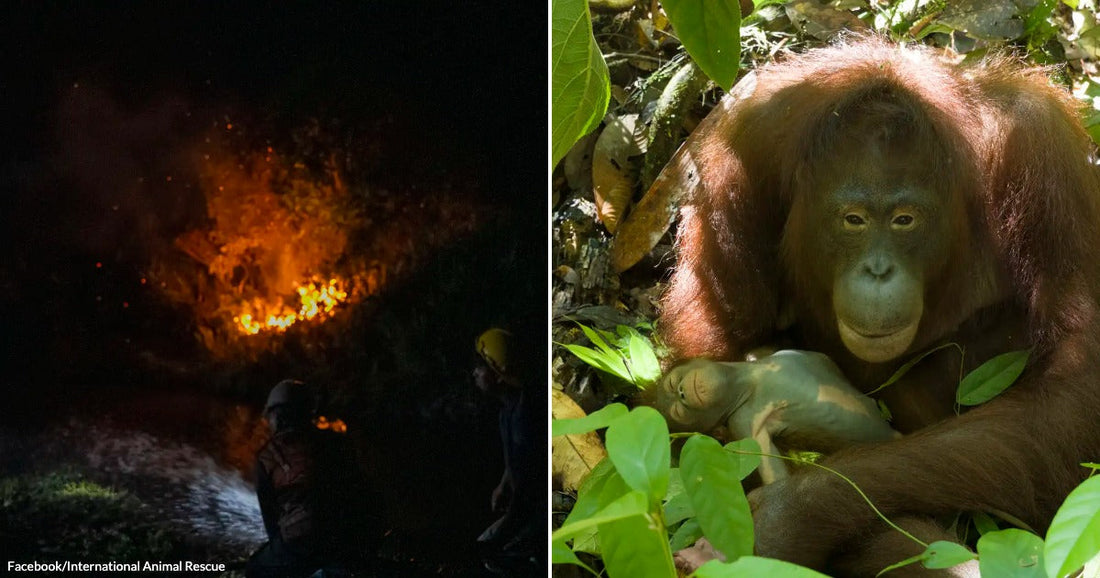
In the heart of the Borneo rainforest, a recent wildfire has thrown thousands of lives into sudden danger, including more than 5,000 critically endangered orangutans. What began as an ordinary dry-season day near the International Animal Rescue (IAR) Orangutan Rescue and Rehabilitation Center in Indonesia turned into a race against time as flames appeared less than a mile from the sanctuary. For anyone who cares about wildlife conservation, this unfolding story of a fire in the Borneo rainforest is both urgent and deeply sobering.
The IAR center is usually a place of healing and hopeful progress. Staff members devote their days to helping rescued orangutans recover from past trauma, learn vital forest skills and, where possible, return to the wild. Over 60 orangutans currently live at the center, each with their own history and fragile new beginning. Beyond the facility, the surrounding forest is home to more than 5,000 orangutans who are already classified as critically endangered. When the fire broke out in late July, that entire landscape of care and cautious optimism was suddenly overshadowed by smoke and uncertainty.

According to IAR, the wildfire erupted just beyond the boundaries of the rehabilitation center. The distance was small, yet the stakes could not have been higher. Wildfires move unpredictably, especially in dry conditions, and the team knew that even a slight change in wind or weather could push the flames toward both the sanctuary and the nearby forest habitat. The focus of the staff shifted quickly from long term rehabilitation routines to immediate emergency response. Protecting orangutans in crisis situations requires speed, coordination and a clear plan, and the team had to put all three into practice at once.
Several agencies came together to confront the fire and keep it from reaching the center. Fire control in dense forest terrain is an all consuming effort. It can involve creating firebreaks, monitoring shifting hotspots and working long hours in thick smoke. Argitoe Ranting, operations director at Yayasan IAR Indonesia (YIARI), described how seriously the team responded. In a press release, Ranting emphasized that the safety of the animals undergoing rehabilitation is the highest priority and that the staff acted quickly to activate emergency procedures. Those procedures are designed to ensure the orangutans and other animals remain safe while firefighters and responders focus on containing the blaze in the surrounding area.

The situation is especially alarming because orangutans in Borneo are already facing a precarious future. Habitat loss, human activity and previous environmental pressures have left their populations diminished and vulnerable. International Animal Rescue and its Indonesian partners have spent years working to reverse that trend, one rescue and rehabilitation at a time. A major wildfire in or near their habitat risks undoing a great deal of that work in a single event. Not only could the flames themselves threaten lives, but the destruction of forest areas can leave surviving animals with fewer places to find food, shelter and safety.
I found it striking that even as the fire was brought under control, the mood remained cautious rather than relieved. The immediate flames have been contained, yet the center is not fully out of danger. Dry conditions persist, which means another fire could start with very little warning. Gavin Bruce, CEO of IAR, highlighted this ongoing risk in comments to The Dodo. He noted that with such dry weather, teams must stay extremely vigilant because a new fire could develop and spread quickly. He also pointed out that the heavy smoke is not just a distant problem. It poses a serious health risk for local communities, for the staff working on the ground and for the orangutans themselves.

This combination of burned land, lingering smoke and continued dryness creates a kind of rolling crisis. Even when visible flames are no longer close, the work of prevention and protection continues. According to Bruce, keeping orangutans safe during a fire emergency is not simply a matter of luck or hope. It requires trained teams, specialized equipment, constant monitoring and the capacity to respond rapidly to any sign of renewed threat. In that context, tools like thermal imaging on drones become crucial. They allow responders to detect hotspots early, sometimes before they grow into visible flames, which can make all the difference in a landscape that might otherwise ignite with little warning.
The front line teams described in the report are portrayed as dedicated and fearless, committed to doing everything in their power to protect both the rescue center and the surrounding orangutan habitat. Their efforts, however, are shaped by the resources available to them. Fire safe infrastructure, proper training, protective gear and advanced detection technology all have costs. When conservation organizations face an emergency like this, they rely heavily on outside support to ensure they can remain prepared not only for the current crisis but also for those that may come with future dry seasons.

In response to the Borneo wildfire, International Animal Rescue is inviting people around the world to take tangible steps to help. One way is by contributing to IAR’s fire crisis fund, which can strengthen the organization’s ability to equip and train its teams for ongoing fire risk. Another is simply sharing IAR’s work on social media, helping more people understand what is happening in this part of the rainforest and why quick action matters. Awareness does not replace direct aid, but it can inspire new supporters and give conservation issues a wider audience.
The timing also intersects with a key date for wildlife advocates: World Orangutan Day on August 19. This annual observance is an opportunity to focus attention on the challenges facing orangutans in Borneo and beyond, including habitat loss, climate related threats and direct conflict with human development. Linking the current wildfire to World Orangutan Day helps underline that these events are not isolated. They are part of a larger story about how fragile ecosystems and species are coping with a changing environment and human pressures. For those who want to make their concern more concrete, recognizing this day and engaging with organizations like IAR can be a meaningful first step.
Ultimately, the story emerging from the Borneo rainforest is one of urgency, resilience and interdependence. The orangutans in and around the IAR center cannot protect themselves from advancing flames or harmful smoke. They rely on the skill and dedication of the teams watching over them, and those teams in turn rely on an international community of supporters who value biodiversity and compassionate conservation. By paying attention, sharing verified information and, where possible, contributing to efforts like IAR’s fire crisis fund, people far from Borneo can still play a role in helping these critically endangered orangutans survive and recover. Read more at https://www.thedodo.com/daily-dodo/in-the-borneo-rainforest-a-fire-threatens-the-lives-of-5000-critically-endangered