
EXTRA Good Points All Week for Guardians! Become a Guardian!
Three Dogs Died From Heat, Starvation, And Dehydration Inside A Trailer
Guest Contributor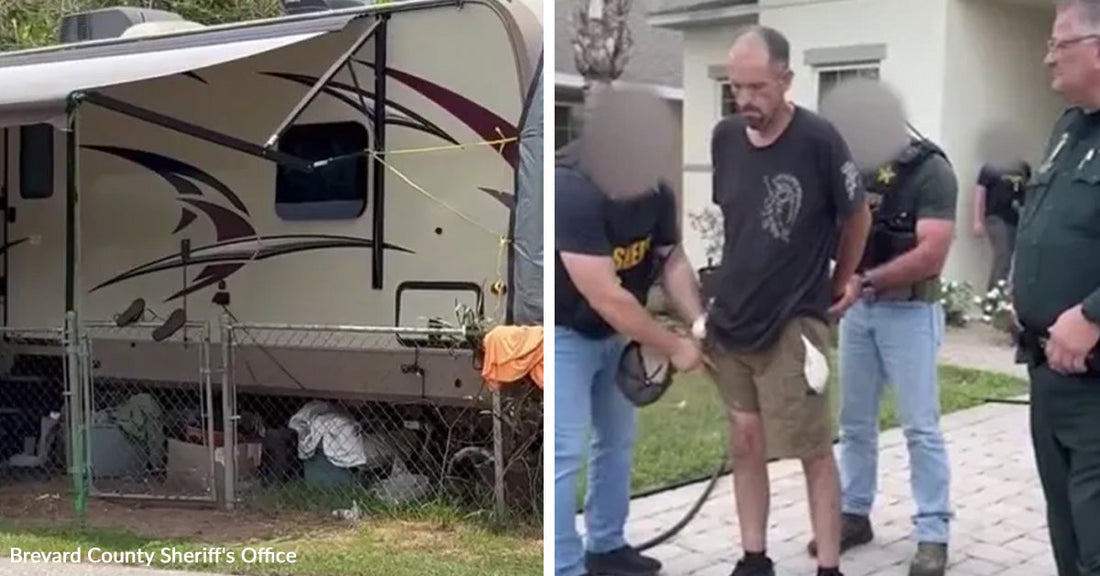
The death of Brevard County resident Jodi Cowan was already a deeply disturbing story of preventable tragedy. Now, a new and equally heartbreaking chapter has unfolded. Authorities say that her longtime boyfriend, 47-year-old Donnell Smith, has been arrested on multiple felony animal cruelty charges after three dogs were found dead inside a travel trailer connected to Cowan’s residence. The case highlights painful questions about responsibility, neglect, and how vulnerable both people and animals can become when basic safeguards fail.
According to the Brevard County Sheriff’s Office, deputies and animal services investigators were called to the travel trailer after reports of a foul odor coming from inside. When they entered, they discovered the decomposed remains of three dogs. Investigators allege that the animals had been left in the enclosed space with no food, no water, and no air conditioning. In the Florida heat, those conditions were lethal. Authorities say the dogs died due to extreme heat, starvation, and dehydration, a combination that points to what Sheriff Wayne Ivey described as a case of severe neglect.

Smith now faces three counts of felony animal cruelty and three counts of unlawful disposal of a dead animal. He was arrested on Monday, June 15, 2026, and remained in custody, with a first court appearance expected on Tuesday. In official statements, the sheriff’s office emphasized that animal abuse cases are taken very seriously and indicated that they will continue to pursue such cases aggressively. This legal response is framed not only as a reaction to this particular situation but also as part of an ongoing effort to address animal cruelty in the county.
The animal cruelty case involving Donnell Smith cannot be separated from the tragic events that preceded it. His longtime partner, 50-year-old Jodi Cowan, had recently been killed in a violent dog attack in her Brevard County neighborhood. The sheriff’s office reports that Cowan was out late one night walking her dogs when she was followed and attacked by two pit bull dogs belonging to her neighbor, Linda Cutler. The attack was captured on camera and is described by officials as brutal. Cowan was reportedly knocked to the ground, mauled, and repeatedly attacked. She did not survive.
In the aftermath of Cowan’s death, the community’s attention turned to the circumstances surrounding the dogs that carried out the attack. The sheriff’s office states that both of Cutler’s dogs were confiscated by Animal Control and scheduled to be euthanized. Cutler herself was arrested and booked into jail on a charge of manslaughter. A judge later denied her bond, a decision that underscores the serious nature of the allegations.
Court records, as cited in the reporting, suggest that this was not the first time concerns were raised about Cutler’s dogs. She had previously been cited for not vaccinating the animals, and there had been multiple incidents involving the dogs allegedly hurting people. Investigators say that Cutler was aware that her dogs frequently escaped from her yard and that one of them had already bitten another person before the fatal mauling. Those details paint a grim picture of what authorities view as a pattern of negligence that, combined with powerful dogs and insufficient control, may have contributed directly to Cowan’s death.
In light of this context, the discovery of three dogs dead inside a travel trailer linked to Cowan’s residence feels especially stark. The details provided by detectives are difficult to read: animals locked inside a confined space, no basic sustenance, no cooling in what authorities describe as extreme heat, and no intervention until the smell of decay drew attention. I found this detail striking because it illustrates how quickly living beings can become invisible when oversight and care break down.
Animal cruelty investigators and law enforcement agencies often stress that neglect can be as damaging as overt violence. In Brevard County, officials are using this case to reiterate that leaving animals without proper care, especially in a hot, enclosed environment, is not simply irresponsible behavior. It can meet the legal threshold for felony animal cruelty. The charges against Smith, which include unlawful disposal of a dead animal, indicate that authorities viewed not only the conditions that led to the dogs’ deaths as criminal, but also the way their remains were handled afterward.
These intertwined cases involving animal attacks, alleged neglect, and manslaughter reflect a broader reality. Communities rely on responsible pet ownership, consistent enforcement of animal control laws, and awareness of how quickly situations involving animals can escalate. When a dog has a documented history of escaping and injuring people, or when pets are left alone for extended periods without proper safeguards, the risks are not theoretical. They can result in devastating consequences for neighbors, for the pet owners themselves, and for the animals.
The case of Jodi Cowan’s death and the subsequent charges against both her neighbor and her boyfriend bring forward several painful questions. How can communities identify and address dangerous patterns earlier? What systems are in place to ensure that animals left behind after a tragedy are checked on quickly? While the article focuses on specific individuals and charges, it also implicitly calls attention to the need for vigilance. For example, neighbors who report foul odors or unusual conditions may play a critical role in uncovering neglect that might otherwise remain hidden.
The mood surrounding these events is understandably somber. At its center is a woman who lost her life while walking her dogs in what should have been a routine, safe activity in her own neighborhood. Around that central tragedy are the deaths of multiple animals, legal consequences for two different people, and a community that has to process both grief and anger. Sheriff Ivey’s statement about pursuing animal abuse cases aggressively can be seen as both a promise and a warning that neglect and cruelty will not be dismissed as minor issues.
Stories like this also serve as a reminder that humane treatment of animals and community safety are linked. Proper training, secure enclosures, vaccinations, and daily care for pets are not just matters of personal preference. They are part of a shared responsibility. When those responsibilities are ignored, the repercussions can ripple outward to affect many lives, as they have in Brevard County. Ensuring that tragedies like these are less likely in the future involves a combination of personal accountability, strong laws, and an engaged public willing to speak up when something seems wrong.