
Marine Team Races To Free Grey Seal Trapped In Deadly Netting
Guest Contributor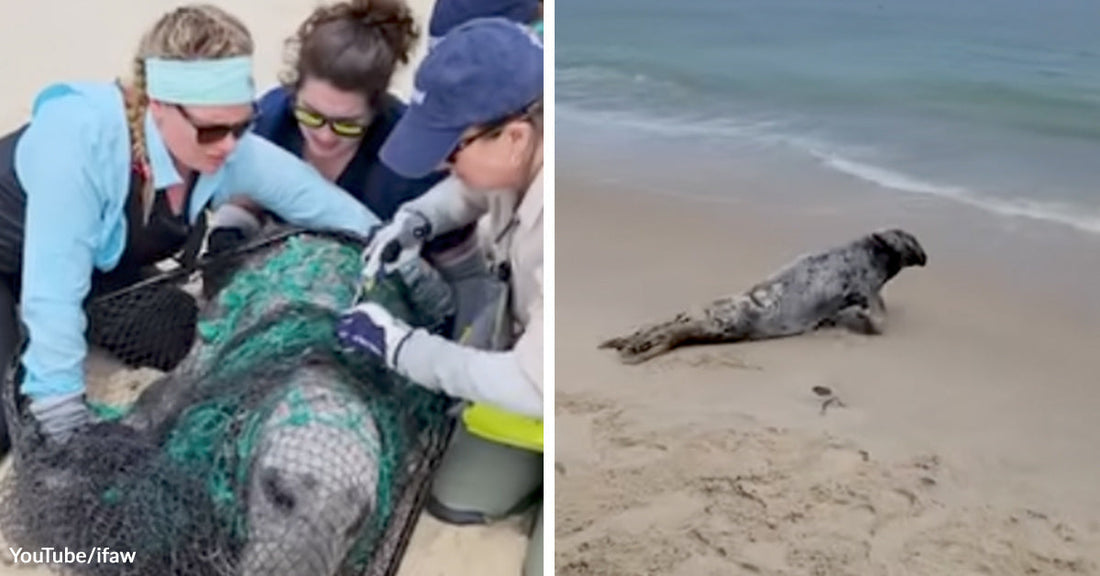
Rescuing a wild animal from a life-threatening situation is rarely as simple as it looks, and the story of a recent grey seal rescue on Cape Cod makes that reality clear. In late May and early June 2025, responders from the International Fund for Animal Welfare (IFAW) received reports of a severely entangled adult male grey seal on Monomoy, a remote island off Chatham. The animal was trapped in a heavy, green multifilament fishing net that had cinched tightly around his neck and was affecting his movement and behavior. This was not just a routine call. It was a race against time to prevent a slow, painful death from entanglement in fishing gear, a threat that kills hundreds of thousands of marine mammals and sea turtles worldwide each year.
The author, IFAW responder and biologist Olivia Guerra, describes how the operation began with waiting and planning. Monomoy is only accessible by boat, which meant that even after the first report on 2 June, the team had to coordinate logistics and permissions with the staff of the National Monomoy Wildlife Refuge. The seal was spotted again on 5 June in the same general area, and by the following day, the conditions and approvals were in place for the rescue team to land on the island.

When the team finally arrived by sea and scanned the shore, they located the animal quickly. The adult male grey seal was lying on the beach, surrounded by about 30 other grey seals, with a three-pound tangle of green plastic fishing net embedded around his neck. Against the lighter sand and the cluster of other animals, the bulk and bright color of the gear made him tragically easy to identify. The sight captured the harsh reality of marine entanglement: one animal in a crowd visibly suffering, marked by the debris of human activity.
Guerra emphasizes that disentangling a wild seal is far from simple. At roughly 180 kilograms, or about 400 pounds, this grey seal was a powerful, unpredictable wild animal capable of moving surprisingly fast on land. It takes trained professionals to approach, capture, and restrain an animal of that size safely. Cutting away the gear is only one part of a complex, high-risk procedure that must protect both the animal and the responders.
The team’s approach relied on caution and stealth. They disembarked quietly from their boat and used the sand dunes for cover, knowing that startling one seal would likely cause the entire group to rush for the water. Crawling forward to stay out of sight, they set their capture nets and then made their move, sprinting to close the distance before the entangled animal could react. According to Guerra’s account, they managed to secure him with a hoop net just in time, proving how critical timing and coordination are in these rescues.
Even then, the challenges did not stop. The seal’s size put intense strain on the capture equipment, and the team could hear the net beginning to crack under the pressure. With quick action, a colleague helped Guerra stabilize the animal while the rest of the team joined in to restrain him. Despite being handled by three experienced staff members, the seal remained extremely strong and difficult to hold. In those few minutes, the balance between speed and careful handling became crucial. The longer an animal struggles, the higher the risk of injury or escape, yet the team also had to avoid causing additional harm as they worked.
Remarkably, they completed the disentanglement in about four minutes. While their veterinarian cut through the layers of green netting, she assessed the extensive damage the gear had caused to the seal’s neck and head. Weeks of abrasion and constriction had carved deep lacerations that extended into the blubber and muscle. Despite the severity of the wounds, the veterinarian determined that the best option was immediate release. In her judgment the injuries, while serious, would be able to heal naturally in the wild without further intervention.
This decision highlights both the resilience of marine mammals and the difficult choices that wildlife veterinarians and rescuers must make. Keeping a large wild seal in captivity for treatment is not always in the animal’s best interest, especially if stress and handling would outweigh the benefits. In this case, freeing the seal from the entangling gear and allowing him to return to his natural environment gave him the greatest chance at recovery.
The story also places this single rescue within a much larger global context. Guerra notes that animals such as seals, dolphins, whales, and sea turtles commonly become trapped in lost or discarded fishing gear or are accidentally ensnared during active fishing. Entanglement can prevent them from feeding, leading to starvation, or from reaching the surface to breathe, resulting in drowning. Lines and nets that dig into their skin can create deep wounds that become infected, turning each movement into a source of pain. The toll is immense and largely invisible beneath the surface of the ocean, which is why many conservationists see each successful disentanglement as both a lifesaving moment and a reminder of the scale of the problem.
Historically, capturing and disentangling seals has been especially difficult. Their agility in the water, wariness of humans, and powerful bodies make them challenging patients. IFAW has developed specialized, humane techniques and equipment to carry out these interventions more safely and effectively. The rescue on Monomoy reflects years of refinement in these approaches, demonstrating that expertise and preparation can dramatically reduce suffering for individual animals caught in dangerous situations.
Once the adult male grey seal was freed and released, the team might have expected a chance to regroup, but their day was not over. A staff member stationed on the vessel alerted them to another urgent case: a juvenile grey seal nearby, entangled in white polypropylene twine. The presence of a second entangled seal at the same site underlined how pervasive marine debris and fishing gear hazards have become in coastal habitats.
Working quickly, the team reused their partially damaged capture net. Guerra explains that she and her colleague rapidly got into position and, within seconds, successfully netted the smaller animal. The juvenile’s size made handling somewhat easier, and one person was able to restrain him while the others cut away the twine and examined him. This younger seal had a superficial laceration on one side of his neck from the entanglement but otherwise appeared to be in good condition. In a small but meaningful step for future monitoring, the responders applied a tag to his left rear flipper so that if he is seen again, they will be able to identify him and track his progress.
The emotional impact of the day stands out in Guerra’s recounting of the moment both seals returned to the water. Watching two animals that had been at real risk of slow, painful deaths move back to the ocean free of entangling gear carried a sense of relief and quiet triumph. I found this detail striking because it shows how individual rescues, while modest compared to the scale of global marine pollution, can still represent powerful victories for animal welfare and conservation practice. Each success story also illustrates what coordinated response teams, proper training, and specialized tools can achieve when combined with support from local refuges and members of the public.
Underlying the narrative is a clear message: preventing and responding to marine mammal entanglement requires many people working together. Members of the public who report injured or stranded animals provide the critical first link in the chain. Organizations such as IFAW contribute trained responders, veterinary expertise, and equipment. Refuge staff facilitate safe access to protected areas like Monomoy. Donors and community supporters make it possible to maintain hotlines, vessels, and gear so that when a call comes in, a team is ready to respond.
Stories like these highlight both the urgency of ocean conservation and the real-world solutions already in motion. They remind us that the crisis of marine entanglement is not abstract or distant. It is written in the deep cuts on a seal’s neck, the weight of a plastic net on a wild animal’s body, and the relief of watching that same animal disappear beneath the waves unburdened. For anyone wondering whether individual actions matter, this rescue offers a clear answer. Each report, each act of support, and each effort to reduce discarded gear at sea contributes to giving animals like these grey seals a second chance at life. Read more at https://www.ifaw.org/journal/seal-rescue-deadly-entanglement