
🚨Urgent: Missile Strikes Shelter in Ukraine! Rush Emergency Aid!
Cat Escapes a Highway Crash and Survives Six Days Alone in a Blizzard
Guest Contributor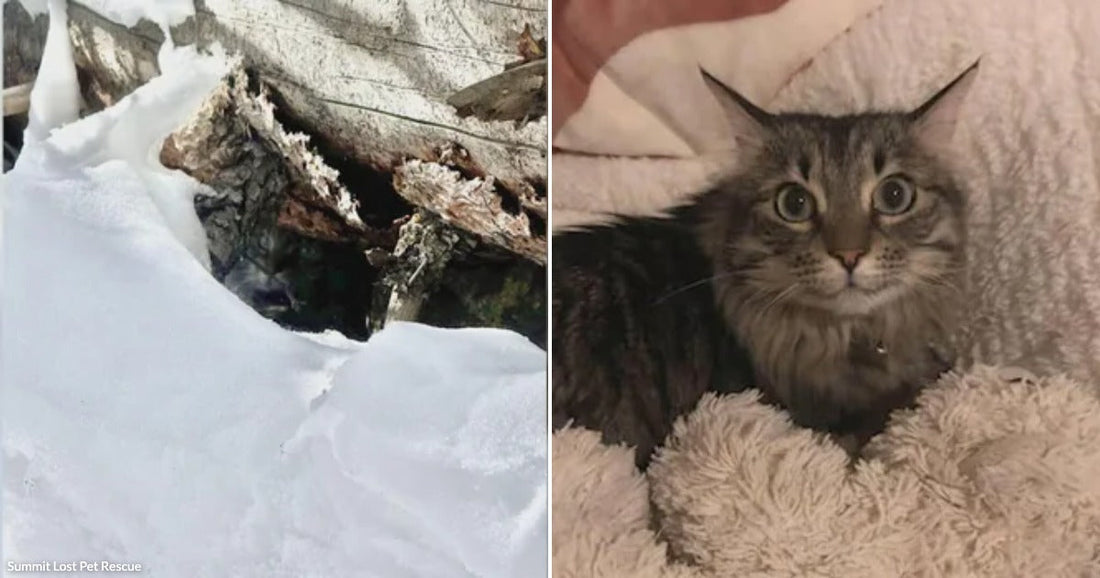
A routine drive through Colorado’s high country turned into a six-day ordeal when a family cat was lost in blizzard conditions after a crash near the Eisenhower and Johnson Memorial Tunnels. What could have ended as a heartbreaking story instead became a powerful example of persistence, community support, and the quiet heroism of a volunteer animal rescue team. For anyone who cares about pets and the people who love them, this rescue story offers both tension and deep relief.
The chain of events began on the westbound side of I-70, just outside the tunnels, when a car veered off the road. In the chaos of the crash, the front passenger window shattered. According to Summit Lost Pet Rescue, the cat, a gray striped tabby named Aria, bolted from the vehicle. Frightened and disoriented, she sprinted up the steep hillside, across rocks, and vanished into the nearby woods. In a matter of seconds, she went from family companion to missing in the mountains.

Animal control received word of the crash and the missing cat, and soon volunteers with Summit Lost Pet Rescue were heading to the scene. From the beginning, they were up against punishing weather. Blowing snow, high winds, and rapidly changing conditions created a grueling environment for searchers and drastically narrowed the chances that a small cat could survive outside for long.
Rescuer Shelly Wasson described the reality of searching for a lost cat in a full Colorado winter. The wind did not just sting faces and numb fingers. It also drove snow into every crevice on the mountain. All the tiny spaces where a terrified animal might hide were steadily filling with snow, turning potential shelters into dangerous traps and making it harder and harder for rescuers to even see where a cat might be tucked away.

Facebook/Summit Lost Pet Rescue
The team’s first search efforts came up empty. Hours spent on the mountain in those harsh conditions did not reveal any sign of Aria. In weather like that, visibility is limited, sound is distorted, and tracks vanish almost as soon as they appear. It would have been easy to assume that the odds were simply too long and that the cat could not survive the cold. Instead, the volunteers refused to give up.
Day after day, they returned to the rugged terrain outside the tunnels, reviewing the landscape and trying to think like a scared cat. Rather than focusing only on obvious hiding spots, the rescuers narrowed their search to places that might offer a bit of bare ground. Wasson explained that she deliberately looked for those rare areas not covered by snow, knowing a cat would likely try to avoid standing or lying directly in the freezing drifts whenever possible.

Facebook/Summit Lost Pet Rescue
This detail about bare ground highlights the experience and intuition that dedicated lost pet rescue teams bring to their work. Searching for a cat in the mountains is not only about stamina or luck. It is a careful blend of animal behavior knowledge, environmental awareness, and patience. I found this emphasis on thinking from the animal’s perspective particularly striking because it shows how rescue work is both practical and deeply empathetic.
On the sixth day, that combination of persistence and insight finally paid off. Wasson returned to an area she had already checked several times. Under a log she had looked beneath at least two or three times before, the snow had finally melted away. This time, with clearer visibility and no snow blocking the view, she spotted something that had been hidden before. Aria, whose gray tabby stripes mirrored the colors of bark and dead wood, had been blending in so perfectly that she had gone unnoticed in earlier passes.

Facebook/Summit Lost Pet Rescue
Realizing that this might be their one real chance, the rescuers moved fast while staying careful. Aria could have escaped again if given even a small opening. Wasson and fellow rescuer Amy Kahle positioned themselves on opposite sides of the log so the cat could not slip out from one end while they reached in from the other. It was a simple but crucial tactic that reflected what they had learned from days of searching in difficult terrain.
When they finally pulled Aria free, it was immediately clear how narrow her margin of survival had been. Wasson recalled that the cat was covered in snowballs, so chilled that every moment mattered. She emphasized that she was grateful they had found Aria when they did and that she was not sure how much longer the cat could have endured those temperatures and conditions alone on the mountain.
Meanwhile, Aria’s owner, Dat Nguyen, had not stopped searching either. Like many pet guardians faced with a sudden loss, he was out looking, hoping for any sign of her. When the call came that the rescue team had found his cat, he rushed to meet them. The reunion, by his own description, was intense and emotional. Nguyen described his heart pounding as he held Aria again, and he shared that his family was very happy to have her back.
Back at home, Aria began to recover from her ordeal. Nguyen reported that she was at least 80 percent better and, most importantly, very happy to be safe indoors again. For him, the rescue was not just about bringing a pet home. He spoke about his heart healing and offered heartfelt thanks to the Summit Lost Pet Rescue volunteers, saying he could not thank them enough for what they had done for his family.
For the rescuers, that moment of reunion seemed to be what made all the danger and exhaustion worthwhile. Wasson stated that once she saw the cat under the log, she was not leaving the mountain without her. That mindset captured the quiet determination that defined the entire operation, from the first stormy search to the final careful capture.
Summit Lost Pet Rescue operates as a nonprofit organization run entirely by volunteers, and this story underlines how essential that kind of community-based effort can be. With no paid staff and often no guarantee of success, volunteers head into blizzards, dense forests, and busy highways to search for missing animals. Their work depends heavily on community support, from financial donations to shared information about lost pets and local conditions.
This Colorado cat rescue story highlights how fragile life can be in severe weather and how powerful compassion is when people organize around a shared purpose. A car crash, a shattered window, a frightened cat, and six days of bitter winter might easily have added up to a tragic outcome. Instead, they resulted in a carefully coordinated effort, an astonishing survival, and a family’s joy at getting their beloved pet back. It is a reminder that even in the harshest conditions, persistence, skill, and collective care can turn a near-disaster into a story worth sharing and remembering.