
EXTRA Good Points All Week for Guardians! Become a Guardian!
Deforestation Heat Deaths Reveal Hidden Human Cost in Tropical Regions
Guest Contributor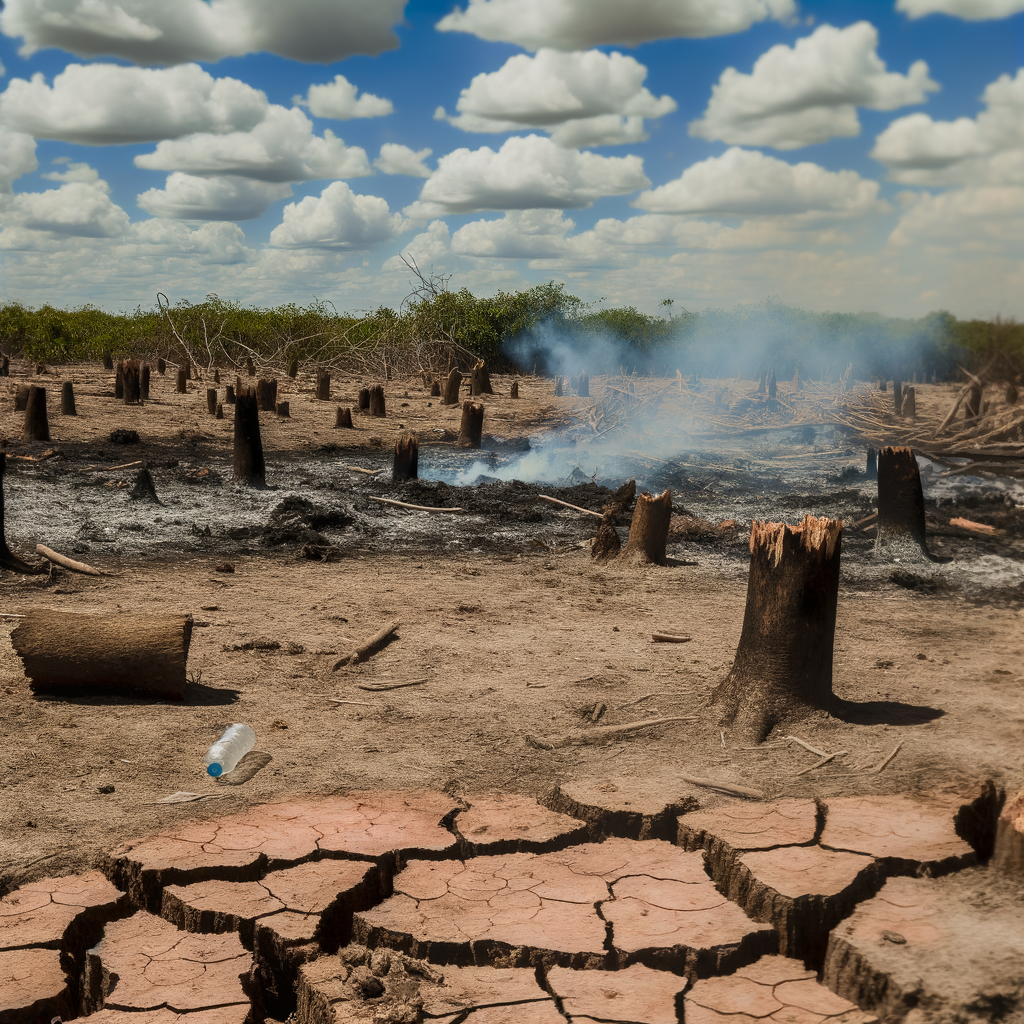
Across the tropical belt of our planet, a silent crisis has been unfolding—one that has claimed more than half a million lives over the past two decades. A recent study published in the journal Nature Climate Change links this devastating toll to deforestation, revealing how the clearing of rainforest land has intensified local heat exposure to deadly levels. With deforestation-driven warming affecting millions across the Amazon, Congo, and southeast Asia, the findings underscore a profound and often overlooked human cost of environmental degradation.

The study’s researchers, based in Brazil, Ghana, and the UK, analyzed temperature changes and mortality rates in tropical regions that experienced significant land clearance between 2001 and 2020. They found that deforestation was responsible for more than one-third of the warming felt by people in these areas—warming that compounded the effects of global climate change. This localized heat increase, driven by the removal of tree cover, diminished shade, reduced rainfall, and heightened fire risk, led to an estimated 28,330 deaths each year over the 20-year period.

These figures are not just statistics; they represent lives lost to a preventable phenomenon. The study highlights that approximately 345 million people across the tropics endured this deforestation-induced warming, with 2.6 million of them experiencing an additional 3 degrees Celsius of heat exposure. Such increases, particularly in already vulnerable populations, can have fatal consequences due to heat-related illnesses.
Most of the deaths occurred in southeast Asia, where population density and vulnerability to heat are especially high. Tropical Africa accounted for about a third of the fatalities, while the remainder were in Central and South America. I found this detail striking: while the global conversation around deforestation often centers on biodiversity loss and carbon emissions, this study brings the issue into sharp human focus. The forests are not just ecological treasures—they are life-saving systems for the communities that surround them.
Professor Dominick Spracklen of the University of Leeds, one of the study’s authors, emphasized the gravity of the findings. “Deforestation kills,” he stated, adding that the local dangers of forest loss are frequently overshadowed by broader climate debates and economic interests. His comments point to a critical need to reframe how we understand forest conservation—not merely as a global imperative, but as a local necessity for health and survival.
The region of Mato Grosso in Brazil serves as a telling example. Once densely forested, it has seen extensive deforestation to make way for large-scale soy plantations. Farmers from the area are now advocating for the end of the Amazon soy moratorium, a policy that currently restricts new land clearance for soy cultivation. Spracklen argues that maintaining forest cover in places like Mato Grosso can actually benefit agriculture, not hinder it. Forests help regulate temperature, bring rainfall, and reduce heat stress—factors that directly support crop yields and human well-being.
This insight challenges the notion that economic development must come at the expense of the environment. Instead, it suggests that sustainable land management can align with both ecological preservation and agricultural productivity. The study’s findings reinforce the idea that tropical forests are not passive landscapes; they actively moderate local climates and protect human health.
What sets this research apart is its focus on the human toll of environmental change. While previous studies have documented the warming effects of deforestation, this is the first to quantify the resulting mortality. By connecting environmental data with public health outcomes, the researchers have illuminated a critical and often invisible link between ecological degradation and human suffering.
The implications are far-reaching. As global temperatures continue to rise, localized heat stress will likely worsen in deforested regions, compounding the risks for millions of people. Policies aimed at curbing deforestation—whether through conservation programs, reforestation efforts, or sustainable agriculture initiatives—could play a vital role in protecting lives as well as ecosystems.
For those living in the tropics, the forests are more than carbon sinks or wildlife habitats. They are buffers against extreme heat, sources of rainfall, and essential components of public health infrastructure. As this study makes clear, preserving them is not just an environmental priority—it is a matter of life and death.
Read more at theguardian.com