
Dog Freed From Plastic Jug Climbs Into Rescuer’s Lap For A Thank You Hug
Guest Contributor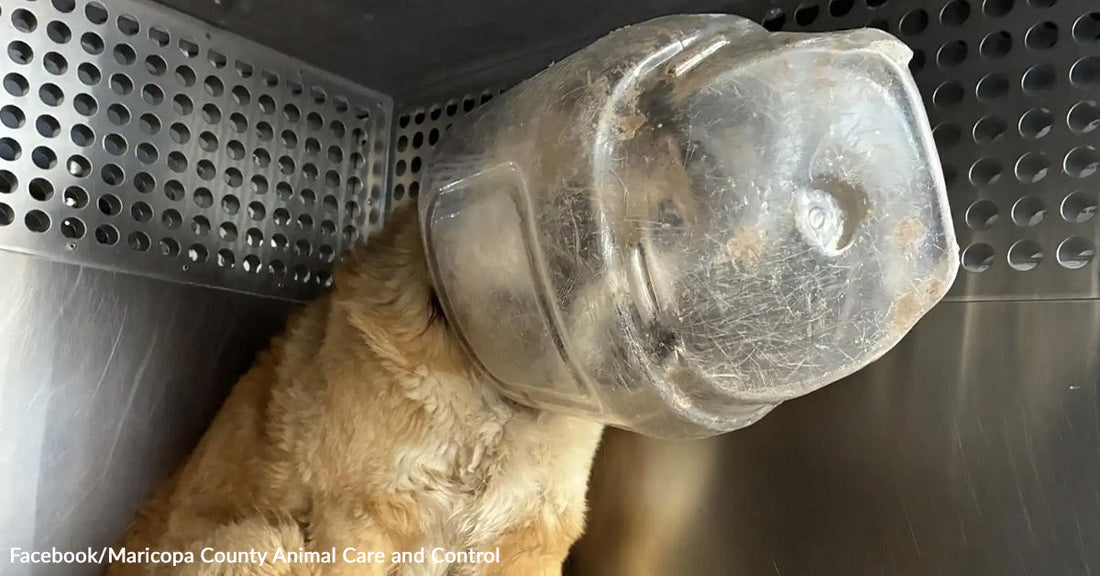
Some rescue stories begin with a quiet discovery. Others start in a frantic sprint, the kind where every second could change an animal’s fate. The story of Jones, a stray dog freed from a plastic jug who immediately asked for a hug from his rescuers, belongs firmly in the second category. It is an uplifting reminder of how resilient dogs can be, and how a single act of compassion can turn a desperate moment into a life-changing one. For anyone who cares about dog rescue stories or pet safety, this is a story that stays with you.
In Maricopa County, Arizona, Animal Care and Control Officer Davis was out in the field when she spotted a worrying sight. A dog was moving through the area with his head completely trapped inside what looked like a plastic jug. The container obscured his vision and limited his ability to sense his surroundings. It also put him at serious risk of overheating. Even though the jug had a small hole in the top, it was far from safe for a dog navigating the Arizona heat.

Davis later shared that her first and only priority in that moment was simple: get the jug off the dog as quickly and safely as possible. As she approached, she realized the dog was not alone. He was hanging out with another dog, a companion who bolted the moment a human came too close. The dog with the jug did the same, taking off at speed despite his limited visibility.
What followed was a careful, exhausting chase. Davis sprinted after the jug-headed dog, all the while monitoring his condition. She recognized that every stride added to his risk of overheating. To balance urgency with safety, she deliberately paused at intervals, letting him rest and cool down before continuing. The situation was tricky, and there was no guarantee how it would end. The dog did not understand she was there to help, and fear kept pushing him further.

After roughly half an hour of following, running, and waiting, Davis finally caught a break when the dog ran into a backyard. The enclosed space reduced his options and, working methodically, she managed to get a leash on him. From there she was able to guide him into her truck. She described feeling deeply relieved at that moment, but the hardest part was still ahead. The jug was lodged too tightly to remove in the field, and she did not want to risk hurting him by forcing it.
Davis transported the dog to the Maricopa County shelter, where veterinarian Dr. Samantha Thurman, the facility’s chief animal medical officer, and her team were ready. Their goal was to remove the jug as gently and safely as possible. They began to slowly and carefully manipulate the plastic, working it over the dog’s head bit by bit. Every move had to be controlled, since one wrong tug could cause pain or panic. According to Dr. Thurman, they focused on patient, gradual progress rather than speed.
The team captured the jug removal on camera, turning a tense procedure into a remarkable visual record of rescue work. When the plastic finally slid free, the moment could easily have gone in a different direction. Many animals in distress react with fear, and the team briefly stepped back, prepared for the possibility of a defensive bite. Instead, the newly freed dog did something that surprised and moved everyone watching.
Rather than snapping or pulling away, the dog walked straight toward one of the veterinary technicians, climbed gently into their lap, and simply leaned in. It was as if he were saying, without words, “Thank you for taking this off my head.” The transformation from trapped and frightened stray to affectionate, trusting companion happened within seconds. That quiet hug, caught on camera, became the emotional heart of the entire story.
Only after the jug was off could the team fully examine what had caused the problem. It turned out that the “jug” was actually the plastic top of a self-feeding dog food dispenser. According to Dr. Thurman, the dog had likely removed the top, then stuck his head into the opening where food would normally be poured in. The narrow outlet, where the kibble would dispense into the bowl, trapped him when he tried to pull back out.
This discovery created an important teaching moment. As Dr. Thurman pointed out, dogs are naturally curious and often mischievous. They can get their heads stuck in almost anything, especially containers that once smelled like food. Items such as feeders, jars, and food dispensers may not look dangerous at first glance, but for a hungry or inquisitive animal they can become serious hazards. Keeping these objects securely stored and out of reach helps prevent incidents like Jones’s ordeal.
The dog was given a new name at the shelter: Jones. With the jug gone and his immediate medical needs addressed, the focus shifted from emergency rescue to long-term care and adoption. Jones was used to surviving on the street, so learning how to live in a home is a big transition. The shelter staff recognize this and are searching for a special family who can offer patience, structure, and gentle guidance as he adjusts to a very different life.
Jones is currently available for adoption through Maricopa County Animal Care and Control. The organization does allow out-of-state adoptions as long as potential adopters can arrange transportation themselves. That flexibility opens the door for people from other regions who feel a connection to his story and believe they can provide the safe, loving environment he deserves.
Officer Davis expressed a heartfelt wish that Jones find a truly good home, one where his affectionate nature can shine without the shadow of survival stress. After chasing him across yards and streets, getting him safely into the truck, and delivering him into the hands of the veterinary team, she has seen firsthand the resilience behind his wary exterior. Her hope is that someone sees in Jones what she and the shelter staff do: a sweet dog who, when given a chance, chooses trust and gratitude.
I found it especially striking that at the very moment he could have lashed out, Jones chose to ask for comfort instead. It highlights a truth that many people who work in animal care already know. Even when animals have every reason to be afraid, they often respond to kindness with remarkable openness. That quiet hug in the vet’s lap reflects the power of safety and relief to transform fear into connection.
Stories like Jones’s do more than warm hearts. They offer practical reminders about how to keep pets safe and show the real impact of local animal control teams and shelter staff. From the first sighting of a dog with a plastic jug on his head to the moment he leaned into a human for a hug, each person involved played a role in changing the course of his life. For Jones, that journey is still unfolding, and somewhere a future adopter may be getting ready to meet the dog who once ran scared through a neighborhood and ended his rescue with a grateful embrace.