
Allegedly Dragged Through NYC Streets by Their Owner, Two Resilient Dogs Recover and Begin Searching for Love
Guest Contributor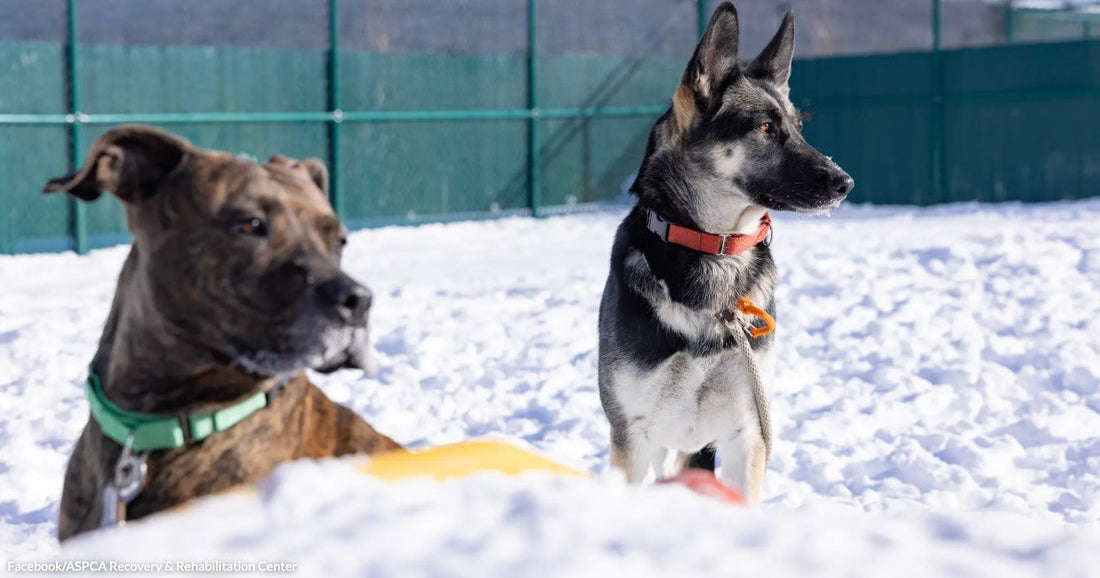
Stories about animal cruelty are always difficult to read, yet there is a particular power in stories where survivors find safety and healing. The recent case of two dogs dragged behind a car on a New York City street is one of those wrenching yet ultimately hopeful accounts. It captures the worst and the best of what humans are capable of, from an alleged act of shocking abuse to the determined care that followed at the ASPCA Recovery & Rehabilitation Center. For anyone following animal rescue news or searching for adoptable dogs in NYC, the journey of Marzipan and Nougat shows how far compassion and expert treatment can go.
According to reporting on the incident, the two dogs were seen in Long Island City tied to the back of a red Volkswagen Passat by their leashes. Witness video showed them struggling to keep up as the car moved toward an intersection near 11th Street and 43rd Avenue on January 4. A witness, horrified by what they were seeing, contacted the NYPD. Officers soon arrested the 68-year-old driver, identified as Dan Bujor, and the dogs were taken into protective care.

Authorities in Queens charged Bujor with overdriving, torturing and injuring animals, failure to provide sustenance, and driving by an unlicensed operator. Queens District Attorney Melinda Katz’s office reported that he has pleaded not guilty and could face up to one year in jail if convicted. As the legal process moves forward, the focus for many animal advocates has been on the physical and emotional recovery of the two dogs who survived the encounter.
Those dogs are Marzipan and Nougat, nicknamed Marley and Miss Noogie by their caregivers. Both were transported to the ASPCA’s Recovery & Rehabilitation Center in Pawling, about an hour and a half north of New York City. This facility, which opened in late 2025, was created to expand the ASPCA’s capacity to treat dogs brought in through NYPD cases. It specializes in animals who need more intensive medical or behavioral support after difficult or traumatic experiences.

Facebook/ASPCA Recovery & Rehabilitation Center
Marley, a German shepherd, arrived at the center with both physical injuries and pronounced fear. The ASPCA reports that she suffered a ruptured eardrum during the ordeal. Behaviorally, she was described as “extremely fearful.” Staff observed her cowering at the back of her kennel and avoiding interaction with people. Her reaction highlights something animal professionals know well: physical wounds may heal relatively quickly, but emotional ones can linger long after the body recovers.
To help Marley rebuild trust, the ASPCA used a combination of specialized behavioral techniques. One approach involved “helper dogs” who were more confident and comfortable around people. These dogs served as role models, showing Marley that interaction with humans could be safe and even rewarding. Another technique was touch training, designed to help fearful dogs gradually acclimate to gentle handling and positive contact. Over time, Marley began to open up, shifting from a posture of avoidance to one of cautious curiosity.
The change in her reported behavior is significant. Although she is still shy, caregivers say Marley now enjoys showing off a goofy side of her personality. She has learned new tricks, discovered the fun of chasing balls, and started to relish time spent running outdoors. For anyone familiar with rescue dogs, this progression from withdrawn to playful often marks a turning point. It suggests the dog is no longer focused only on survival, but is beginning to feel safe enough to explore and enjoy life again.
Miss Noogie, a large mixed-breed dog, arrived with a different set of medical challenges. Veterinarians documented abrasions on her paw pads behind her wrists and inflammation between her toes, consistent with the kind of friction and strain that might occur if a dog is forced to move over pavement while tethered. She also experienced diarrhea when she first came into care, a reminder that stress and trauma can manifest in multiple physical ways.
Despite these injuries, Miss Noogie’s personality is described as big-hearted and adventurous. After her initial treatment, she transitioned to a foster home where she has reportedly been thriving for several months. In that more relaxed environment, she has had the chance to recover and let her natural temperament show through. Caregivers say she is searching for a home with someone who shares her appreciation for both snacks and naps, a relatable combination that many dog adopters might recognize in their own routines.
What stands out about both Marley and Miss Noogie is how they have traveled from a public act of cruelty to a private space of care, and now toward a new life. Their story demonstrates why recovery and rehabilitation centers are so important within the broader world of animal rescue. When a cruelty case makes the news, attention often focuses on the graphic footage or the legal charges. Yet the quieter work that happens afterward, in kennels, clinics, and foster homes, is where long-term change actually occurs for the animals involved.
From an adoption perspective, these dogs represent both resilience and responsibility. They have endured experiences that most pets never should, and they have made clear progress with the support of professionals and foster caregivers. At the same time, any future adopter will need to understand that a history of trauma can mean ongoing sensitivity, especially in new or overwhelming environments. Patience, routine, and a willingness to follow guidance from the ASPCA or other behavior specialists will be essential to helping them continue to thrive.
The case also reflects the value of bystanders who choose to act. Without the witness who saw the dogs tied to the moving car and contacted the NYPD, the outcome could have been far worse. Their decision to speak up initiated the chain of events that brought Marley and Miss Noogie into safety and, ultimately, into the care that made their healing possible. For communities concerned about animal welfare, this serves as a reminder that quick reporting can save lives, whether the situation involves neglect, visible injury, or apparent cruelty.
Today, both Marley and Miss Noogie are described as ready for adoption, a phrase that carries a lot of weight given where they started. They are no longer just “the dogs dragged behind a car” on a New York City street. They are individuals with distinct personalities, needs, and preferences, looking for people who will see them as more than victims of a past event. Potential adopters who meet them through the ASPCA will be encountering dogs who have already overcome significant obstacles with the help of a network of rescuers, medical staff, and foster families.
The painful beginning of this story should not be forgotten, but it does not have to define the end. Marley’s shy goofiness and Miss Noogie’s love for snacks and naps are small but meaningful victories over what they survived. Their recoveries underscore how vital it is to support local shelters, humane law enforcement, foster networks, and rehabilitation centers that step in when animals are harmed. For anyone considering opening their home to a rescue dog, Marley and Miss Noogie offer a powerful example of what can happen when animals are given a second chance and the steady care they deserve. Read more at https://nypost.com