
💜 Thanksgiving Food Drive for Shelter Pets Help Us Feed 1 Million Shelter Pets!
Could Edible Packaging Help Solve the World’s Plastic Problem?
Guest Contributor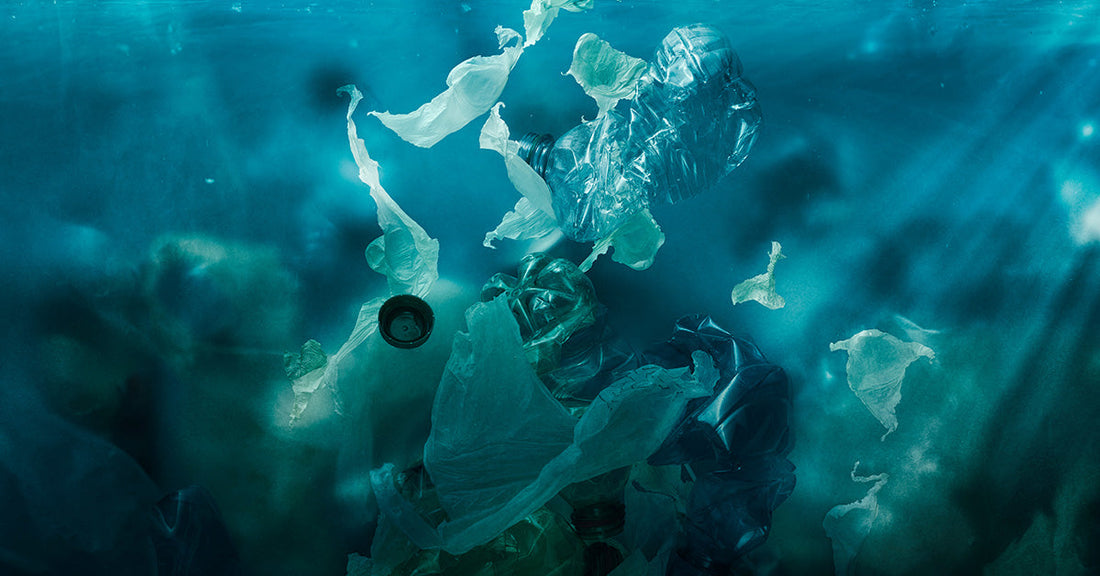
The tiny hamlet of Nobottle in Northamptonshire might not seem like a likely setting for a packaging revolution, yet it recently became a quiet stage for one. On a village driveway opposite the green, residents were invited to try Innocent ginger shots served not in plastic bottles, but in edible seaweed pods. The trial, created with sustainable packaging company Notpla, brought a global question into sharp local focus: could edible packaging help solve the world’s plastic problem?
Global packaging waste is projected to reach 434.5 million tonnes by 2025 and 525 million tonnes by 2030. Plastic packaging sits right at the center of this challenge. Between 2000 and 2019, plastic waste volumes doubled, and packaging accounts for about 40% of that total. Despite plastic’s ubiquity, it remains one of the least recycled materials, with an estimated global recycling rate of 27.9% in 2024. In the UK, plastic packaging recycling has edged upward, from 51.4% in 2022 to 52.5% in 2023, but the gap between what is produced and what is recovered is still enormous.

Against this backdrop, the emerging market for edible packaging looks both small and potentially significant. The global edible packaging market is valued at about $1.04 billion in 2024 and forecast to grow to $1.84 billion by 2033, supported in part by growing consumer concern about plastic pollution and a desire for sustainable packaging solutions. At Nobottle, roughly half of the 30 or so residents sampled the seaweed-encased ginger shots. Feedback was largely positive. One resident, Steve Anderson, noted that while some people found the ginger flavor itself too strong, reactions to the pods were “very palatable”, suggesting that taste and texture may not be the main barriers.
Instead, the hurdles identified by market research are more practical. Edible packaging can be sensitive to fluctuating environmental conditions and often requires special handling in storage and shipping. Reports also indicate that some customers are hesitant to embrace edible utensils and containers. These concerns limit widespread adoption and raise questions about how far edible cups, films, and pods can scale beyond novelty or niche uses.
The trial with seaweed pods is part of a broader wave of experimentation. Notpla has already delivered edible drink pods for events such as the London Marathon and is exploring seaweed-based solutions that replace plastic film in cardboard packaging, encase small amounts of olive oil, and even form edible spoons for ice cream parlours in London. Co-founder Rodrigo García González highlights seaweed’s advantages. It grows quickly, with some species reportedly extending up to 60 centimeters per day, does not compete with crops on land, and biodegrades faster than a leaf. He also points out that seaweed is already harvested at substantial scale, around 40 million tonnes annually, and is used in everyday products from toothpaste to ice cream.
Yet researchers caution that the scale of global plastic use is staggering. Professor James Elliott at the University of Cambridge, who works on alternatives to plastic packaging, notes that around 30 to 40% of all plastics worldwide are used for packaging. In the UK alone, 2 million tonnes of plastic are used each year. Substituting a significant share of that with seaweed-based materials would require major shifts in how and where seaweed is farmed and processed. Elliott also underscores the financial obstacle. Traditional plastic packaging represents a $265 billion market, while edible packaging remains around $1 billion, and manufacturers are often reluctant to pay more for biodegradable or edible options.

Cost and consistency are recurring themes. Innocent Drinks’ packaging lead, Andrew Wallis, says surveys suggest that 78% of consumers would consider buying ginger shots wrapped in seaweed, and the company is already exploring whether seaweed wrappers could replace plastic on paper straws in its children’s range. Even so, questions remain about who pays the premium for such innovations. Elliott frames it simply. If a ginger shot is already seen as a premium product, customers may accept a small price increase for edible pods. For a more everyday item like a cabbage wrapped in film, it is less clear whether shoppers would agree to pay double for an edible or compostable wrap.
Other innovators are taking slightly different paths. Xampla has developed an edible film made from pea protein, even wrapping stock cubes in it. Elliott is also working on non-edible but fully compostable films made from cellulose, created from waste plant material. One advantage of these materials is that they can be produced at scale using biochemical processes, without relying on a single crop or harvesting method. These efforts point to a broader trend toward plant-based, biodegradable films intended to behave like plastic but leave a lighter footprint.
Then there is Cupffee, which has focused on making an edible cup that behaves like a conventional one. Co-founder and sustainability expert Lubomila Jordanova explains that their cup is neither bread nor wafer. It must handle coffee at about 85C, resist leaking, and remain firm while being held. Cupffee now produces millions of cups, protected by patents in numerous European countries, but achieving reliable consistency required heavy investment in automation, quality control, and custom machinery. Customers expect every edible cup to look and feel almost identical to paper or plastic versions, and meeting that expectation has been one of the hardest challenges.
Beneath the technical innovations lies a deeper debate around consumption habits. Environmental campaigners argue that better packaging alone cannot resolve the plastic waste crisis. They say the real solution lies in moving away from a throwaway culture and reducing reliance on single-use items altogether. Sian Sutherland, co-founder of campaign group A Plastic Planet, views edible packaging as valuable for shifting perceptions. She notes that if a material is safe enough to eat, it becomes powerful evidence that plastic-free materials can be safe and able to break down harmlessly. At the same time, she remains sceptical about edible packaging as a long-term, universal solution. Packaging is meant to shield contents from contamination throughout shipping, stacking, and shelving. For many people, the idea of eating something that has been handled along that journey may always feel uncomfortable.
What emerges from these experiments in Nobottle, London, and beyond is a picture of promising but partial answers. Seaweed pods, edible cups, pea protein films, and cellulose-based wraps show that the world of packaging can be reimagined. They can reduce reliance on conventional plastics, spark consumer curiosity, and prove that alternatives are both possible and practical in specific contexts. Yet they also highlight cost hurdles, scaling challenges, and the reality that materials alone will not fix a culture built on disposability.
For individuals, these innovations may serve as a prompt to think differently about both packaging and what is inside it. The Nobottle trial did not just replace a bottle, it encouraged residents to literally consume the container along with the product. Whether edible packaging becomes a common feature of supermarket shelves or remains mostly in niche uses, it is likely to continue playing a role as one of several strategies to reduce plastic pollution. The broader shift, as campaigners emphasize, will depend on redesigning systems to favor reuse, reduction, and long-term thinking over single-use convenience.
For anyone inspired by the story of those seaweed-encased ginger shots, the drink itself is straightforward to recreate at home. Chop 60 grams of unpeeled ginger and blend it with 400 millilitres of apple juice and the juice of half a lemon. Strain it through a very fine sieve, pressing the pulp with the back of a spoon, and store the resulting shot in the fridge for up to four days. The cup might not be edible yet, but the conversation about what holds our drinks, foods, and everyday products is clearly changing, one experiment and one village driveway at a time.