
Endangered Bobcat Gets Trapped Inside Chicken Coop Until Animal Control Officer Comes to Its Rescue
Guest Contributor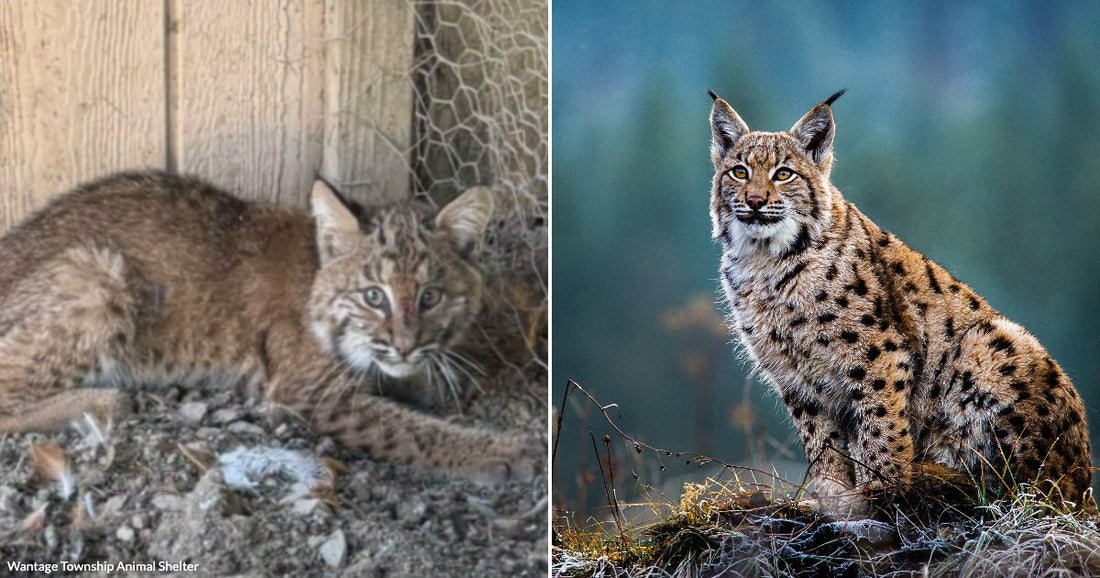
In a calm corner of Sussex County, New Jersey, a brief and unexpected encounter between people and wildlife turned into a quiet success story for animal welfare. A bobcat safely removed from a chicken coop in Frankford Township highlighted both the presence of this elusive endangered species and the careful coordination that can happen when residents, local authorities and wildlife experts work together. The situation could easily have ended badly for the animal, yet instead it became an example of how thoughtful response can protect both domestic animals and native wildlife.
According to the Wantage Township Animal Shelter, New Jersey State Police were the first to respond after a bobcat became trapped inside a chicken coop at a residence in Frankford Township. Recognizing that this was not a typical call about a stray dog or a neighborhood nuisance, state police brought in Wantage Township Animal Control, which provides animal control services to Frankford through a shared services agreement. The cooperation between agencies meant that the right people with the right training were quickly on the scene.

When animal control officers arrived, they found a bobcat that appeared healthy and uninjured, yet clearly distressed and confused by its surroundings. The animal had managed to get into the coop but could not find its way out. It was an unusual and stressful environment for a wild predator that is more often heard about than seen, even in rural stretches of New Jersey. Bobcats are adept hunters in forests and fields, not structures built for poultry, and the animal’s inability to navigate out of the enclosure showed how easily wild creatures can become disoriented in human-made spaces.
Animal Control Officer Monastra took the lead in addressing the situation. According to the shelter, the officer used a net to safely contain the bobcat while keeping appropriate distance and control. This method allowed the animal to be secured without causing injury to itself or to the officer. Once it was safely restrained, the bobcat was released right outside the chicken coop, where it was free to return to its natural environment. That brief intervention, carried out with care and training, was enough to redirect the animal back to its proper habitat without resorting to harmful measures.

Wantage Township Animal Shelter
The calm resolution of the incident invites a closer look at why a bobcat in a chicken coop matters beyond one backyard in Frankford Township. Bobcats are native to New Jersey and are listed as an endangered species within the state. Their presence signals a functioning ecosystem, but it also brings responsibilities for the people who share that landscape. An encounter like this illustrates the delicate balance between human activity and the needs of native species that are trying to survive in increasingly complex environments.
The Wantage Township Animal Shelter emphasized that residents who encounter a deceased, injured or orphaned bobcat are encouraged to contact New Jersey Fish & Game. That advice rests on a simple idea. Bobcats, as an endangered species in New Jersey, are not animals that should be handled informally or relocated by untrained individuals. Wildlife authorities and trained animal control officers understand both the legal protections and the biological needs of these animals. They are better equipped to evaluate whether a bobcat is simply passing through, is in distress or presents a genuine safety concern.
Wantage Township Animal Control has experience with these kinds of situations. The shelter notes that the agency has worked in the past with state bobcat biologists and with Last Resort Rescue on cases involving injured and orphaned bobcats in the area. That collaboration adds an important layer of expertise. Biologists contribute scientific understanding of bobcat behavior, habitat use and health, while rescue organizations may assist with rehabilitation or specialized care when needed. Together, they form a support network that can respond effectively when a wild cat shows up in a place it does not belong.
There is a broader message in the shelter’s guidance for local residents. People who encounter wildlife that appears injured, orphaned, trapped or in distress are advised to contact their local animal control agency for direction. That recommendation goes beyond bobcats. It suggests a general rule of thumb for coexistence with wildlife. Instead of approaching, feeding or attempting to “rescue” an animal without training, residents can lean on local professionals who are prepared to assess the situation and respond in ways that are safe and humane.
The story of the bobcat in the Frankford Township chicken coop also reflects changing patterns in how communities view and handle wildlife. In many places, wild animals that came into contact with people were once routinely removed through lethal methods or seen primarily as threats. In this case, the response focused on humane capture and release, coupled with an awareness that the bobcat is part of New Jersey’s natural heritage. The outcome respected the safety of the chickens and the well-being of the bobcat at the same time.
I found it striking that such a brief incident captured so many elements of modern wildlife management. There is the practical side: coordination among state police, municipal animal control and specialized rescue groups. There is the legal and conservation side: recognizing the bobcat’s endangered status in New Jersey and turning to state wildlife agencies when more complex cases arise. There is also the everyday human side: a homeowner experiencing an unexpected visitor in a backyard coop and relying on professionals to guide the response.
For people in Sussex County and similar rural or semi-rural areas, the takeaway is straightforward. Encounters with wildlife, whether a bobcat, a fox, or another native species, are becoming more common as habitats overlap with residential spaces. When those encounters involve animals that seem trapped or vulnerable, the safest and most responsible option is to call local animal control or the appropriate wildlife agency. The episode in Frankford Township shows that with the right help, even a tense moment involving an elusive endangered predator can end with the animal safely returning to the wild and the community better informed about how to share the landscape with native species.