
Bruce Willis’ Wife Says He Is Still “Very Present” Despite His Frontotemporal Dementia
Guest Contributor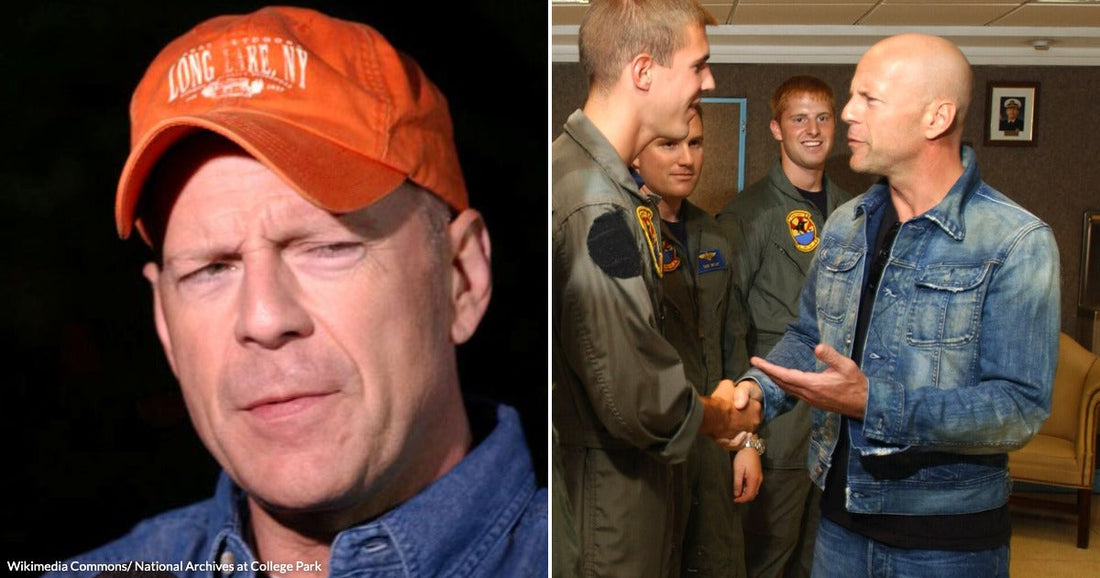
Bruce Willis’ family has spent the past few years navigating a remarkably public journey with a very private illness. As his wife Emma Heming Willis continues to speak about his frontotemporal dementia diagnosis, she is also quietly reshaping how many people think about dementia, caregiving, and what it means to stay “present” through profound change. For anyone following Bruce Willis’ dementia battle, her latest reflections offer a more nuanced and compassionate picture of life with this condition.
In a new conversation previewed by Entertainment Weekly, tied to her interview on the MS NOW talk series Because We Care with Richard Lui, Emma Heming Willis shared that Bruce is “very present.” She spoke of “so many beautiful moments of joy and connection” that still exist in their home. Rather than denying the harsh realities of dementia, she acknowledged the difficulty while insisting that it is possible to hold both truths at once. It is a terrible disease, yet it can still come with unexpected, meaningful moments that do not look like anyone’s “norm,” and she believes that is okay.

Heming Willis has become increasingly determined to challenge the more one-dimensional and frightening narratives that often surround dementia. She pointed out that when people avoid talking about dementia or push it to the margins, it can make both the person living with the disease and their caregiver feel unseen and unsupported. The silence itself becomes another burden to carry. By describing the emotional texture of their days, from the hard parts to the joyful ones, she is inviting others to consider that there is more to these diagnoses than decline and loss.
Her words come against the backdrop of Bruce Willis’ evolving health story. In March 2022, his family shared that he had been diagnosed with aphasia, a disorder that affects communication and language. Nearly a year later, in February 2023, they revealed that his condition had progressed to frontotemporal dementia, often shortened to FTD. This group of brain diseases affects the frontal and temporal lobes of the brain, regions that play central roles in personality, behavior, and language.

Wikimedia Commons/U.S. Navy
For fans who had watched Bruce Willis across decades of films, from action franchises to more intimate dramas, the news was difficult. Yet from the outset, his blended family, including ex-wife Demi Moore and their adult daughters, approached the diagnosis in a united and transparent way. Heming Willis and Willis, who married in 2009, share two daughters, Mabel and Evelyn. Bruce Willis is also father to three older daughters, Rumer, Scout, and Tallulah, with Moore. Together, this extended family has consistently emphasized solidarity, care, and respect for Bruce’s dignity.
Over time, Emma Heming Willis has stepped into a more public role as an advocate and educator around frontotemporal dementia. In June, she appeared on the “Bossticks” podcast and addressed what she called a common misconception about the disease. Many people automatically equate dementia with memory loss, likely because conditions such as Alzheimer’s disease are so widely recognized. Heming Willis clarified that FTD is different. It targets specific parts of the brain that are responsible for executive decision making, everyday functioning, and language. Memory is impacted by a different brain region, which is why, in Bruce’s case, his diagnosis does not primarily affect whether he remembers loved ones.
On the podcast, she noted that there are three main variants of frontotemporal dementia. One, like the type Bruce Willis has, affects language. Another variant more strongly affects behavior, and a third can impact movement. By breaking this down in clear, straightforward language, she offered a concise primer on a condition that many people have heard of but do not fully understand. FTD, she emphasized, is not a single, uniform experience. Instead, it describes a group of related disorders that can look different from person to person.
When asked directly if Willis’ diagnosis affects his memory, Heming Willis answered “No, it doesn’t,” and then elaborated. That kind of specificity is rare in celebrity coverage, which often focuses more on headlines than on explaining the science. She stressed that because Bruce Willis has frontotemporal dementia rather than Alzheimer’s, many assumptions people make about what he can or cannot recall are simply incorrect. I found this detail striking because it highlights how gaps in public awareness can add emotional weight to families who are already coping with a major life change. Clarifying these differences may help reduce confusion and fear for others who are newly confronting similar diagnoses.
In another appearance, on the “Conversations With Cam” podcast in January, Heming Willis addressed a less familiar concept known as anosognosia. She explained that this neurological condition can occur with FTD and other types of dementia. Anosognosia describes a state in which the brain is unable to recognize what is happening to it. To outside observers, it can look like denial. A person may insist they are fine and resist seeking medical help, which can frustrate family members or caregivers who see clear changes.
Heming Willis emphasized that this is not simply a matter of stubbornness or refusal to face the truth. Instead, it is part of the disease itself. When awareness of one’s condition is impaired, the person may genuinely perceive their experience as normal. By framing it in these terms, she offered reassurance to caregivers who might otherwise blame themselves or their loved one for not “accepting” what is going on. This reframing can be especially important in families struggling to bridge the gap between visible symptoms and the person’s own perception.
Throughout these conversations, she returns to the importance of adaptation. She has said that she and the family have “learned to adapt and show up for Bruce.” Those few words carry an entire philosophy of caregiving: meeting a person where they are, adjusting expectations, and finding new ways to connect. It is not about pretending that everything is the same as it once was. It is about recognizing that connection can take different forms and that value still exists in each shared moment, even in a shifting landscape.
For many readers, the most powerful aspect of Emma Heming Willis’ approach may be her refusal to flatten the narrative into simple tragedy. She does not minimize the hardships, nor does she hide from words like “terrible” when she describes the disease. At the same time, she insists that this is not the whole story. There are still jokes, small rituals, and quiet joys. There are days that feel heavy and others that bring relief. There is grief for what has changed, and there is gratitude for what remains.
By sharing Bruce Willis’ journey with frontotemporal dementia publicly, the family is not only updating fans but also contributing to a broader cultural conversation about how society understands dementia, memory, and caregiving. For people who may be at the beginning of their own caregiving path, seeing a high-profile family talk openly about adapting, learning, and seeking support can be profoundly validating. It suggests that even when life takes an unanticipated turn, there are still ways to move forward with honesty, compassion, and presence.