
Severely Injured Dog Shocks Rescuers With Incredible Recovery
Guest Contributor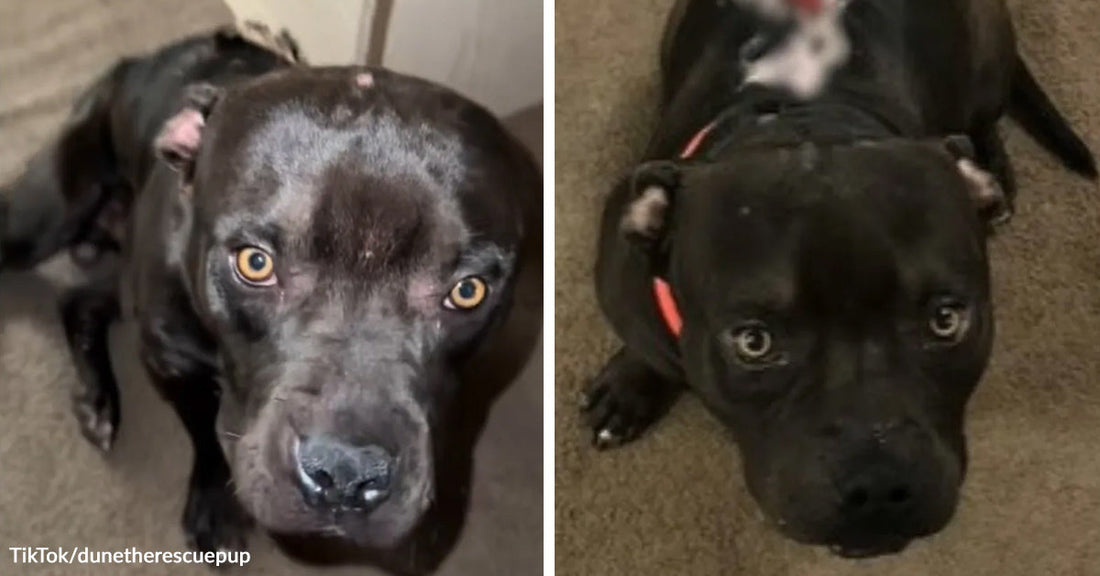
The viral TikTok video of a severely injured black pit bull named Dune has stunned millions of viewers and sparked renewed conversations about animal cruelty and second chances. In the footage, which has amassed 8.4 million views, Dune is first shown with horrific wounds across his back, with skin peeling away and no fur in sight. Later clips reveal his remarkable transformation as his injuries heal and he settles into a new life with a person who refused to walk away. For many who encounter the video, it is both heartbreaking and hopeful, capturing the worst of what animals can endure and the best of what compassionate humans can offer.
Dune’s story began on an ordinary day in June as his future owner was on his way to trucking school. Along the route, he came across the injured dog, whose back bore the unmistakable signs of extreme trauma. According to what he later told Newsweek, no one nearby was able to take responsibility for the dog. Faced with the choice of leaving Dune where he lay or stepping in, he decided to act. On his lunch break, he brought the dog home, offered food, and gently gave him a bath. That simple decision altered the course of Dune’s life.

Since that first day, the new owner reports that he has cared for Dune’s wounds, making sure they remained clean and tended. He focused on feeding him regularly and giving him consistent attention and affection. Over time, the dog’s back began to heal. The viral clip that follows Dune’s journey shows that while the skin has significantly improved, the fur on his back has not yet grown back. Visually, the scars are still stark, yet they stand as evidence of survival and recovery. The owner explains that with this steady routine of care and what he calls TLC, Dune has now “pretty much made a full recovery.”
The emotional power of the healing process is what has made the TikTok video so resonant. Viewers see the contrast between the early footage, with raw, exposed wounds, and the later images of a dog whose body has knit itself back together. His posture and demeanor have shifted too. Although he remains timid at times, particularly when going outside, his new home has become a place of safety. The owner shares that Dune loves his new environment and that the feeling is mutual. In that relationship, many viewers recognize a familiar pattern: animals who have suffered often cling strongly to the people who finally show them kindness.
The internet’s reactions to Dune’s trauma and recovery reflect a mix of sorrow, anger, and empathy. The video has gathered about 1 million likes and more than 13,000 comments. Many remark that they can hardly bear to look at his initial injuries because they feel as if they can sense his pain. Others focus on the cruelty that must have preceded the discovery. One commenter asks what kind of evil could be responsible for such suffering, a sentiment that has drawn tens of thousands of likes from those who share the same disbelief and outrage.
Yet amid that pain, viewers notice something quietly hopeful. Several commenters observe that even in the clips showing his worst condition, Dune’s tail is still wagging. That small detail has touched many people, who see it as a sign of the dog’s underlying spirit and willingness to trust. I found this detail striking because it captures how animals can cling to the possibility of safety even when they have every reason to be afraid. It also helps explain why videos like this resonate so widely. They reveal both the depths of harm and the resilience of a living being determined to keep going.
Dune’s case does not exist in isolation. It sits within a larger context of animal cruelty and neglect that advocates and professionals confront every day. The article notes that intentional cruelty can take many forms, including animal fighting, physical abuse such as beating or burning, poisoning, and even using harm to animals as a way to control or intimidate humans. These acts highlight how violence often crosses species lines and how vulnerable animals can be in households or communities where abuse is present.
The statistics behind these issues are sobering. In the United States, an estimated 10 million animals die each year as a result of abuse or cruelty, according to Shelter Animals Count. This figure underscores that, while stories like Dune’s occasionally break through as viral content, many other animals suffer out of sight. Even with that scale of harm, there have been legal shifts. Most states now have felony-level animal cruelty laws, which indicates that society is increasingly recognizing severe cruelty as a serious offense. However, there are still significant exemptions for certain activities, including research, euthanasia practices, farming, hunting, pest control, and rodeos. These carve-outs highlight ongoing debates over how to balance animal welfare with longstanding human practices.
In addition to overt cruelty, animal neglect remains a broad and complex category. The National District Attorneys Association describes neglect as a failure to meet basic needs, including instances such as abandonment, lack of adequate food or shelter, medical neglect, hoarding situations, and operations like puppy mills. While every state prohibits neglect, cases are not always straightforward to detect or prosecute. Large-scale situations, for example, may involve substantial financial costs to seize and care for animals. They also require detailed investigations that pull together circumstantial and forensic evidence, and that can generate intense reactions within local communities.
Prosecutors and investigators often need specialized training and resources to pursue these cases properly. Handling animal cruelty and neglect involves more than just documenting visible injuries. It can require veterinary expertise, careful documentation, and an understanding of how to represent animals’ suffering in legal terms. This complexity helps explain why many incidents never reach a courtroom, even when onlookers and advocates feel that justice is clearly needed. Dune’s story therefore highlights not just one dog’s suffering, but also the reality that many similar cases rely on individual bystanders willing to intervene when systems fall short or move too slowly.
There is another important layer to Dune’s journey, involving how animals process trauma and learn to live again. The article points out that dogs can remember past trauma. Their fearfulness, sensitivity to certain triggers, or hesitancy in new environments can persist long after physical wounds close. At the same time, with patience, time, and consistent compassion, many dogs gradually rebuild their ability to trust and to form bonds with humans. Dune’s remaining timidity when stepping outside is a reminder that recovery is not instant or complete, even when a dog is physically safe. His wagging tail and affection for his new home suggest that emotional healing is underway, shaped by every gentle interaction and each day that passes without harm.
For viewers who encounter Dune through a short TikTok clip, his transformation can serve as a powerful prompt to reflect on their own roles in animal welfare. Sometimes that might mean supporting local shelters, reporting suspected abuse or neglect, or simply being attentive when an animal appears injured or abandoned. Other times, as in Dune’s case, it might involve one person making a split-second decision to take responsibility for a vulnerable life in front of them. While not everyone can take an animal home, many can still act as advocates, amplifying awareness of cruelty, sharing stories of rescue and rehabilitation, and standing behind efforts to strengthen protections for animals.
Dune’s story is difficult to watch at first and deeply moving by the end. His scarred back testifies both to the suffering he endured and to the care he eventually received. In the bond between this once-injured dog and the man who chose not to turn away, many people see a reminder that healing is possible even after severe harm. The viral video captures only a few moments from that journey, but it has already inspired millions to look more closely at the realities of animal cruelty and the quiet, everyday heroism of those who choose kindness when it matters most. Read more at Newsweek