
🚨Urgent: Missile Strikes Shelter in Ukraine! Rush Emergency Aid!
Golden Puppy Left Without A Name Trembles In Shelter Until Love Finds Him
Guest Contributor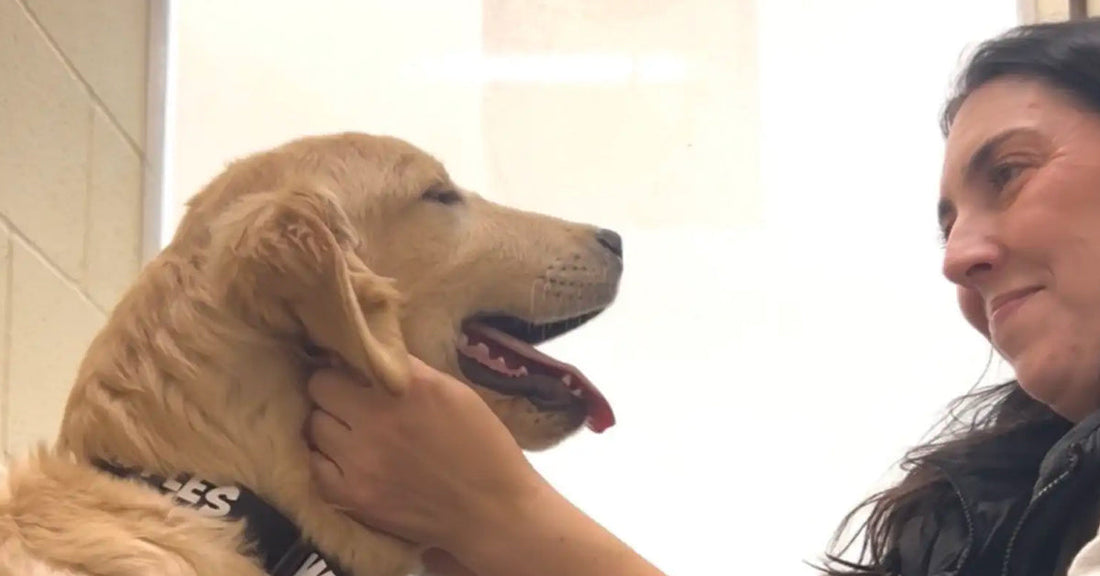
When a golden retriever puppy arrived at the Benton-Franklin Humane Society in Washington State, no one on staff knew his name, because he did not have one. The man who brought him in said only that he needed to “get rid of” the dog. He had owned the puppy for three days, had not chosen a name, and had not even provided a proper leash, using a rope clipped to a carabiner instead. The scene captured something quietly heartbreaking about shelter surrenders and also highlighted how a frightened shelter dog can find hope, comfort, and a new beginning. Stories like this one about a golden puppy surrendered without explanation remind readers that a “shelter dog” can be any dog at all, even a young golden retriever puppy.
Volunteers and staff at the Benton-Franklin Humane Society were taken aback by how casually the man described his decision. According to shelter volunteer Julie Saraceno, he simply stated that he had a dog he needed to give up, offering little more than that. When they asked for more information, he did not share details about the dog’s background, behavior, or needs. What did become clear was that he had not formed a bond with the puppy and did not appear particularly reluctant to leave him behind.

The staff estimated that the golden retriever was only about five months old. He was still very much a baby, caught at the age when many dogs are curious, energetic, and learning to navigate the world. With no name to call him by, Saraceno decided to give him one. She chose “Waffles,” inspired by his sunny, golden fur. That small act of naming gave the puppy an identity and a sense of recognition that he had not received in his brief time with his previous owner.
Waffles’ first moments at the humane society were filled with confusion and fear. Shelters tend to be loud environments, full of unfamiliar smells and sounds. For an adult dog, that can be disorienting. For a young puppy who has just been left by the only person he knows, the experience can feel overwhelming. Staff saw Waffles standing in his new kennel, trembling, eyes darting around as if searching for something familiar. His body language reflected how lost he felt in this unfamiliar place.
Saraceno later explained that the noise and constant activity at the shelter make it an especially intense environment for a new arrival. The chorus of barking, the metallic clink of kennel doors, and the presence of many people and animals at once can be intimidating. Waffles responded the way many anxious animals do. He shook, hesitated to move, and seemed unsure about everything around him.
To help ease his anxiety, the shelter staff gave Waffles a warm bath. That simple act made an immediate difference. According to Saraceno, he relaxed in the water in a way she had rarely seen. It was as if the bath provided a small oasis of calm amid the chaos of intake. She described him as unusually serene, soaking in the attention like a pup enjoying a spa day. The warmth, gentle handling, and one-on-one focus helped ground him when his world had just been completely upended.
After his bath, Waffles was moved to his kennel, where he now had clean bedding and a little space to himself. Even so, the shelter environment still posed a challenge. Recognizing that he needed more than just physical care, Saraceno sat quietly with him on the floor. This was not a training session or a formal assessment. It was simply time spent being present, allowing Waffles to adjust at his own pace and letting him know that someone was there.
Over the next thirty minutes, his shaking eased. Anxiety did not vanish all at once, but he began to explore his space, accept gentle affection, and finally curl up beside the person who was there with him. Eventually, he felt safe enough to close his eyes and fall asleep. That small shift, from trembling in a corner to napping in the presence of a trusted human, marked the beginning of his transition from abandoned puppy to cherished companion.
Golden retrievers are often known for their friendly demeanor and affectionate nature, and Waffles proved to be no exception. As he settled in, his sweet personality began to shine. His soft fur and gentle eyes caught the attention of visitors, and his calm, trusting behavior around people made an immediate impression. Adoption interest grew quickly once he became available. The fact that such a young, appealing dog ended up in a shelter surprised some people, but it also challenged assumptions about who ends up needing a second chance.
When Waffles was old enough and had been neutered, the humane society approved a new family for him. Staff and volunteers who had watched his journey from shaking in a kennel to snoozing peacefully in his run were thrilled to see him go home. They knew he was heading into a life where he would be appreciated, named with love, and seen as more than an inconvenience. It is a powerful contrast to his first experience, where he had been treated as a temporary responsibility and surrendered within days.
Stories like Waffles’ help shift how people think about local humane societies and animal shelters. Some individuals imagine that only older or “problem” animals end up there. In reality, shelters routinely care for puppies, purebred dogs, and deeply affectionate companions who simply landed in difficult circumstances. In this case, a purebred golden retriever puppy was turned in with minimal explanation, underscoring how unpredictable and complex people’s decisions about animals can be.
At the time of Waffles’ adoption, Saraceno noted that he was not the only puppy at the shelter. There were many other young dogs, each with their own story and potential. The hope among staff and volunteers was that attention on Waffles would encourage people to visit and meet the rest of the animals as well. A single golden puppy shaking in a shelter kennel may catch headlines, but behind that story are many other dogs, just as deserving of patient care and a stable home.
I found it striking that what helped Waffles most were simple acts of kindness: a warm bath, a calming presence on the kennel floor, a name chosen with affection. None of these could change his past, but together they helped reframe his future. They show how meaningful it can be to volunteer, adopt, or simply share stories that spotlight the lives unfolding in shelters every day. Waffles’ journey from nameless surrender to beloved family member is both specific and universal, a reminder that wherever you live, there may be a dog very much like him waiting at your local humane society for a chance to be seen, understood, and welcomed home.