
Lowe’s Workers Hear Tiny Cries From a Shelf High Above the Store and Discover Seven Kittens
Guest Contributor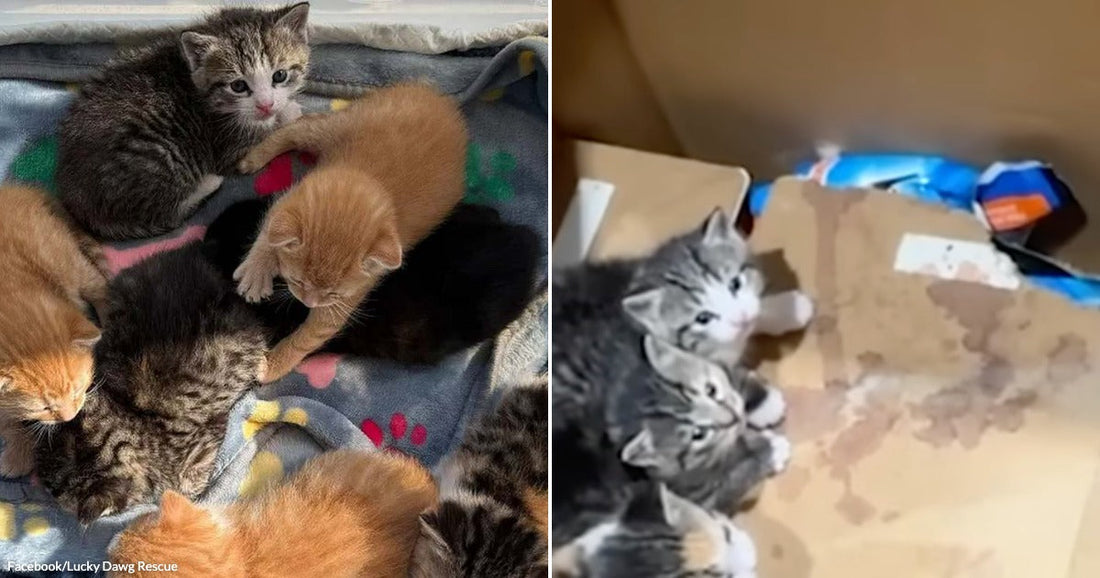
Shoppers at a Lowe’s in Downingtown, Pennsylvania, had no idea that high above the aisles, another set of tiny customers had quietly moved in. Perched on top of a pallet stored near the Garden Center, two litters of kittens were discovered by employees who were just going about their normal day. That chance discovery turned into a heartwarming rescue story and a reminder of how often stray animals find creative, hidden places to call home. For anyone interested in cat adoption or rescue stories, this tale of “hardware store kittens” is both surprising and uplifting.
According to the report, the discovery began with an ordinary task. Staff at the store went to retrieve a pallet that had been stored high on a shelf. As the forklift rose and the pallet neared ground level, the workers suddenly heard a chorus of frightened meows. At first they did not know what they were hearing. Only when they looked down at the pallet and the boxes it carried did they see several tiny faces staring back at them. Nestled on top of the boxes were seven kittens, grouped in two distinct clusters that turned out to be separate litters.

Realizing that they were not equipped to care for such young animals on their own, the employees quickly contacted Lucky Dawg Rescue, a local shelter that could help. The shelter’s Lisa Newton responded to the call and arrived with a cat carrier, unsure what she would find in the sprawling home improvement store. Staff directed her to the Garden Center area, which had apparently become an unofficial hangout for a couple of neighborhood cats.
Newton later explained to WPVI News that she was taken aback by the number of kittens involved. She was told there were seven in total, and that they were from two separate litters. That detail suggested that two different mother cats had chosen the same tucked-away space to give birth. The store team used the forklift once again to reach the high shelf where the animals had been living. When they got close, the evidence of life in this unlikely nursery was obvious. Newton reported that one of the litters appeared to have been born right on the pallet, a sign that at least one mother cat had seen this elevated perch as a safe place to deliver and hide her babies.
It is easy to imagine the strange, limited world these kittens knew during their first days. Their nest rested on rigid box tops at the edge of a long rectangular shelf, with a significant drop to the floor below. To them, the store’s Garden Center must have sounded like a distant, echoing universe filled with unfamiliar noises. They would have heard human voices drifting up in muffled conversation, carts rattling over concrete, forklifts humming past, and perhaps the rustle of plants and bags of soil being moved. Yet their immediate surroundings were confined to cardboard, timber, and metal, with their only real comfort coming from each other and their mothers.

Facebook/Lucky Dawg Rescue
The employees shared that two female stray cats had been hanging around the Garden Center for some time. The open-air structure, with its shelter, shade, and relative quiet outside the main store aisles, likely felt safer to them than the streets or parking lot. It is not unusual for outdoor or feral cats to seek out high, hard-to-reach places to protect newborns from predators, foot traffic, or vehicles. In this case, the top of a pallet on an elevated shelf in a home improvement store apparently offered exactly the kind of hidden nook these cats were looking for.
Once the kittens were secured, the plan for the adults came into focus. Newton has since heard that the two mother cats are still frequenting the Garden Center. Lucky Dawg Rescue now intends to return to the store to safely capture the adult cats for spaying. This step is important both for the health of the cats themselves and for preventing future litters from appearing in similarly precarious locations. Neutering community cats while returning them to safe, familiar territories is a common practice in humane animal management, and it benefits stores, neighbors, and the animals alike.

YouTube/6abc Philadelphia
The kittens, meanwhile, have already begun their journey from hidden shelf dwellers to beloved family pets. Lucky Dawg Rescue has provided them with care and, in a charming nod to their unusual birthplace, has given each kitten a name inspired by the store and its Garden Center surroundings. The kittens are called Forklift, Herb, Pallet, Planter, Grass, Lowe, and Rose. Each name reflects a small piece of their origin story, turning an industrial setting into something unexpectedly tender and memorable.
These names also help potential adopters connect with the story behind the animals. People often respond to adoption stories with a meaningful narrative, and this one is easy to picture: a group of tiny kittens discovered on a high shelf, rescued thanks to quick-thinking employees, and then ushered into safety with the help of a local shelter. For those browsing the shelter’s website, seeing names like Forklift or Planter offers a clue that there is a unique tale behind each feline face.
Lucky Dawg Rescue plans to list Forklift, Herb, Pallet, Planter, Grass, Lowe, and Rose for adoption on the organization’s website once they are ready to leave the shelter and join permanent homes. Kittens usually require time for veterinary checks, vaccinations, and socialization before they are fully prepared to be adopted. When they do become available, they are likely to draw interest from people who appreciate the charm of a good rescue story, whether they are seasoned cat owners or first-time adopters.
I found this detail striking: the rescue unfolded not in a quiet backyard or rural barn, but in the heart of a busy retail environment, with a forklift doubling as both work tool and rescue device. It underscores how often stray and community animals live alongside people in places that might not ordinarily be seen as animal habitats. Stores, parking structures, and garden centers can all become makeshift shelters when a cat needs somewhere to hide and raise a litter.
Stories like this one also illustrate the role of everyday workers in animal welfare. The Lowe’s employees did not ignore the sounds they heard or dismiss the kittens as someone else’s problem. Instead they made the effort to call a rescue group and remain involved until help arrived. Their decision transformed what could have been a dangerous situation for vulnerable animals into a positive outcome that will soon result in several cats finding safe, loving homes through adoption.
As word of the rescue spreads, it may encourage more people to stay alert to the presence of animals in unexpected places, especially in areas like garden centers or warehouses where doors are open and outdoor cats might wander in. Taking a moment to listen, look around, and contact a reputable shelter when something seems amiss can make a significant difference. For Forklift, Herb, Pallet, Planter, Grass, Lowe, and Rose, that combination of attentiveness and quick action has already changed the course of their lives for the better, turning a precarious start on a shelf into a hopeful future with new families.