
Rescuers Pull a Deer From a Reservoir Only to Watch Him Fall Straight Back In
Guest Contributor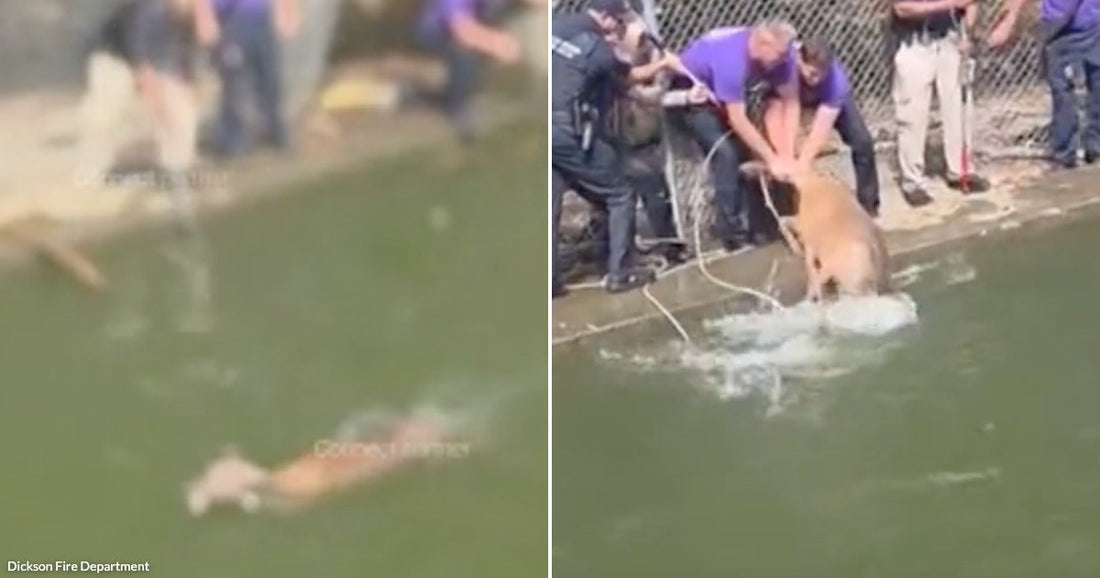
When a routine day turns into a life-or-death moment for a wild animal, the response often reveals a community’s character. In the City of Dickson, Tennessee, the fire department recently demonstrated that their commitment to rescue extends beyond human calls for help. In a scene that was both dramatic and heartwarming, first responders used their skills and training for a very different kind of emergency: a deer rescue from a Tennessee reservoir. The department later shared video of the operation, giving viewers a rare look at what it takes to save a struggling animal trapped in the water.
According to the account, the situation began when a deer somehow ended up in a reservoir and became unable to get out. Reservoirs can be treacherous for wildlife. The steep, often slippery sides and lack of natural escape routes mean that an animal entering the water in search of a drink or a path across can find itself quickly in danger. In Dickson, that danger turned into a full-blown emergency when the deer’s efforts to free itself proved unsuccessful and it was left swimming, exhausted and vulnerable.

The Dickson Fire Department’s video captures the moment first responders arrived on the scene. While the footage speaks for itself, the scenario is easy to picture. The deer, likely frightened and fatigued from repeatedly trying to escape, was stranded in the cool reservoir water with no obvious way out. Every minute in the water increased the risk of hypothermia and exhaustion, and there was no guarantee the animal would survive without outside help. For the firefighters, it was clear that a swift and careful rescue was needed.
Water rescues are inherently risky. Even when the subject is a person expecting help, strong currents, sudden temperature changes, and limited visibility can turn a call into a dangerous operation. When the subject is a wild animal such as a deer, the situation becomes even more complex. Deer are powerful, fast and unpredictable when stressed. Their hooves can unintentionally injure rescuers who get too close, especially in confined or unstable environments. Yet, despite these challenges, the Dickson firefighters proceeded with a calm focus that reflected both training and compassion.

The video shared by the Fire Department appears to show a deliberate and methodical approach. Rather than rushing in, first responders would have had to assess the reservoir’s layout, identify safe access points, and consider how to secure the deer without causing more distress. Firefighters are often trained to think in terms of scene safety and risk management, and this rescue likely followed those same principles, adapted to the unique needs of a wild animal in distress.
Although the exact techniques used in the rescue are not detailed in the brief report, common strategies for such situations include using ropes, flotation devices or small boats to safely reach and guide an animal to shore. The key is to minimize direct contact while still providing enough support and direction for the animal to find its footing. Watching professionals use tools more commonly seen in human water rescues to help wildlife adds an unexpected but powerful dimension to their work.
The Dickson deer rescue also highlights a broader truth about emergency services. Fire departments across the country are increasingly known not only for fighting fires and responding to medical calls but also for handling a wide range of emergencies that involve animals. Whether it is a pet trapped in a storm drain or wildlife caught in an urban infrastructure problem, first responders are often the only ones with both the training and equipment to intervene safely. This incident in Tennessee offers a clear, visual example of that role.
In many communities, stories about animals in peril capture public attention in a way that few other local news items do. A deer stranded in a reservoir taps into concerns about coexistence with wildlife and the unforeseen risks created by human-made structures. Seeing trained professionals step in to help reassures residents that their community values life, even when it involves a nonhuman neighbor. The video from Dickson, showing coordinated efforts to bring the deer to safety, is the sort of moment that resonates with viewers across ages and backgrounds.
The mood surrounding this event is distinctly uplifting. At a time when news can feel dominated by difficult or divisive topics, the image of firefighters working carefully to free a trapped deer offers a brief but meaningful reminder of everyday heroism. The fact that the fire department chose to share the footage adds another layer. It gives the public a closer look at the often unseen side of emergency work and underscores how first responders frequently go beyond the expected calls of duty.
For those who live near reservoirs, lakes or rivers, the story also serves as a quiet prompt to think about safety and design. Sloped or stepped exits, protective barriers and clear signage can make these environments safer not only for people but also for animals that live nearby. While the article does not go into such detail, it invites reflection on how infrastructure and nature intersect, and how communities might consider wildlife when planning or maintaining public spaces.
I found this detail striking: a full team of trained professionals, whose primary mission is to protect human life and property, readily applied their skills to save a single deer. That single act encapsulates a broader ethic of care that many fire departments embody. It shows how technical expertise, such as water rescue training, can be paired with empathy in unexpected ways. Watching or reading about such efforts can quietly influence how residents view both their local wildlife and the people sworn to protect their communities.
The deer’s successful rescue from the Tennessee reservoir, as shared by the City of Dickson Fire Department, stands as a small but memorable example of community values in action. It blends professionalism with kindness and reminds viewers that public servants often find themselves in situations that fall outside the standard image of fire engines and smoke-filled buildings. For anyone who sees the video, the lasting impression is likely the same: when a vulnerable creature needed help, a team of responders showed up, assessed the danger and carefully brought it back to solid ground. Read more at https://www.ntd.com/ntdplus/fire-department-rescues-deer-from-tennessee-reservoir_1172666.html