
EXTRA Good Points All Week for Guardians! Become a Guardian!
Senior Rescue Dog Takes One Terrifying Step Toward Trust
Guest Contributor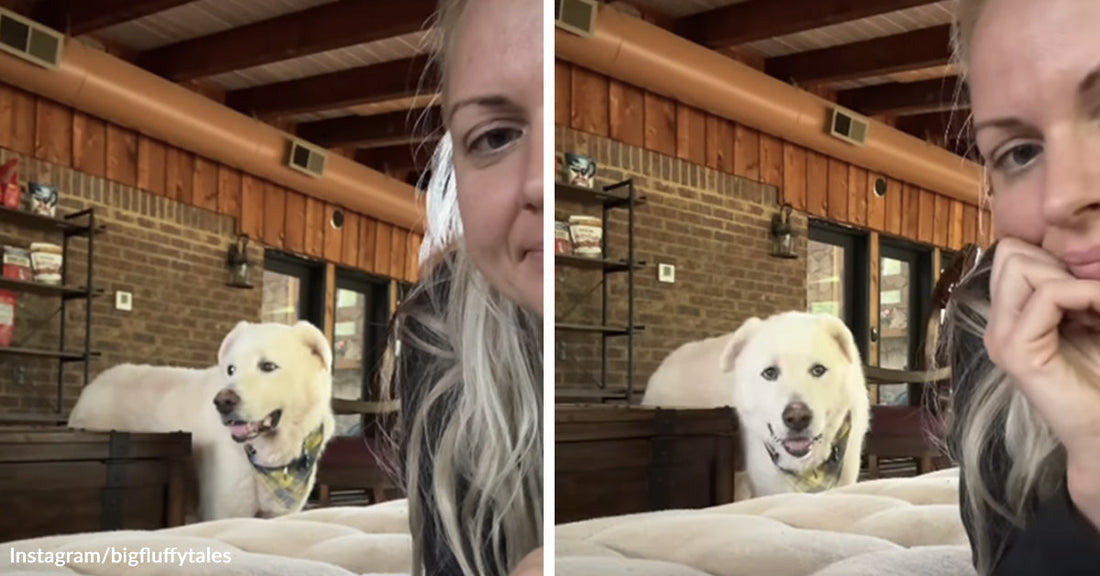
Senior rescue dogs carry entire lifetimes of memories with them, and sometimes those memories make it hard to believe the world can still be kind. That is what makes the story of Cloud, a 13-year-old senior rescue dog learning to trust again, so moving. His new foster caregiver captured a quiet but powerful turning point on camera, and viewers have been watching their bond unfold as this once shut-down dog slowly discovers safety and connection again.
Cloud’s journey began in frightening circumstances. According to the Instagram account @bigfluffytales, he was found on the side of the road and later taken to a shelter, where staff watched him emotionally withdraw. They reportedly said there were days he did not even want to get up to go outside. It is not hard to imagine how disoriented and defeated a dog might feel after losing everything familiar so late in life. Senior rescue dogs often face longer shelter stays and more complex emotions, and Cloud appeared to be no exception.

When his new caregiver brought him home to foster, Cloud’s body language told the story before any words could. The dog was trembling with fear, taking in the unfamiliar surroundings with a mix of hesitation and overwhelm. Yet even in that fearful state, he offered a small but clear invitation: he leaned in for head scratches. That simple gesture hinted that, despite his history and his shutdown behavior at the shelter, some part of him remained open to trust and connection.
In the video shared online, the caregiver decided to meet Cloud where he was, both physically and emotionally. She lay down on the floor near him to make her presence feel less imposing. This is a well-known strategy for earning a fearful dog’s trust, especially with an older rescue who might feel especially vulnerable. By lowering her height and softening her body language, she was signaling that there was no pressure, no demand, just quiet companionship.
Cloud’s initial response was cautious. He circled a console table and kept looking back at his foster caregiver, watching closely as she remained still and calm. According to the caption, he continuously stared at her, his gaze lingering in a way that felt new and significant. That direct eye contact can mean many things for a dog, but here it seemed to mark a tentative question: “Can I trust you?” The caregiver later wrote that she could not believe she had caught the moment on camera, because it represented a huge and terrifying step for him.
The scene unfolded slowly. Cloud hovered on the floor while his foster human continued to stay grounded and relaxed. Then, something shifted. In the next moment caught on video, Cloud locked eyes with her and took a few steps forward. This time, he did not retreat to the console table. Instead, he moved closer to the bed where she was lying, his posture still somewhat unsure but clearly more courageous than before.
What happened next felt like a small miracle for those who have followed his story. Cloud gently placed his paws on the bed, testing the new surface and the new situation. His caregiver’s voice registered both excitement and care as she encouraged him to come closer. There was no rush and no force, just a soft invitation. Eventually, he climbed fully onto the bed, choosing proximity over distance and connection over isolation.
For a senior rescue dog who had been emotionally shutting down at the shelter, this moment of mutual trust carried deep meaning. The caregiver had mentioned using gentle somatic work and focusing on regulating her own nervous system before engaging with Cloud. That detail highlights an emerging understanding among some dog guardians and trainers: dogs are astonishingly sensitive to human emotional states. They observe posture, breathing, tone of voice, and patterns of movement, then respond in ways that mirror the safety or tension they perceive.
A calm and grounded human presence can be especially important when supporting a frightened or traumatized animal. When a person consciously slows their breath, softens their muscles, and maintains a steady emotional tone, a nervous dog can sometimes “borrow” that sense of stability. The article describes Cloud using his caregiver’s steady state as a reference point, slowly allowing his own nervous system to settle as her calm presence remained consistent. I found this detail striking because it underscores how relational healing can be, even across species.
Eye contact often plays a complicated role in dog communication. In many situations, direct staring can feel confrontational or intimidating to a dog, especially if they already feel anxious. Yet in quiet, low-pressure contexts, gentle eye contact between a dog and a trusted human can support attachment and reassurance. In Cloud’s case, his deliberate choice to hold that gaze seemed to mark a turning from fear toward curiosity, from self-protection toward tentative belief that this person might be safe.
What makes this story particularly moving is how un-dramatic the footage is at first glance. There is no grand gesture or spectacular transformation, just a senior rescue dog circling a table, pausing, looking, and finally choosing to come close. Still, many viewers found themselves deeply affected because they understood how much emotional work might be compressed into those few quiet minutes. For a dog who once did not want to stand up and go outside, climbing onto that bed beside a new human could be the emotional equivalent of leaping across a chasm.
Stories like Cloud’s highlight the patience and empathy that often go into fostering and adopting older dogs. Senior rescue dog care can involve slower timelines, gentler introductions, and a willingness to celebrate subtle shifts instead of waiting for dramatic changes. Progress is often measured in small steps: a dog taking food from a hand for the first time, choosing to rest in the same room, or, as with Cloud, maintaining eye contact and moving closer rather than withdrawing.
They also remind us that even when an animal appears withdrawn, there may still be a spark of hope inside, ready to respond to kindness. Cloud’s trembling body, paired with his request for head scratches, suggested a complex emotional state. He was scared, yet he still sought connection. With consistent calm, respectful boundaries, and emotional attunement, his foster caregiver helped that flicker of willingness grow into something more solid. Over time, that process can reshape a dog’s experience of the world, turning what once felt dangerous into something that feels bearable, maybe even safe.
As Cloud continues his journey, his story stands as a quiet testament to what can happen when humans approach senior rescue dogs with patience, regulation, and respect. It invites anyone who cares about animals to consider how their own emotional presence affects the creatures around them. For a dog like Cloud, the world became a little less frightening the moment someone decided to slow down, lie on the floor, and let trust arrive on its own schedule.