
🚨Urgent: Missile Strikes Shelter in Ukraine! Rush Emergency Aid!
Adopted Shelter Dog Breaks Down Over A Simple Gift
Guest Contributor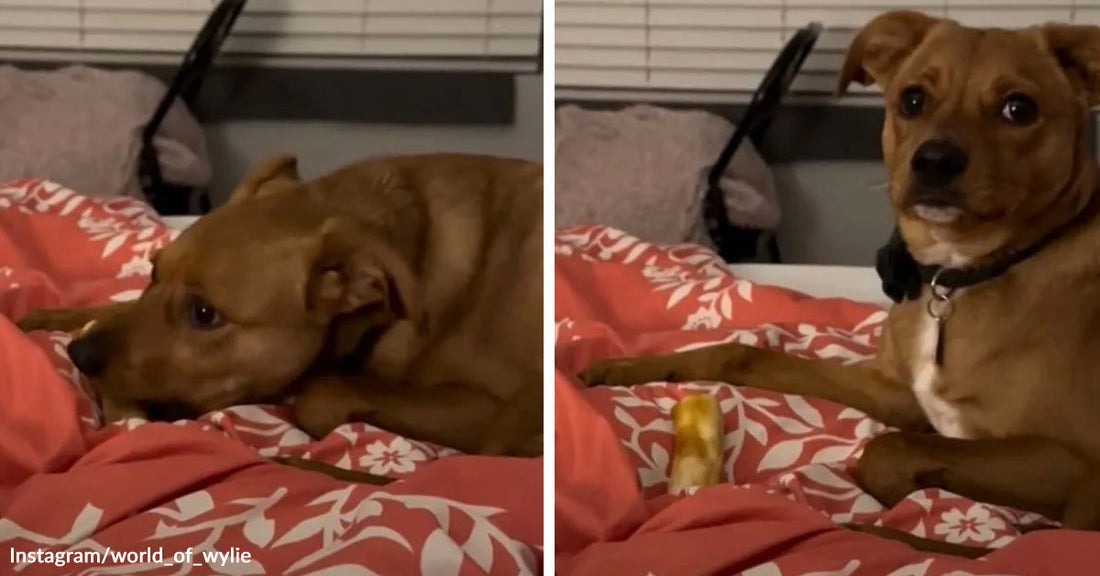
Some rescue stories unfold in quiet, nearly invisible ways. Instead of dramatic before-and-after photos, the transformation shows up in small moments: a relaxed sigh, a lingering look, a tentative tail wag. The story of Wylie, an adopted shelter dog who seems to pause and process every good thing that comes his way, is one of those gentle transformations. His viral video and growing following as a former shelter dog learning to trust reflect something many people recognize in their own rescue pets, and it highlights just how meaningful it can be when a dog finally realizes that the good stuff is here to stay.
In the clip that captured so many hearts, Wylie lies on a peach-colored comforter with a brand-new chew bone placed right in front of him. It is such a simple scene that it might be easy to miss its significance at first glance. He leans forward, gives the bone a tentative nibble, then suddenly pulls back as if he needs a moment to think it through. What follows is a stream of tiny, high-pitched squeaks and whines that carry a mix of emotions: happiness, excitement, and a tinge of confusion all rolled into one small soundtrack of feelings.

Wylie’s human asks him if he is happy, and his response is almost entirely in body language. His ears perk forward, he blinks up at her, and then he gives a quick little lip smack. It almost looks like he is trying to answer without quite knowing how. Instead of diving headfirst into chewing, he keeps looking at her and at the bone, repeatedly checking in with both. Each soft sound and cautious glance seems to say, “Is this really for me? Is it really okay to enjoy this?”
He eventually reaches out with a paw and taps the bone, then does it again, as though he is testing the reality of the gift. The action is simple but very telling. For a dog who once lived in a shelter and likely knew uncertainty as part of daily life, this kind of caution makes sense. Good things might not have always been guaranteed, so the presence of a brand-new chew bone in a safe, cozy space can be as surprising as it is exciting.
This kind of hesitation is familiar to many people who have brought home an adopted shelter dog. The transition from a kennel environment to a permanent home is rarely instant. There is often a period where the dog is trying to understand new routines, new rules, and especially the idea that food, beds, and toys are not just passing privileges that could disappear at any moment. The report about Wylie mentions that he has been known in the past to guard his toys, a behavior that can develop when dogs feel unsure if resources will be taken away. That history makes his gentle, almost reverent treatment of the chew bone feel especially meaningful.
What stands out is not just that Wylie has nice things now, but that he is learning to believe they are his to keep. His owner notes that his excitement over simple things is what matters most. There is a certain beauty in watching a dog rediscover joy in everyday items: a soft bed, a safe room, a favorite toy that will still be there after a nap. Wylie’s pauses and squeaky conversation with his human capture that moment of realization in real time, as if viewers are witnessing a heart slowly relax.
The response to the video shows how deeply this resonates. In the comments, people share similar experiences with their own rescue animals. One person describes how their dog still comes back to them after every meal, as if to say thank you each time the bowl is filled. Another observer notes how Wylie touches the bone with his paw like he is timidly asking if it truly belongs to him. These observations mirror what many see at home: former shelter dogs offering quiet, grateful gestures for what some might consider routine care.
For many rescue dogs, adapting to “good things” is not just about learning house rules. It is about slowly unwinding a sense of scarcity. In a shelter, even the best-staffed and most caring facility is still an unfamiliar and sometimes stressful place. Dogs are surrounded by noise, new smells, and frequent changes. Once they move into a forever home, it can take time for them to understand that meals will arrive every day, that beds are always available, and that affection is not on a strict schedule. Wylie’s cautious joy over his chew bone is a small example of that bigger emotional shift.
I found this detail especially striking: Wylie does not rush, even though he is clearly excited. Instead, he checks in with his person over and over, as if her presence and reassurance are just as important as the treat in front of him. It suggests that trust is becoming as rewarding to him as the toy itself. Moments like that can be incredibly moving for people who share their lives with rescue dogs because they mark visible progress in the dog’s emotional journey.
Wylie’s story also reinforces a key idea that many animal advocates repeat. Rescue dogs deserve the world, and often what changes their lives is not a grand gesture, but consistent, gentle care. A dog coming from a shelter does not need perfection. What they need is patience, safety, and the chance to adjust at their own pace. Wylie is not expected to instantly understand that every new bone and blanket is permanent. Instead, his family lets him take it one moment at a time as he learns that nothing is about to be taken away.
There is something quietly powerful about seeing a dog become the “star” of his own happy story after starting out as just another face in a kennel. As the report shares, Wylie’s life has changed significantly for the better. He has gone from the uncertainty of the shelter system to a home where his quirks, hesitations, and soft squeaks are cherished. The popularity of his video suggests that many people find comfort in watching this kind of transformation. It serves as a gentle reminder that behind every kennel door there might be a dog like Wylie, just waiting for the chance to learn that good things can last.
In the end, the image of Wylie quietly squeaking over his new chew bone lingers. It is such a small scene, yet it speaks to the emotional lives of rescue dogs everywhere. With time, patience, and consistent kindness, a hesitant dog can gradually trade guarded caution for genuine joy. Wylie is already on his way, learning, squeak by squeak and paw tap by paw tap, that he really is home and that the good things are finally his to keep. Read more at DogTime