
Lost Dog Vanishes Without Trace Then Makes Stunning Return 8 Years Later
Guest Contributor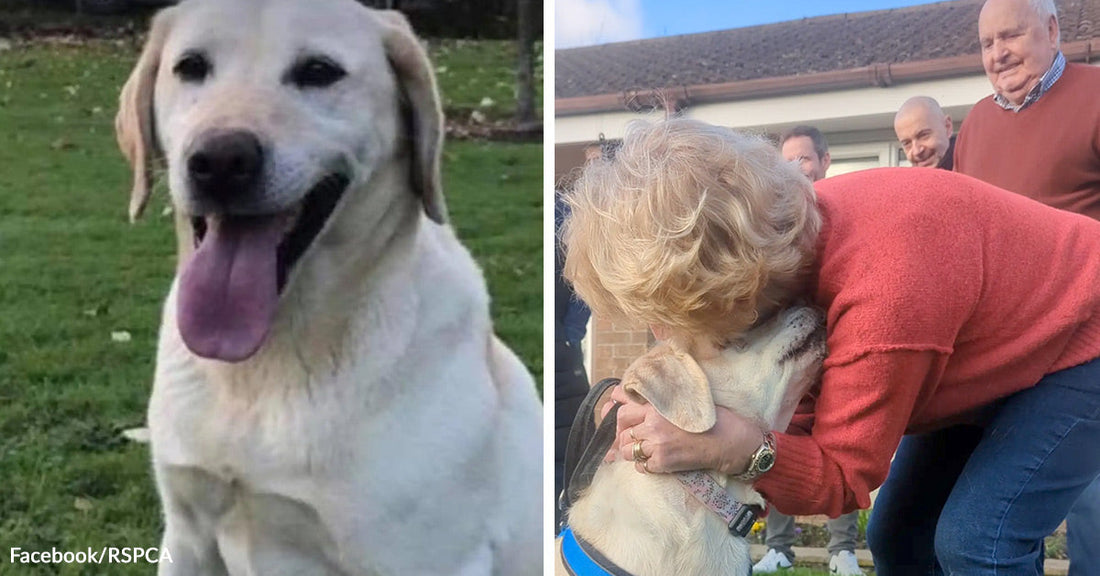
Some stories read like they were written just to remind people that hope can survive for a remarkably long time. The story of Daisy, a beloved family dog who disappeared from her yard and came home eight years later, is one of those rare tales. It begins as a heartbreaking account of a stolen pet and ends as an uplifting reunion, the kind of miracle that makes phrases like “never give up hope” feel newly meaningful. For anyone who has ever loved a dog, this is more than a feel-good story. It is a powerful example of the bond between people and their animals and a clear reminder of why tools like microchipping matter so much.
In November 2017, Daisy was in what should have been the safest place in the world, playing in her own yard. A vehicle pulled up, strangers got out, and they put her in their truck and drove away. Just like that, a familiar everyday scene turned into a family’s worst nightmare. Daisy’s people were devastated. They did not simply post a few notes and move on. According to Daisy’s mom, Rita Potter, the family poured their energy into the search. They made appeals across social media, shared Daisy’s photo widely, and even saw their story picked up by the news. Despite all of that effort, Daisy did not come home.

As days stretched into months and then years, the reality of her disappearance settled in. The family continued to live with a painful question: not only where Daisy was, but whether she was safe or loved. Rita described how they kept a photograph of Daisy on the mantle, looking at it every day and wondering where she might be. That daily act became a quiet ritual of remembrance and hope, a small way of refusing to let Daisy’s memory fade even while life had to continue without her.
Over time, the most realistic fears began to creep in. Daisy would be an older dog by now, a senior pup. Her family knew that even in the best circumstances, dogs do not live forever. They had to face the possibility that Daisy might have already passed away. Yet the emotional door never fully closed. The family did not receive any clear answer about what had happened, and that lack of closure can be its own kind of grief. I found this detail striking because it captures something many pet guardians understand: the uncertainty can be just as painful as the loss itself.

Years later, in what seemed like an ordinary workday for an animal welfare professional, everything began to change. RSPCA Inspector Kim Walters was carrying out a routine investigation when she came across Daisy. At the time, the dog was living with someone who said he had only had her for a few years and could not afford the veterinary care she needed. Rather than attempt to hold onto a dog he said he could not care for, he signed her over to the RSPCA. That decision would become the turning point in Daisy’s long journey home.
As is standard practice, the RSPCA scanned Daisy for a microchip. That tiny piece of technology held the thread that would connect her back to the family that had never stopped thinking about her. When her microchip revealed her original identity, her rescuers understood that this was no ordinary case of a surrendered pet. They quickly contacted Daisy’s family, delivering the kind of phone call most people in their situation only dream about.
Inspector Walters later described how the family reacted. They were shocked, which is easy to imagine after eight years, but also elated. They told her about the lengths they had gone in their attempts to find Daisy and how devastated they had been when she was taken. Listening to their story and hearing how deeply they still loved this dog moved Walters to the point of feeling choked up. She also shared how rewarding it was to be able to tell them that Daisy would soon be on her way back home, once she was healthy enough to travel and transport had been arranged for the four hour journey.
Although Daisy was finally safe, it was clear that the years had not been easy on her. Her condition suggested that she had been used for backyard breeding, a situation that often involves repeated litters and limited care. She was extremely dirty and appeared not to have been groomed in several years. This paints a stark contrast between the life she had before she was taken and the one she likely endured afterward. The RSPCA team cleaned her up, examined her, and made sure she was fit enough to travel. Only then did they set off to take her back to the place that had always been her real home.
When the car finally arrived and Daisy stepped out, her reaction said what words could not. Her tail began to wag uncontrollably and her nose went into overdrive as she sniffed the familiar air. She seemed to recognize where she was. Her family was waiting not just in the nuclear sense but as an entire extended group, ready to welcome her back. They surrounded her and filled the space with affection. Daisy, now a senior dog, relaxed into her mom’s arms as though the years had melted away. The family had never forgotten her, and her response suggested that in some way she had not forgotten them either.
Now settled back at home, Daisy is around 13 years old. She is no longer the young dog who once played in the yard before everything went wrong, yet the love around her has not diminished. Her family understands that they may not have many years left with her. What matters most is that whatever time Daisy does have will be spent in safety and comfort, surrounded by people who truly care for her. For them, simply knowing that she is back where she belongs brings immense relief.
Daisy’s story offers more than an emotional reunion. It highlights the importance of microchipping dogs and keeping those details current, since that single step can make an extraordinary difference even many years later. It also illustrates how animal welfare organizations can be a crucial bridge between lost pets and the families who are still searching. Perhaps most of all, it shows that persistent love and a small piece of technology can bring about what feels very much like a miracle. Read more at The Dodo