
How Sarayaku People Defend Their Living Forest Against Big Oil
Guest Contributor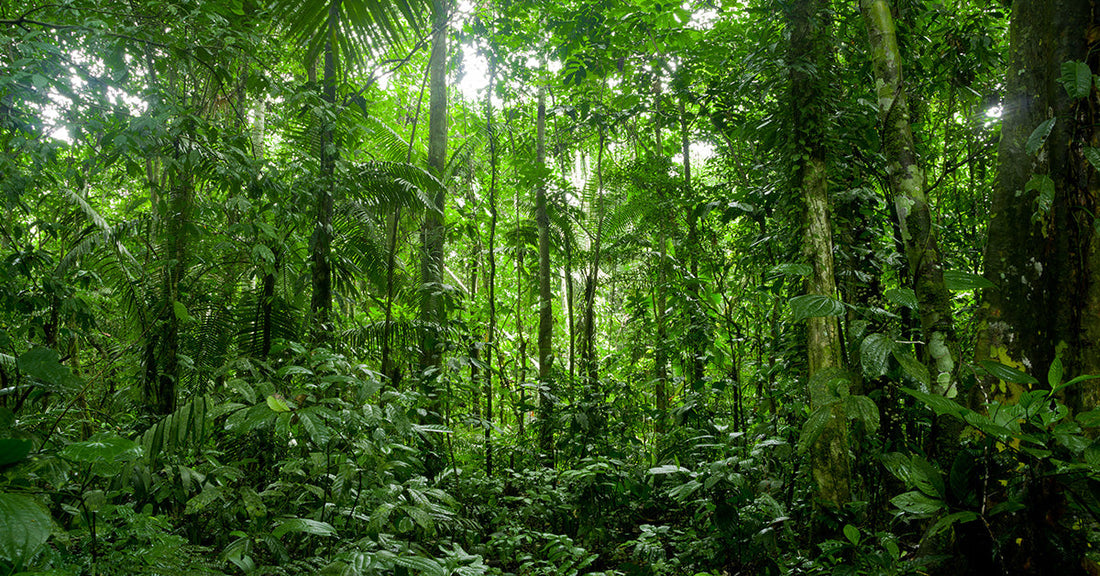
In the heart of the Ecuadorian Amazon, along the Bobonaza River, an Indigenous community has quietly become a global reference point for how to confront fossil fuel expansion and protect both culture and land. The Kichwa people of Sarayaku are known for defeating a powerful oil company and helping pioneer the rights of nature movement. Their story offers a detailed roadmap for other Indigenous communities confronting oil and gas concessions across the Amazon basin and beyond, and it raises a profound question: what does real development look like when the forest itself is understood as a living being with rights?
The journey into Sarayaku begins by river, where visitors arrive seeking guidance and solidarity. Among them were Brazilian Indigenous leaders Guisel Marworno and Wagner Karipuna, whose territories lie along a stretch of rainforest, mangroves and mudflats near Brazil’s northern coast. There, the state oil company Petrobras has begun offshore exploration that could transform their homelands and nearby city of Oiapoque. They have long defended their territories against hunters, loggers and traffickers, but had never faced an industrial project of such scale supported by the full backing of their government. They traveled to Sarayaku to learn how a small community could stand up to Big Oil and win.

Waiting on the riverbank was Patricia Gualinga, a widely respected Kichwa leader and one of Sarayaku’s most visible defenders. She connects defense of the land with the defense of women, describing the Earth as holding a feminine energy harmed by extractive industries. In her experience, oil camps and large infrastructure projects do not just scar ecosystems. They also bring social disruption, division, alcohol abuse and violence, including sexual violence against Indigenous women.
Sarayaku’s people have lived for generations as a network of family clans with their own traditional authorities. As oil and mining pressure intensified, they adapted by creating a governing council, Tayjasaruta, that could interact with the Ecuadorian state while preserving their own decision-making processes. Central to this governance is Sumak Kawsay, often translated as “good living” or “living in harmony,” which frames their territory as an interconnected system of visible and invisible beings rather than an inventory of resources.
Patricia began explaining Sarayaku’s journey by holding up what many communities elsewhere would view as the ultimate protection: a legal title to their land. In 1992, members traveled to Ecuador’s capital to secure that title, believing it guaranteed security. Four years later, they discovered that while the surface was recognized as theirs, the state claimed subsurface rights and had already authorized an Argentine oil company to operate in their territory. On government maps, their home was relabeled as Oil Block 23.
In 2002, military escorts accompanied company workers into Sarayaku territory. The community responded with coordinated resistance, blocking operations where possible, launching international outreach and refusing attempts to divide them through internal conflicts. According to court documents, their peaceful defense was met with violent repression and alleged torture of leaders. Yet after months of pressure, the company withdrew in 2003, leaving behind tons of buried explosives from seismic surveys. These remnants still litter the forest floor and riverbanks.
Patricia often repeats a hard lesson: “Companies never lose.” Even when they leave, communities are left with pollution, physical danger and social scars. While Sarayaku fought to have the explosives removed, the government depicted them as poor obstructionists standing in the way of national progress. Sarayaku leaders, however, insist they were not rejecting development but defending their own vision of a dignified life on their own terms.
After exhausting national legal avenues, Sarayaku took their case to the Inter American Court of Human Rights. In 2012, the court ruled that Ecuador had violated the community’s rights by allowing oil exploration without free, prior and informed consultation. The judges also recognized the special relationship between Indigenous peoples and their territories and ordered reparations, including an apology and removal of the explosives. This decision has become a landmark for Indigenous land rights and consultation standards across the Americas, giving other communities like the Galibi Marworno and Karipuna a concrete legal precedent to invoke.

For Sarayaku, the victory was more than a legal win. It was a moment of restored dignity after years of being portrayed as backward or anti-development. Yet the struggle is not over. The explosives largely remain, and Sarayaku is now seeking formal recognition of its forest as a living being and rights holder. In 2024, they returned to the Inter American Court to press this claim, framing their territory not just as property but as a subject of rights.
This idea is captured in their Kawsak Sacha, or “Living Forest,” declaration. Developed by leader José Gualinga after nearly two decades of studying ancestral teachings, Kawsak Sacha describes their Amazonian home as a living, intelligent entity composed of rivers, trees, animals and spiritual beings. It does not separate a river from its watershed or the invisible presences that inhabit sacred places. It is a holistic articulation of what many Indigenous communities have long practiced but legal systems have struggled to express.
Kawsak Sacha helped inspire Ecuador’s 2008 constitutional recognition of the rights of nature. Since then, courts have applied those provisions to protect specific ecosystems, such as frogs in the Intag Valley or the Los Cedros cloud forest threatened by mining. Globally, rights of nature laws have grown, often recognizing individual rivers or mountains as legal persons. José notes these gains yet stresses that Sarayaku’s approach is broader. For them, the whole territory is a living subject, and humans are one part of this larger community of life.
This worldview also shapes everyday practices. Hunting is not seen as simply taking from the forest. It involves discipline, dreams and requests for consent from animal beings so that people can eat without disrupting ecological balance. The community monitors wildlife and plant populations and imposes moratoriums when necessary to allow regeneration. When long struggles cause exhaustion, fear and trauma, residents describe how walking in the forest, listening to the river and participating in communal work restores their energy. The jungle itself, they say, gives strength and balance back.
For Sarayaku, development is not synonymous with roads, extraction or deforestation. They seek better health care, communications and services but only in ways that do not sacrifice the Living Forest that sustains them. Collective work days known as mingas, where community members maintain trails and infrastructure together, are part of this vision. They build connectivity without fragmenting the forest and reinforce social bonds that make resistance possible.
The visiting Brazilian leaders shared that they too have built governance systems grounded in the understanding that the land is alive and inhabited by guardian beings. They have fostered “bioeconomies” based on sustainable açaí harvesting, fishing and tourism that provide food security and autonomy while protecting nature. From their perspective, offshore drilling framed as national economic progress ignores the thriving local economies, cultures and legal systems that already exist. An oil spill could erase those gains in a single incident.

Yet for defending their territories, they face growing stigmatization as “anti development” and increasing risks in a country where killings of environmental defenders have risen. Government backing for oil exploration continues even as climate change drives hotter temperatures, erratic rainfall, crop failures and faster fires that Indigenous communities have been documenting through their own knowledge systems. For leaders like Wagner Karipuna, the link is clear. Territory, spirituality and economy are inseparable, and caring for nature is a duty owed to future generations.
For some allies who traveled to Sarayaku, such as representatives of global Indigenous rights organizations, the rights of nature framework initially raised questions. Observing how Sarayaku translates ancestral values into modern legal proposals, however, offered clarity. It provided a bridge language that non Indigenous people and state institutions can understand without erasing the community’s own concepts. I found this detail striking, because it suggests that alternative ways of organizing society are not hypothetical visions but living realities.
Sarayaku’s experience offers a grounded example of how an Indigenous community can confront powerful extractive interests, win historic legal victories and still insist that true progress is measured not in barrels of oil or kilometers of new roads, but in abundant forests, clean rivers, healthy people and united communities. As environmental crises deepen worldwide, their Living Forest proposal does more than protect one territory. It invites a wider reconsideration of what it might mean to move into a future where both people and the rest of nature can flourish.
Read more at https://insideclimatenews.org/news/01112026/how-sarayaku-people-beat-big-oil/