
Shelter Long-Timer Gets Overlooked for Weeks Until a Grieving Family Finally Sees His Gentle Face
Guest Contributor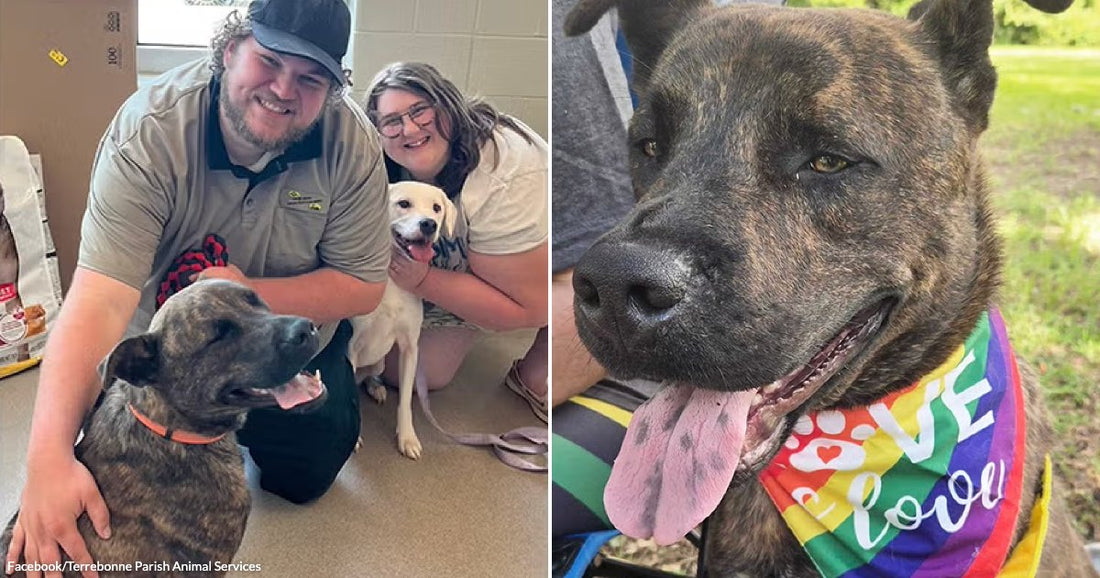
Sometimes it only takes one chance, the right support, and a caring community to change an animal’s life. That is exactly what happened for Brixton, a 2-year-old Plott Hound-mix in Louisiana, whose journey from “unwanted litter” to beloved family member shows how The Rescue Effect can help shelter dogs find a home.
When Brixton first entered Terrebonne Parish Animal Services in Gray, Louisiana, he was one of many puppies who needed a fresh start. According to shelter manager Valerie R., he arrived in October 2024 as part of an unwanted litter, then returned again in May 2026 when his adopters had to relinquish him due to changes in their living situation. Twice before his second birthday, he found himself back at the shelter, waiting for someone new to see his potential.

As the days passed, Brixton slipped into the category many shelters know all too well. He became a “long-timer,” a term Valerie uses for great animals who are repeatedly overlooked. It is not that there is anything wrong with them. Often, they simply blend into the background in a busy kennel or are passed over for puppies or dogs who appear to need less care. In Brixton’s case, he also faced another barrier. He tested positive for heartworm, a diagnosis that can make adopters worry about long-term costs or complications.
Valerie and her team were determined that Brixton would not be forgotten. When Terrebonne Parish Animal Services joined The Rescue Effect campaign in July, they used the opportunity to showcase dogs like him. The Rescue Effect is the ASPCA’s national campaign focused on helping animals find loving homes, and it provides funding and tools to help shelters remove some of the most common obstacles to adoption.
Backed by a Rescue Effect grant, the shelter promoted Brixton on social media with a $5 adoption fee and free essentials, including a crate and a large bag of dog food. They also made a crucial commitment. The shelter agreed to cover the cost of Brixton’s ongoing heartworm treatment, removing a financial and emotional hurdle that might otherwise have discouraged potential adopters. This blend of practical support and thoughtful outreach is a powerful example of how rescue campaigns can enhance pet adoption incentives.

Facebook/Terrebonne Parish Animal Services
That social media post is what first caught the attention of Derek T. As he tells it, his interest in Brixton began during a deeply emotional moment. Derek’s dog of six years, Bean, had recently passed away. He was not planning to adopt another dog right away, but he came across Brixton’s photo and noticed his gentle face and demeanor. Even in a crowded online feed, something about Brixton stood out.
The next day, July 2, Derek visited the shelter with his girlfriend, Kailee, and their dog Mira, who had also been adopted from Terrebonne Parish Animal Services. Meeting Brixton in person was the real turning point. The shelter arranged a meet and greet so the humans and dogs could get to know one another. The interaction went well, and it quickly became clear that this was a good match.

Facebook/Terrebonne Parish Animal Services
Despite Brixton’s heartworm diagnosis, Derek and Kailee chose to focus on his personality and potential, rather than his illness. As Derek explained, they wanted to provide him with a good home and life and not let his illness define his worth. With that, Brixton officially left his life as a long-timer behind and went home with his new family.
For the staff at Terrebonne Parish Animal Services, Brixton’s adoption was a meaningful victory. Valerie describes feeling grateful for the ASPCA’s generosity and explains that The Rescue Effect does more than support the animals themselves. It also equips shelter workers with tools and resources to do their jobs more effectively and compassionately. After nearly 25 years with the shelter, Valerie has seen firsthand how adoption incentives can influence outcomes, especially for pets who might otherwise wait months for a home.
The shelter, located about an hour southeast of New Orleans in bayou country, generally has around 50 dogs and 230 cats available for adoption at any given time. In a region where many residents love animals but may face financial or logistical challenges, reducing adoption fees, supplying starter items, and addressing medical needs can make adopting a shelter pet far more accessible. Valerie notes that since initiating adoption incentives supported by The Rescue Effect, the shelter has successfully placed multiple long-timer dogs, a sign that targeted support can tip the scales in favor of animals who have waited the longest.
Life for Brixton, now renamed Lox, looks very different today. His new family reports that he is thriving at home. Lox took an immediate interest in Mira and integrated quickly into their routine. He is housetrained and knows words such as kennel, bed, outside, treat, sit, and others, skills that can be especially reassuring to adopters welcoming a new dog into a family setting. I found this detail striking because it shows how much potential often sits quietly behind a kennel door.
Lox also has a unique way of expressing affection. Derek describes how the dog hugs like a person, placing his paws on someone’s shoulder and pressing his head in close. This kind of behavior might have gone unseen or unappreciated in a shelter environment, but in a home it has become one of his most endearing traits. Just as importantly, Lox has done exceptionally well with the family’s small child, showing a gentle demeanor that confirms the shelter’s confidence in his temperament.
Meanwhile, his heartworm treatment is progressing well, helped greatly by the shelter’s commitment to cover those medical costs. With that burden removed, Derek and his family are free to focus on bonding with their new companion instead of worrying about how to manage his care. They describe feeling exceptionally blessed to have Lox in their home and express appreciation to both the ASPCA and Terrebonne Parish Animal Services for giving him another chance.
Stories like Lox’s highlight why large-scale adoption initiatives and rescue funding can make such a difference. The ASPCA’s Rescue Effect campaign is providing 2 million dollars in grant funding to support 200 shelters across the country. These grants help participating organizations waive or reduce adoption fees, offer supplies, and support operating costs, all of which boost responsible dog adoption and increase the odds that animals like Lox will be noticed and chosen.
Behind each success story is a combination of compassionate adopters, dedicated shelter staff, and community-based support. When those elements come together, a dog who once faced an uncertain future can become a cherished family member. For Brixton, now Lox, that transformation began with a single social media post, a modest adoption fee, and the promise of medical support. It ended with a new name, a new life, and a family who sees his worth far beyond any diagnosis. Read more at https://www.aspca.org/news/how-rescue-effect-helped-shelter-dog-brixton-find-home