
8-Year-Old Reportedly Loses His Sight After a Severely Limited Diet Leaves Him Vitamin-Deficient
Guest Contributor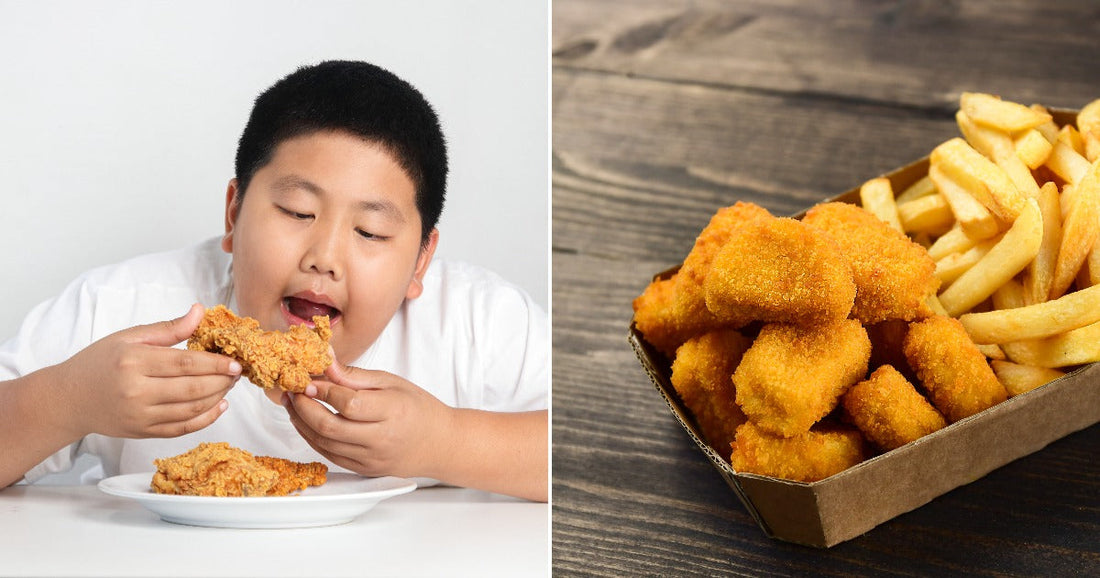
A recent medical case report from the United Kingdom offers a stark reminder of how a years-long bad diet can do far more than affect weight or energy levels. In a story that has captured attention around the world, a British teenager who lived on a diet of fries, chips and processed meats developed severe vision loss and significant hearing problems, illustrating in painful detail the hidden dangers of junk food and nutritional deficiencies.
The case began when the boy was 14 years old. According to the report published in the Annals of Internal Medicine, he went to his family doctor complaining of tiredness. At that time, he was described as a “fussy eater” but was otherwise considered healthy and was not taking any medications. The doctor identified a vitamin B12 deficiency, provided B12 injections and offered advice about improving his diet. It might have seemed like a straightforward nutritional issue that could be corrected with supplements and better food choices.

Over the following years, however, his health took a troubling turn. By age 15, the teenager started to lose his hearing. This was serious enough that he was referred to an ear, nose and throat specialist. Soon after that, he noticed changes in his vision. What began as tiredness had progressed into sensory problems that are far more commonly associated with serious neurological or eye diseases than with a junk food diet.
The teen’s vision problems did not resolve. Instead, they worsened. By the time he turned 17, his visual acuity had fallen to 20/200 in both eyes, a level considered legally blind in both the United Kingdom and the United States. Doctors found evidence of damage to his optic nerve, the crucial pathway that sends visual information from the eye to the brain. Tests ruled out many familiar causes of such damage and did not immediately reveal a clear reason for his deteriorating vision.

To get answers, his medical team began to investigate more deeply. They reviewed his history, lifestyle and habits, looking for anything that might explain the decline in his sight and hearing. The report notes that he denied using alcohol, tobacco or recreational drugs. On the surface, this ruled out many of the risk factors that are sometimes linked with nerve damage. That led clinicians to look more closely at the one aspect of his life that had drawn concern from the very beginning: his diet.
When pressed about what he ate, the teenager described a pattern that had begun in elementary school and had barely changed over the years. The authors wrote that he refused certain textures of food, which significantly narrowed what he would accept. Day after day, he relied on a very small set of ultra-processed foods. He typically ate a daily portion of fries from a local fish and chip shop and regularly snacked on Pringles, white bread, processed ham slices and sausages. Fresh fruits, vegetables and other nutrient-dense foods did not feature meaningfully in his meals.
Nutritional experts have long warned that junk food diets can cause weight gain, heart disease and type 2 diabetes, but this case highlights a different and less visible danger. The doctors report that the boy suffered from multiple nutritional deficiencies involving several essential vitamins and minerals. In particular, deficiencies in B vitamins, including vitamin B12, and minerals such as copper were identified as likely contributors to his vision and hearing loss. Although poor nutrition has been known to damage the optic nerve, the authors noted that in developed countries purely dietary causes of such severe vision problems are rare.
I found this detail striking because it shows how a person can appear generally well while silently developing profound deficits in nutrients that the nervous system depends on. The optic nerve and auditory pathways require a steady supply of vitamins and minerals to function and repair themselves. Over time, a diet that consistently lacks these essentials can harm the delicate structures that process sound and sight long before obvious symptoms appear.
Once the medical team understood the scope of his nutritional deficiencies, they acted quickly. The teenager was given nutritional supplements in an effort to halt the progression of his vision loss and support his overall health. According to the report, this intervention stopped his eyesight from getting worse, which suggests that his condition had reached a critical but somewhat stabilizable point. Unfortunately, the damage that had already occurred could not be reversed, and his vision did not improve. The opportunity for full recovery appears to have passed before treatment began.
That outcome underscores one of the key messages of the report. The authors emphasize that optic nerve damage from poor nutrition can be potentially reversible if caught early. If nutritional optic neuropathy is identified in time and the underlying deficiencies are corrected, there is a chance to preserve sight. If it is left untreated, however, the result can be permanent blindness. In this case, the boy’s symptoms unfolded gradually over several years, suggesting that earlier recognition of the seriousness of his dietary pattern might have made a difference.
The clinicians also looked beyond the lab results to understand why his eating habits had been so restricted for so long. They concluded that his pattern of “fussy eating” was not just a casual preference or a typical childhood phase. Instead, they referred him to mental health services and described his behavior as an eating disorder. Their report states that “fussy eating” that is limited almost entirely to junk foods and leads to multiple nutritional deficiencies should be considered a form of disordered eating that needs professional attention.
This distinction matters. In many communities, it can be easy to dismiss picky eating, especially with familiar favorites such as fries, chips and white bread, as a minor issue or part of a young person’s personality. Yet this case shows that when that pickiness is severe, longstanding and highly restricted to low-nutrient foods, it may signal a deeper problem. Mental health support, in combination with nutritional guidance, can be crucial in helping someone expand their diet and avoid serious health consequences.
From a broader perspective, the story of this teenager serves as a sobering cautionary tale about the risks of extreme junk food diets in modern societies. In settings where food is plentiful, it is sometimes assumed that major nutrient deficiencies are rare or confined to specific groups. This case report challenges that assumption by showing how an individual with ready access to food can still be severely malnourished if the variety and quality of that food are extremely limited.
It also highlights the importance of clinicians asking detailed questions about diet when patients present with unexplained neurological symptoms, especially in children and adolescents. Vision and hearing changes in a teenager might prompt evaluations for infections, autoimmune disease or genetic conditions. While these are important to explore, this case suggests that nutrition should also be part of the conversation, particularly when there is a known history of restrictive or highly selective eating.
For families, educators and caregivers, the lesson is not about blaming or shaming young people for what they eat, but about recognizing when picky eating has crossed into territory that can endanger long-term health. Encouraging a balanced diet with a range of textures and flavors, seeking help early for severe food aversions and treating nutrition as a foundation of sensory and neurological health can all play a role in prevention.
In the end, this teen’s experience with legal blindness from a junk food diet is a powerful example of how dietary habits that seem manageable in the short term can have profound consequences over time. It shows how essential nutrients, often taken for granted, quietly underpin our ability to see, hear and interact with the world. Read more at https://www.nbcnews.com/health/health-news/blinded-junk-food-teen-loses-eyesight-years-long-bad-diet-n1049181