
🚨Urgent: Missile Strikes Shelter in Ukraine! Rush Emergency Aid!
Leopard Stops in Her Tracks When a Tiny Dung Beetle Steals the Spotlight
Guest Contributor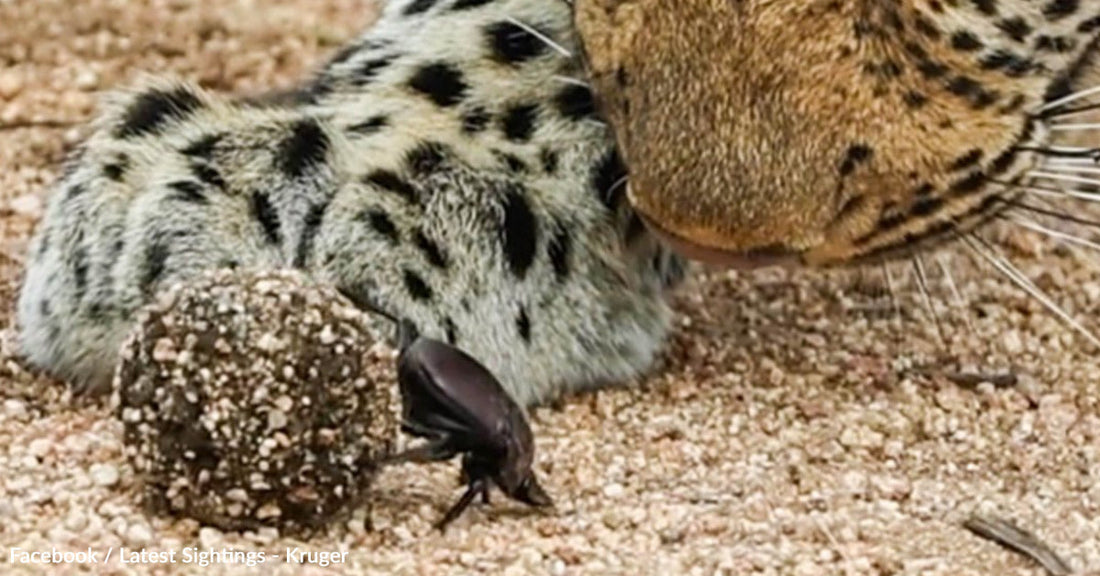
Among the countless wonders of the animal kingdom, few moments are as unexpectedly delightful as a chance encounter between two vastly different species. During a recent safari in South Africa’s Mala Mala Game Reserve, wildlife photographer Nick Kleer captured such a moment—a brief but magical interaction between a leopard and a dung beetle. The resulting video, now shared widely online, offers a rare glimpse into the curiosity that drives not only humans but also some of nature’s most majestic creatures. This unusual meeting of predator and insect showcases the rich biodiversity of protected African habitats, and subtly reminds us why conservation efforts remain so vital.

Leopards are often celebrated for their stealth and strength, but this particular sighting revealed a softer, more inquisitive side. As Kleer observed from a safe distance, a leopard noticed a dung beetle diligently rolling its prize across a dirt road. The beetle, oblivious to the towering feline nearby, continued its work—an age-old behavior that has fascinated scientists and nature enthusiasts alike. According to the source, the leopard appeared transfixed, ignoring the photographer entirely as she moved in closer to inspect the tiny insect and its cargo. This quiet moment of interspecies curiosity was captured on video, offering a heartwarming reminder of the intelligence and wonder found in the wild.
For those unfamiliar with dung beetles, their behavior is both practical and impressive. These insects locate and collect dung, shaping it into balls that they roll away to use as nourishment and nesting chambers for their young. While not glamorous, this behavior plays an essential role in many ecosystems, helping to recycle nutrients and improve soil quality. The beetle in Kleer’s footage was simply doing what dung beetles do best—working tirelessly to secure its food source. What made this instance extraordinary was the unlikely audience it attracted.
The leopard’s reaction, described by the original article as showing “trademark curiosity,” echoes the inquisitiveness often seen in domestic cats. Though many people associate leopards with their hunting prowess and elusive nature, this brief encounter revealed a different facet of their character. After a few moments of close observation, the leopard decided the beetle—and its dung ball—were not worth tasting and walked away, leaving the insect to continue its journey undisturbed. I found this detail striking, as it highlights the nuanced behavior of wild animals, which often goes unnoticed in broader discussions about predators.
Photographs and videos like Kleer’s do more than entertain; they help build appreciation for the complexity of life in places like Mala Mala. The reserve, located in one of South Africa’s most ecologically diverse regions, provides a sanctuary for a wide range of species, from iconic big cats to industrious insects. It is within these protected areas that such moments can unfold naturally, free from the pressures of habitat destruction or human interference.
Unfortunately, not all African leopards enjoy the safety afforded by reserves. According to the World Land Trust, these animals face serious threats including habitat loss, fragmentation, illegal wildlife trade, declining prey populations, and poorly managed trophy hunting. These challenges have led to a decline in leopard populations across much of their range. The footage captured by Kleer serves as a gentle reminder of what stands to be lost if conservation efforts are not maintained and expanded. Each leopard, each dung beetle, plays a role in the broader ecological web. Protecting them ensures that future generations can witness the same unscripted wonders that nature so often provides.
Moments like the one Kleer documented resonate because they challenge our expectations. We often view large predators through a narrow lens, focusing on their strength and danger. Yet here, a leopard paused to observe a beetle, not out of hunger but from curiosity. It’s a scene that invites viewers to reconsider the emotional and cognitive richness of wild animals. Such interactions, though fleeting, can inspire a deeper connection to the natural world and a renewed commitment to its preservation.
As wildlife photography continues to evolve, capturing not just the dramatic but also the quietly profound, stories like this one remind us of the value in looking closely. Whether it’s a beetle rolling dung or a leopard pausing to watch, every creature has its part to play. And sometimes, the most memorable moments are those of simple, shared curiosity.