
Little Owl Arrives With Feathers Coated in Oil and Unable to Fly Properly Until Rescuers Step In
Guest Contributor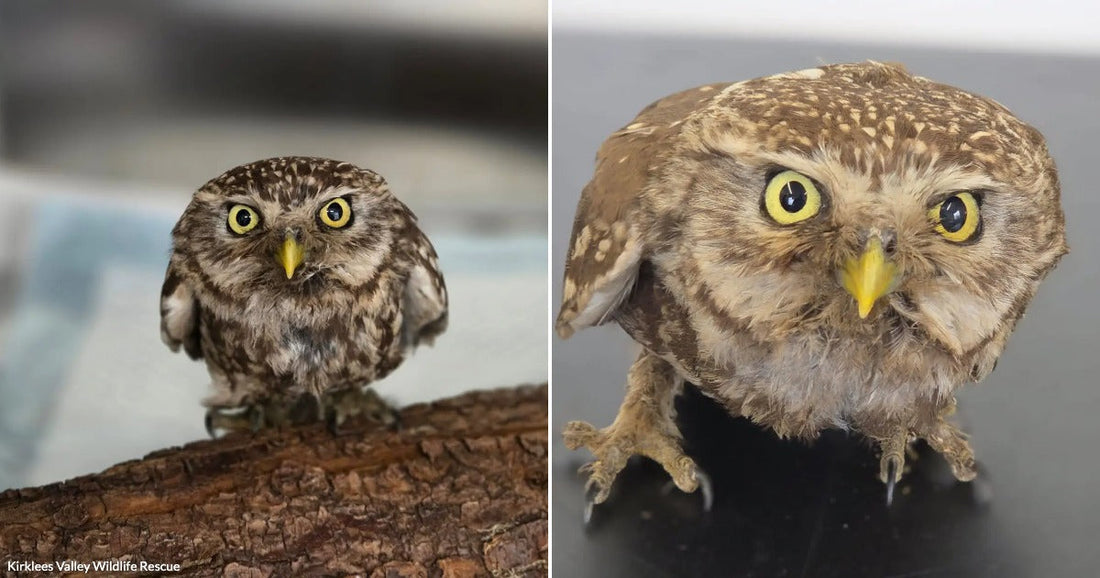
When a little owl arrived at a wildlife center with its feathers coated in oil, the team knew they were looking at much more than a cosmetic problem. Clean feathers are essential for a bird’s survival, and in this case, for a potential return to the wild. The story that follows is a gentle reminder of how vulnerable even the smallest wild creatures can be, and how careful, informed rescue work can turn a frightening moment into a hopeful recovery. For anyone interested in wildlife rescue success stories or how to help an oiled bird, this account offers a warm and uplifting glimpse behind the scenes.
The original report explains that for an owl, feathers carry a lot of responsibility. They are not only beautiful to look at. Feathers insulate the bird against the cold and allow it to fly with precision and power. When those feathers become clogged with a sticky substance like oil, the consequences can be serious. The bird can lose its ability to stay warm, its flight can become unstable or impossible, and stress levels can quickly rise. In this case, the little owl’s condition meant that getting him clean was the essential first step in any kind of rehabilitation.

The team approached that first stage with care and patience. Their priority was not just to remove the oil, but also to monitor how the owl was coping during the process. Cleaning an oiled bird is delicate work. The animal is already stressed, its natural defenses are compromised, and every handling decision matters. According to the account, the staff worked carefully to remove the contaminant, keeping a close eye on his responses the entire time, so that the treatment itself did not add unnecessary strain.
The little owl, unsurprisingly, was not especially impressed with the clean-up. Being washed and handled is unlikely to feel reassuring to a wild bird that is used to relying on camouflage, distance, and flight for safety. The report notes that he did not enjoy the process, which is easy to picture. Yet with supportive care and the opportunity to rest afterward, he started to recover from both the physical and emotional toll of his ordeal. As the oil came off and his feathers began to settle back into their natural condition, he started to look much more like the owl he had been before the incident.

Kirklees Valley Wildlife Rescue
I found this detail striking: the transformation from a small, sticky, bedraggled patient into a bird that looks like itself again is not simply cosmetic. For wild animals, appearance is closely tied to function. When an owl’s feathers lie correctly and regain their structure, that change signals a return of their insulating and aerodynamic qualities. It also marks a shift in how the animal feels, as clean plumage allows more comfortable rest and better control over body temperature.
Once he had recovered from the wash and his condition stabilized, the little owl moved from the more controlled environment of initial care into an outside aviary. This change of setting is an important milestone in many rehabilitation journeys. The aviary provided space to move, stretch, and rebuild strength, without exposing him to the full challenges of the wild before he was ready. Here, staff could watch his behavior closely. They observed how he perched, shifted his weight, and used his wings, and they monitored his flight to see whether he was regaining the coordination and stamina that an owl needs to survive.

Kirklees Valley Wildlife Rescue
Flight assessment is a crucial part of deciding whether a wild bird can be released. According to the report, the team used the time in the aviary to evaluate how the little owl moved and flew, looking for signs that he was not only physically capable but also confident in his own abilities. It is one thing for an animal to flutter across a small enclosure. It is another to navigate more extended flights, turn sharply, land accurately, and manage the controlled bursts of speed needed to hunt or avoid danger. Only when these elements fall back into place can a responsible wildlife organization consider release.
In this case, the outcome was as positive as anyone following the story could hope for. The team concluded that the little owl was ready to return to his home range. This step closed the circle of his wildlife rehabilitation, taking him back from care to the landscape he knew. The account describes how his release was a little tricky to capture on camera. Twilight and darkness favor owls rather than video quality, and his departure was more felt than seen. The article notes that anyone with night vision might be able to pick him out in the released footage, which becomes a small, charming detail in its own right.
The release video difficulty underscores a larger truth about encounters with wild animals. Sometimes the best moments are fleeting, half seen, or only captured in memory. The bird is healthy enough to disappear quickly, and in wildlife rescue success stories, that vanishing act is often the most satisfying sign of all. The little owl’s quick exit, barely traceable on film, hints at a renewed strength and an eagerness to reclaim his nocturnal world.
The original piece closes on a gentle note, describing the outcome as a lovely one for a tiny patient who arrived in such a sticky situation. That phrasing captures the tone of the entire episode. It does not minimize the seriousness of oil contamination, but it also allows space for relief and appreciation when hard work leads to a happy ending. The rescue, the painstaking clean-up, the period of monitoring in the outside aviary, and the eventual decision to release all weave together into a quiet celebration of care and attention to detail.
This story also highlights the value of specialized organizations that know how to respond when a bird or other wild animal ends up in trouble. From recognizing that oily feathers threaten warmth and flight, to understanding how to clean a distressed animal safely, to judging when a bird is strong enough to fend for itself again, every step involves knowledge and judgment. Readers who care about wildlife rescue, oiled bird rehabilitation, and the wellbeing of local species can find in this case a clear, hopeful example of what effective intervention can look like. For those who may one day encounter an animal in need, it also illustrates why connecting with experienced local groups is so important. Their work can turn a sticky situation into a story of recovery, release, and a quiet return to the night sky.
Read more at https://kirkleesvalleywildlife.org/2026/09/25/a-little-owls-sticky-situation/