
She Left a $75,000 Corporate Job for Yellowstone and Now Pays Just $96 a Month in Rent
Guest Contributor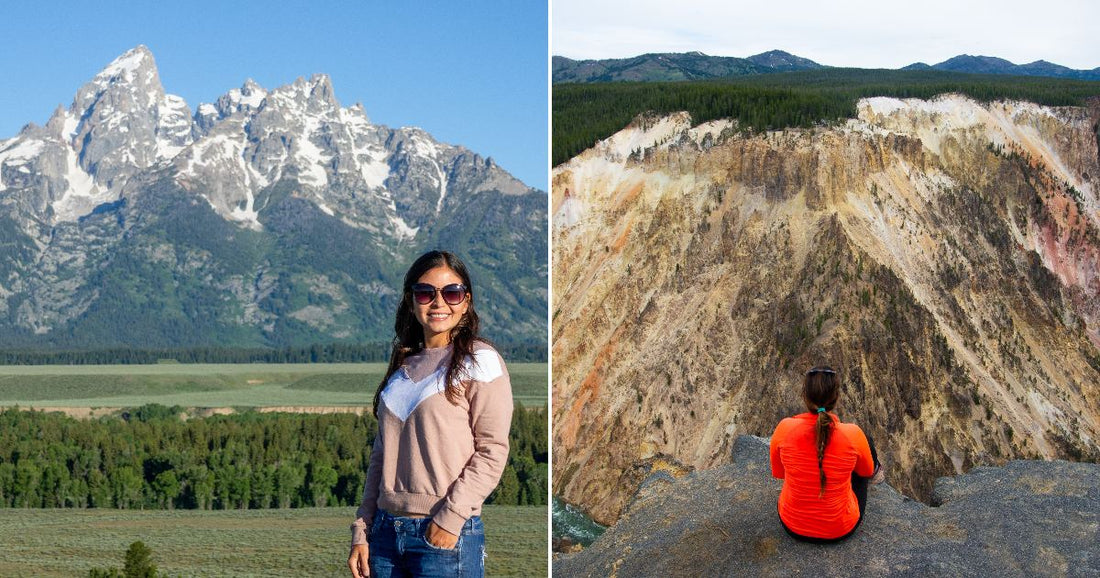
Living in Yellowstone National Park for just 96 dollars a month sounds like a fantasy, yet for 26-year-old seamstress Zoe De La Paz, it is real life. Her move from a corporate engineering job in Chicago to a seasonal tailoring role inside the park shows how one decision can radically shift not only a career, but an entire way of experiencing the world. The story of how she traded a 75,000 dollar salary for a uniform department job and employee dorm housing offers a vivid example of what it looks like to prioritize purpose, creativity, and time in nature over a traditional 9-to-5 path.
Before she arrived in Yellowstone, De La Paz was working as a mechanical designer for an engineering firm in Chicago. She was well paid and settled into big-city life, yet she felt creatively unfulfilled. The catalyst came in 2024 when she traveled to Yellowstone to visit a friend with a seasonal job in the park. Seeing the dramatic landscapes and the freedom that came with seasonal work planted a powerful seed. She realized that life was too short to stay in a job that left her unhappy and creatively stifled.

Her move was not impulsive. The article describes how she reconnected with her long-standing love of sewing, a skill she first developed as a teen cosplayer. While still in Chicago, she tested the waters by taking odd jobs at local music venues on nights and weekends. During one of these side gigs catering a concert, she met members of The Weeknd’s wardrobe team and eventually did costuming work for backup dancers. That experience confirmed that a hands-on, creative sewing career was not only possible but within reach.
In early 2026 she began seriously looking for a more creative role and kept checking job postings for Yellowstone, inspired by her earlier visit. By June she had secured a position with Xanterra Parks & Resorts, the concessionaire that runs many of the hotels, restaurants, and services within the park. Her new job as a tailor in the uniform department pays 19.25 dollars an hour and gives her a daily view of the mountains and the chance to build a future around her craft.

Her typical workday starts early. She catches a 6:45 a.m. employee shuttle for a 15-minute trip from her dorm in Mammoth Village in Wyoming to Xanterra’s facilities in Gardiner, Montana. She works full time, Monday through Friday, roughly 7 a.m. to 4 p.m. with an hour for lunch. On the job she hems pants, sews on patches, replaces snaps, buttons, and zippers, and makes sure uniforms for thousands of employees are comfortable and presentable, from housekeepers and restaurant workers to security staff and tour guides.
The start of the summer season brought a steep learning curve. With hundreds of new employees arriving in a short span of time, she and one other tailor had to keep pace with a flood of alterations and repairs. She recalls days when they hemmed around 40 pairs of pants and pushed to meet same-day turnaround times. Despite the demands, she values the role she plays in helping public-facing staff feel confident and at ease in their uniforms.
The work is not purely functional. De La Paz’s team also uses creativity to solve practical problems. One detail I found striking is an upcycling project where they turned old company-issued backpacks into fanny packs in response to a new clear-backpack rule in the park. The article notes that her colleagues come from a broad range of backgrounds, including a 73-year-old retired educator, a grad student, and a former hairstylist who joined the park system to see more of the world.
Financially, her life looks very different from Chicago. She now pays just 96 dollars a month for employee lodging, a dorm-style room in Mammoth Village that she shares with up to two roommates. That fee, deducted from her paycheck, includes Wi-Fi and utilities and provides access to communal bathrooms, laundry facilities, and shared social spaces. Her July 2026 budget offers a clear look at how she spends while living in Yellowstone. That month she spent 1,162 dollars on discretionary items like gifts, entertainment, household needs, and pet care, 742 dollars on food, 586 dollars on savings and investments, 34 dollars on subscriptions, and 20 dollars for her phone bill.
Food is subsidized in a structured way. Around 359 dollars is automatically deducted from her paychecks to fund a meal stipend at six employee dining rooms run by Xanterra. On top of that, she chose to spend 383 dollars on off-campus food in July, including restaurant meals and some delivery orders. She notes that her food and discretionary spending were higher than normal that month because it was her birthday. She bought herself a new bag, a sewing machine, and hosted several visiting friends and family members, which meant extra spending on dinners and activities such as cruises on Yellowstone Lake. An especially useful perk was an extra-generous employee discount at park gift shops for two weeks in July, which she used to get an early start on holiday shopping.
Her responsibilities still extend back to Chicago, where her cat Pepperjack lives with a former roommate. She sends 200 dollars each month to help cover pet care and orders cat food online for delivery. Even as her income has dropped compared with her engineering salary, she continues to prioritize financial stability. She contributed 586 dollars to savings and investments during July and maintains almost 11,000 dollars in emergency savings along with a 401(k) from her former employer valued at more than 34,000 dollars. She currently does not pay for health insurance, relying instead on access to a low-cost employee clinic, where a recent visit for a head cold cost her only 15 dollars.
For De La Paz, the financial trade-offs are balanced by her surroundings. She grew up in the Midwest and later lived in Chicago, but Yellowstone’s mountains and wildlife have changed her relationship with nature. She describes feeling as though she is living with nature instead of occasionally dipping into it as an outsider. On a hike during her second day in the park, she encountered a grizzly bear and now stays alert for elk, bison, and other potentially dangerous animals. She emphasizes the mindset that in Yellowstone humans are in nature’s territory, which requires ongoing respect and caution.
Life in the park also includes a built-in social network and low-cost activities. Employee resource groups organize horseback rides, group hikes, and outings such as a day trip to the Cody Rodeo, where she paid 6 dollars for the three-hour bus ride and around 20 dollars for entry. Another meaningful benefit is the ability for visiting friends and family to stay inside the park for only 5 dollars a night. She points out that for many people there are real geographical and financial barriers to visiting national parks and that commercial lodging in Yellowstone can rival the cost of international travel. Against that backdrop, paying what she calls “pennies and dimes” to live in the park feels like a rare privilege.
Her time in Yellowstone is structured as a seasonal contract that runs through the end of September. The article explains that she is already looking ahead and considering her next move as her sewing career evolves. In Los Angeles, she has leads on positions in film or concert touring productions. In New York City, she is exploring possible theater costuming roles and a tailor job. She plans to use her 11,000 dollar savings cushion to help fund a relocation to whichever city presents the best opportunity.
De La Paz reflects that it is intimidating to think about how quickly her life has changed, from clocking into a corporate office less than six months ago to now asking what comes next in a very different line of work. Yet her time in Yellowstone has reinforced her belief that she can build a sustainable career behind a sewing machine while living in environments that inspire her. The experience of arriving in a place where she knew no one has reminded her of the size and variety of the world and strengthened her habit of trusting that if she takes a leap, a safety net will appear in some form. She expects that wherever she goes, creativity and sewing will remain central and that the months in Yellowstone will stand as a turning point that permanently shifted her sense of what work and home can look like.