
🚨Urgent: Missile Strikes Shelter in Ukraine! Rush Emergency Aid!
This Tiny Tick Can Trigger a Serious Allergy to Red Meat
Guest Contributor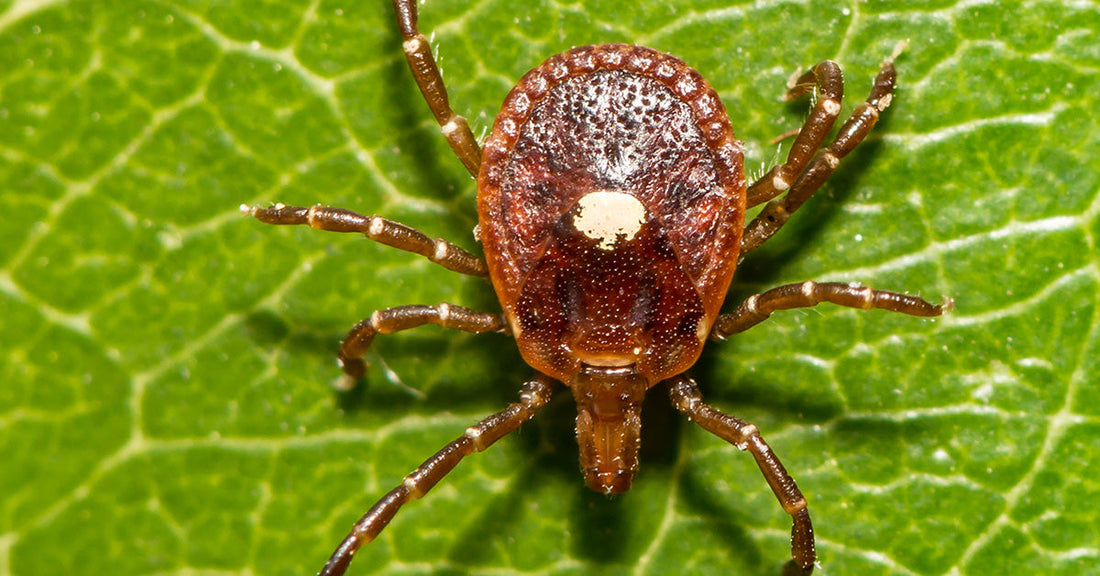
A tiny tick is quietly reshaping life on parts of the East Coast. The lone star tick, once mostly confined to the American South, is now linked to a fast-rising condition called alpha-gal syndrome, a bizarre meat and dairy allergy that can upend everything from family barbecues to hospital care. On Martha’s Vineyard, a resort island off Massachusetts that has become a surprising hot spot, the lone star tick’s spread has turned a scenic vacation hub into an unexpected front line for a new kind of public health crisis.
The original report from the L.A. Times describes how a public health biologist, Patrick Roden-Reynolds, can sweep a simple swatch of white flannel across a yard and collect more than 30 ticks in minutes. Local residents talk about a sense of invasion and use words like “plague” to capture how omnipresent these arachnids feel. The biologist treats clothing with permethrin, an insecticide that kills ticks on contact, and arms himself with gaiters, gloves and a lint roller. Even with these precautions, his tick surveys routinely turn up clusters of the tiny pests.

Behind those ticks is a condition many people had never heard of a decade ago. Alpha-gal syndrome appears after a lone star tick bite injects a molecule called galactose-alpha-1,3-galactose, or alpha-gal, into the bloodstream. This sugar occurs naturally in most mammals but not in humans. For reasons that remain unclear, some immune systems respond by producing antibodies that later react violently when a person consumes red meat, dairy and other mammal-derived products. The allergy often shows up hours after a meal and sometimes weeks or months after the tick bite, which makes it hard to connect the dots.
The article highlights how disorienting this can be for people who suddenly find themselves allergic to foods they enjoyed their entire lives. A University of Virginia allergist, Dr. Jeffrey Wilson, has treated nearly a thousand alpha-gal patients. Many were stunned to learn that staples such as hamburgers, bacon and ice cream now carried serious risk. Some describe mild symptoms like itchiness and hives while others report headaches, fever, nausea or gastrointestinal pain so intense that one person likened it to “knives in the stomach.” The most severe cases involve anaphylaxis, with dropping blood pressure and restricted airways that can become life-threatening within minutes.
On Martha’s Vineyard the numbers are rising quickly. The local hospital recorded only two positive alpha-gal tests in 2020. By 2025 that figure had climbed into the hundreds, with close to 700 cases already counted by late summer and more each year. Hospital leaders now describe alpha-gal as the island’s most pressing emerging illness. Fear of tick bites, according to a local editorial, has replaced fear of sharks as the dominant outdoor worry. In response the hospital opened a special clinic for tick-bite patients and launched a multimillion-dollar research program to study why some individuals develop serious reactions while others never show symptoms despite having antibodies.

This unfolding crisis is not limited to people’s plates. Alpha-gal complicates medical care in ways that are easily missed. The article recounts how a Martha’s Vineyard resident heading into open heart surgery had to stop her surgeon from using a cow valve, then a pig valve, because both could contain the offending molecule. She ultimately avoided a valve replacement, yet still received heparin, a widely used blood thinner made from pig intestinal tissue, and broke out in hives. Her alpha-gal symptoms worsened after the procedure. Situations like this reveal a troubling gap between the rapid spread of the allergy and the slower pace of medical awareness.
Accessing a correct diagnosis can be difficult even outside operating rooms. In one North Carolina study more than 90 percent of alpha-gal cases were misdiagnosed, often as food poisoning or unspecified gastrointestinal trouble. Many clinicians are simply unfamiliar with the condition or unaware that a blood test exists for alpha-gal antibodies. The Centers for Disease Control and Prevention recently concluded that official estimates almost certainly undercount the true scope of the allergy. In some heavily affected states such as Arkansas, Kentucky, Missouri, Tennessee and Virginia, one in four adults tested positive for alpha-gal antibodies even though only a smaller fraction had symptoms.
On Martha’s Vineyard, community responses now reach from medical corridors to school cafeterias. A local nonprofit, Tick Free MV, pushes for coordinated island-wide strategies. School lunch programs have added more meatless and dairy-free options so that children with alpha-gal can eat safely alongside their peers. Restaurants throughout the island’s six towns are rethinking menus and kitchen practices, treating meat and dairy the way they would other severe allergens. One chef described swapping out pans, knives and cutting boards to avoid cross contamination after seeing how a single mistake, such as grilling food in butter rather than oil, could send a diner to the hospital.

At the same time homeowners and businesses debate how best to battle ticks on their properties. Several companies market pesticide treatments or natural oil sprays designed to repel deer or kill ticks. Critics worry about unintended effects on pollinators and pets. Some researchers see promise in devices that treat deer with tick-killing compounds in a way similar to dog collars, though rolling out such technology on a large scale remains complex. Quirkier proposals, such as a “Roomba-like” device that would move through yards vacuuming up ticks, sit on the more speculative end of the spectrum.
Many experts and local officials point to deer as a central piece of the puzzle. Lone star ticks use white-tailed deer as key hosts where they can feed, mate and multiply. On the Vineyard a recent aerial survey counted several thousand deer, far beyond levels considered manageable for both ecology and tick control. Extending hunting seasons and encouraging venison donations to food pantries are part of the strategy, though even the most determined hunters face an uphill battle. One bowhunter who has alpha-gal himself described his efforts as a kind of “revenge,” harvesting dozens of deer a year that he can no longer personally eat.
For residents already living with alpha-gal syndrome, daily life becomes an exercise in vigilance. Some turn to alternative proteins like emu or ostrich, which are birds and do not carry the offending molecule, or to specially bred pork that has been genetically altered to remove alpha-gal. Others adopt fully plant-based diets. Outdoor routines also change. People wear permethrin-treated clothes, tuck pants into socks and add gaiters even for a quick walk in the garden. One resident now wears gaiters to the beach. The goal is simple: avoid another lone star bite at almost any cost.

Researchers and public health workers on the island talk about a “holy grail” solution in the form of a tick vaccine that could block transmission or prevent the allergic sensitization process from unfolding. Several teams are working on vaccine concepts, but experts emphasize that practical results lie years away. For now the island’s strategy rests on layered defenses. These include public education, faster diagnosis, support for those living with alpha-gal and incremental environmental changes that might eventually lower tick numbers. I found it striking how an issue as small as a tick bite has forced an entire community to rethink food, medicine and what it means to safely enjoy the outdoors in a warming world.