
🚨Urgent: Missile Strikes Shelter in Ukraine! Rush Emergency Aid!
Everyone Thought This Dog Was Dead Beside the Tracks Until Someone Saw Him Move
Guest Contributor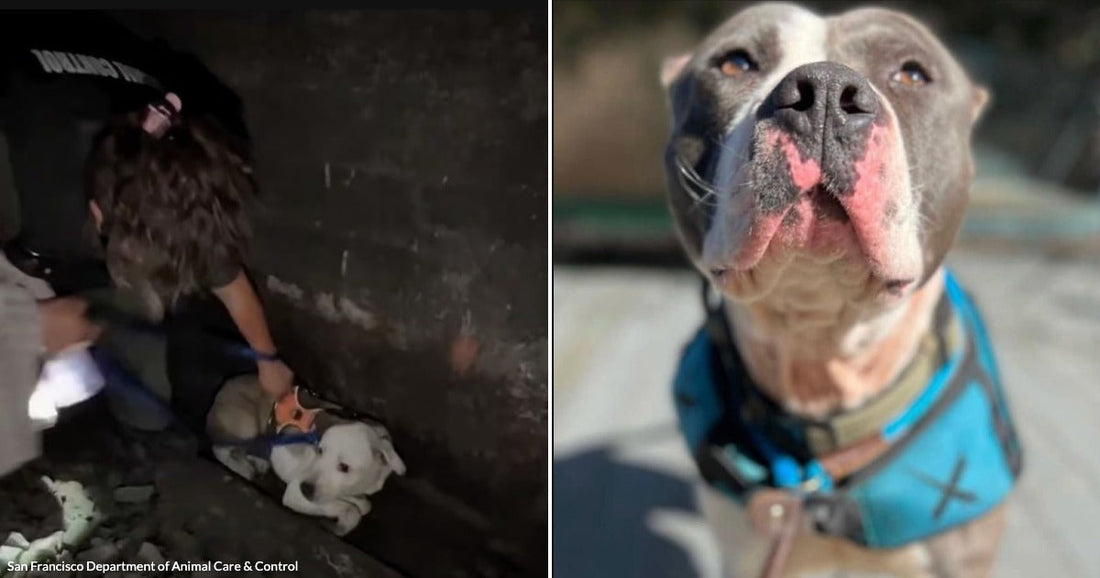
A routine day on the tracks turned into a quiet, emotional rescue story when a two-year-old pitbull named Roo was pulled from a dim San Francisco railway tunnel after two days alone. This heartwarming dog rescue has captured attention not just because of the danger Roo faced, but because of the way small, coordinated acts of care and attention brought him safely home. For anyone who lives with a pet, the idea of a beloved animal lost in a dark tunnel while trains pass overhead is a chilling one, and it gives this story an especially powerful pull.
According to the account from San Francisco Animal Care & Control, Roo is a recent adoptee who had been “spooked” before he disappeared. That brief detail hints at a backstory that many rescue dog owners know well. Newly adopted animals are often still adjusting to their surroundings. They might not yet understand that their new home is permanent, or that their new humans are trustworthy and safe. A sudden noise, a fast movement, or an unexpected encounter can send a nervous dog bolting, driven more by instinct than by logic. Roo’s flight ultimately placed him in one of the most dangerous environments nearby, a railway tunnel where visibility is low, escape routes are limited, and the roar of passing trains can be overwhelming.

The first people to realize Roo was in trouble were Caltrain operators who noticed his body inside the tunnel. From their vantage point on a moving train, the dog appeared to be lifeless, and they initially believed that Roo had been struck and killed. That moment underscores how narrow the margins of survival can be around active rail lines. A dog lying near or between tracks, unable or unwilling to move, has very little protection from the machines that use those rails every day. The operators’ report set the stage for what would become an intensive, close-quarter search by animal control officers.
On the second day, the situation changed. Someone spotted Roo moving in the tunnel, and that crucial observation meant there was still time to help. Animal control officers entered the dark passage on foot, carrying flashlights and carefully making their way along the rail line. They were not dealing with a typical lost dog search in a park or neighborhood. A railway tunnel is confined and noisy, and it demands extreme caution from anyone inside. Trains may still be running, sound can echo in disorienting ways, and visibility depends entirely on artificial light. Within that context, simply walking toward a frightened animal becomes a deliberate, calculated effort to avoid startling the dog into further danger.

San Francisco Department of Animal Care & Control
Roo was eventually found curled up next to one of the rails. The description of him lying there, pressed against the track in a dim, echoing tunnel, conveys how vulnerable he must have felt. For two days, he appears to have stayed in roughly the same area, perhaps too frightened or exhausted to move far. The animal care team reports that when officers approached, Roo was terrified at first, which is understandable for a dog that had just endured days of loud noises, vibrations, and isolation. Yet once the officers were able to guide him safely along the tracks and toward the tunnel’s mouth, his fear reportedly gave way to visible relief.
That moment when Roo left the darkness behind and stepped back into daylight marks the emotional center of the story. The shelter has described him as thrilled to be rescued, and it is easy to picture the transformation from a tense, tucked body near the rails to a more relaxed dog responding to gentle voices and outstretched hands. In many rescue accounts, this shift from panic to trust happens in an instant, when an animal realizes that the unfamiliar humans nearby are there to help. Roo’s journey out of the tunnel highlights that subtle but powerful change.

San Francisco Department of Animal Care & Control
A practical detail about Roo’s situation turned out to be just as important as the bravery and persistence of the rescuers. Roo had been microchipped, which allowed animal care staff to quickly identify his owner and arrange a reunion once he was safely out of danger. Microchipping is a standard practice among shelters and veterinarians, yet stories like this give that ordinary procedure fresh weight. Without a chip, connecting a lost dog to their family can take days or weeks, if it happens at all. In Roo’s case, it meant that instead of simply being another anonymous stray found along the tracks, he became a specific, beloved pet with a name, a recent adoption history, and a human waiting anxiously for news.
The reunion between Roo and his owner closes this episode on a hopeful note. The dog who had been presumed dead inside a tunnel did not just survive, he returned home. For the adopter, the experience likely underscores two powerful realities at once. First, even a new or nervous dog can form a deep bond that makes any loss feel intensely personal. Second, safety planning for recently adopted pets is especially important. Securing yards, checking for gaps in fences, double leashing in busy areas, and preparing for potential “spook” moments can reduce the risk of flight. Each of those steps is a small act of prevention that could spare both humans and animals from similar scares.
Roo’s story is not the only example of the San Francisco Bay Area mobilizing to protect animals in precarious situations. In another recent episode, firefighters in Menlo Park rescued a missing dog that had ended up swimming in the San Francisco Bay while seagulls trailed above. The image of a lone dog paddling in the chilly water with birds circling adds a different visual, but the themes overlap with Roo’s experience in the railway tunnel. In both situations, an animal found itself alone in a harsh environment that offered no clear way out. In both cases, people who noticed something unusual took the time to alert authorities or intervene directly, and skilled rescuers stepped in to bring the animals to safety.
Viewed together, these separate incidents reflect a broader culture of compassion and attentiveness to animals in distress. Trains and bays are not designed with pets in mind, yet they are part of the same urban and coastal landscape that dogs, cats, and people all share. When workers, commuters, and first responders treat a stranded dog as worthy of focused effort, that decision sends a quiet message about community values. It suggests that safety and care do not stop at human boundaries, but extend outward to the vulnerable creatures that live among us and sometimes wander into peril.
I found the contrast between Roo’s initial stillness in the tunnel and the description of his joy at being rescued particularly striking. That contrast captures how thin the line can be between tragedy and relief, and how a handful of decisions made by observant individuals can determine which side of that line a story falls on. For readers and pet guardians, it also offers a gentle reminder to invest in identification methods like microchips, to pay attention to the behavior of newly adopted animals, and to remain alert to signs of distress in the places we pass through every day. Behind each of those choices lies the possibility of another successful reunion, another dog stepping from darkness into the light.