
🚨Urgent: Missile Strikes Shelter in Ukraine! Rush Emergency Aid!
Mom’s Pregnancy Symptoms Mask A Stage-Four Brain Cancer Diagnosis
Guest Contributor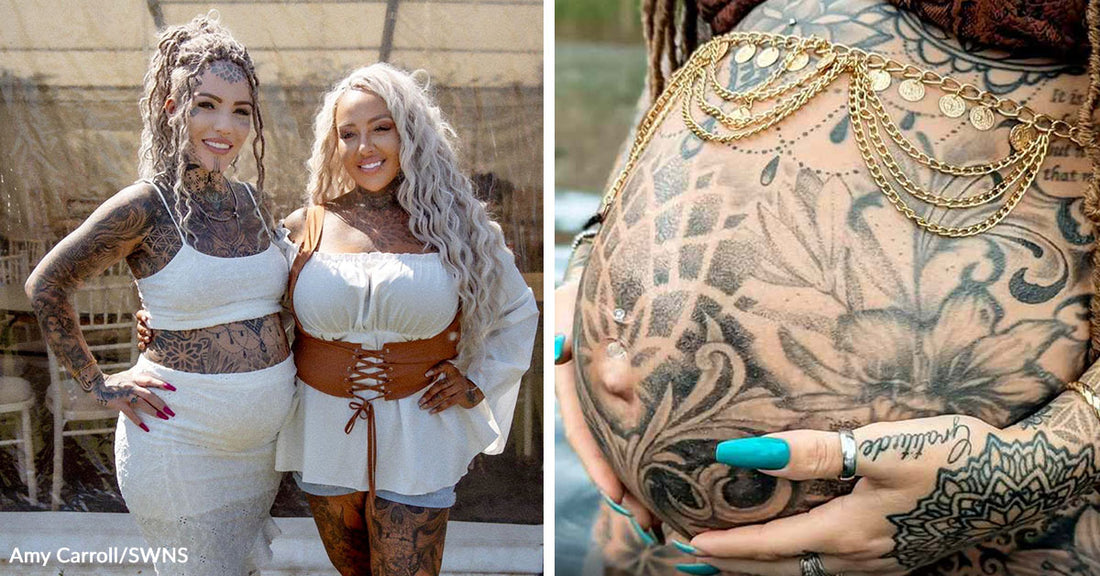
When 34-year-old Amy Carroll began feeling dizzy and faint during her fourth pregnancy, she assumed it was a side effect of gestational diabetes. Diagnosed with the condition early in the pregnancy, she did what many expectant parents do: she tried to manage her symptoms and carry on. Instead, those worrying spells turned out to be the first sign of something far more serious. A seizure in the middle of the night led to an emergency hospital visit and the discovery of stage four brain cancer, turning what had been a “miracle” pregnancy into a race against time for both mother and baby.
Amy, a support worker, mindset coach and tattoo model from Great Addington in Northamptonshire, had already survived one life-threatening illness. In 2021 she was treated for breast cancer, undergoing chemotherapy, radiotherapy and eight surgeries. Back then, a cosmetic breast procedure had unexpectedly saved her life. After breastfeeding her three boys, now aged 18, 12 and eight, she felt unhappy with how her chest looked and chose to have surgery. That was when she spotted a small lump that turned out to be breast cancer. She later reflected that she had gone into the operation for aesthetic reasons, but the decision led to a diagnosis that may otherwise have been missed.

Amy Carroll/SWNS
Following her treatment, doctors told Amy she would not be able to have more children. Against that backdrop, her fourth pregnancy felt extraordinary. She and her partner, 36-year-old Torrin Sirus, found out they were expecting over Christmas, and the baby was due on her birthday. The timing added another layer of meaning for the family, who saw the baby as a symbol of hope after a long and gruelling cancer journey. As the pregnancy progressed, however, Amy began to feel increasingly unwell.
Gestational diabetes in pregnancy can cause symptoms such as tiredness and increased thirst, so when Amy started experiencing dizziness and faint feelings, it made sense to assume the new diagnosis was responsible. The spells continued, and she tried to shake them off and push forward. Everything changed in the early hours of June 17, when Torrin woke to find her having a seizure in bed at around 3 a.m. An ambulance rushed her to hospital, where doctors quickly moved to investigate.
Within two days, scans revealed devastating news. A CT and MRI showed seven masses on Amy’s brain, and specialists confirmed that she had stage four brain cancer. Doctors at John Radcliffe Hospital in Oxford later verified that the tumours were secondary cancer that had spread from her previous breast cancer. For Amy and her family, the diagnosis landed heavily. Her partner has remained by her side throughout, as the medical team acts urgently to protect her health while giving her baby the best chance possible.
Because treatment for brain metastases cannot safely wait until full term, consultants made the difficult decision to deliver the baby early. Her care team scheduled an emergency caesarean section for Monday, July 6, when she would be just under 31 weeks pregnant. The plan is for Amy to give birth under general anaesthetic, then begin radiotherapy as soon as the following week. Doctors have explained that babies born at around 31 weeks often do well with appropriate neonatal support, and they have tried to reassure her that her son should have a strong chance of recovering and thriving.
Amy and Torrin have already chosen a name for their little boy: Arlo Atlas Sirus. Naming him before he arrives seems to be one way of grounding themselves amid the uncertainty ahead. Amy has spoken candidly from her hospital bed about the conflicting emotions she feels. On one hand, she is deeply grateful to be pregnant at all, describing this baby as an “absolute miracle” after being told she would never conceive again. On the other, she is facing the reality that her cancer treatment will separate her physically from her newborn at a time when most parents expect constant close contact.
As her doctors have explained the plan, Amy has learned that during some stages of chemotherapy she will not be able to touch Arlo at all. Even outside of active chemo days, she will need to assess after each treatment how she feels and what she can manage. The idea of not being with him continuously, especially in those fragile early weeks, is something she describes as heartbreaking. She is preparing herself for stretches apart from her baby boy while she undergoes radiotherapy and, potentially, more invasive procedures.
The potential side effects of treatment weigh heavily on her mind. She has been told that surgery and radiation to the brain can sometimes lead to complications that affect memory, balance, eyesight or speech. Among her greatest fears is the possibility of forgetting her life or her children, or losing the ability to communicate with them. For a young mother who has already endured so much, the thought of cognitive loss carries a particular poignancy.
Meanwhile, Amy’s three older sons are trying to navigate this new reality. They have not yet been able to visit their mother in hospital, but she hopes to see them before she undergoes the general anaesthetic for her caesarean. She has spoken about wanting to take them out to somewhere familiar like Costa, simply to share a bit of normal time together and give them a memory that is not framed by hospital walls or medical equipment. With the summer holidays approaching, she is keen for them to have as much normality as possible, even as the family faces extraordinary stress.
In the years after she beat breast cancer the first time, Amy channelled her experience into supporting others. Fundraising became an important part of her life, not only as a way to help people in similar situations but also as a source of purpose and community for herself. Through that work she met many friends who understood the realities of living with and beyond cancer. One of those friends, Kirsty Wilkinson, has now set up a JustGiving page to support Amy as she confronts this new diagnosis and the demands of treatment with a newborn in intensive care.
Amy has expressed how surprised and moved she was when she learned about the fundraiser. She had grown used to being the one helping to raise money for others and had never expected to be on the receiving end of that kind of support. Knowing that people are rallying around her again appears to bring some comfort at a time when so much is uncertain.
Her story touches on many powerful themes: the unpredictability of health, the way a routine medical decision can lead to life-saving discoveries, the emotional complexity of a miracle pregnancy that collides with a cancer recurrence, and the strength of family bonds under pressure. It also highlights how important it can be to listen to persistent or unusual symptoms, even when there seems to be an obvious explanation such as gestational diabetes. For Amy and her family, the coming weeks will be filled with surgeries, neonatal care and treatment schedules, and yet there is also the hopeful arrival of a long-wished-for baby boy named Arlo.