
Nearly 100 Years Old, Mommy the Tortoise Becomes a First-Time Mom to 16 Hatchlings
Guest Contributor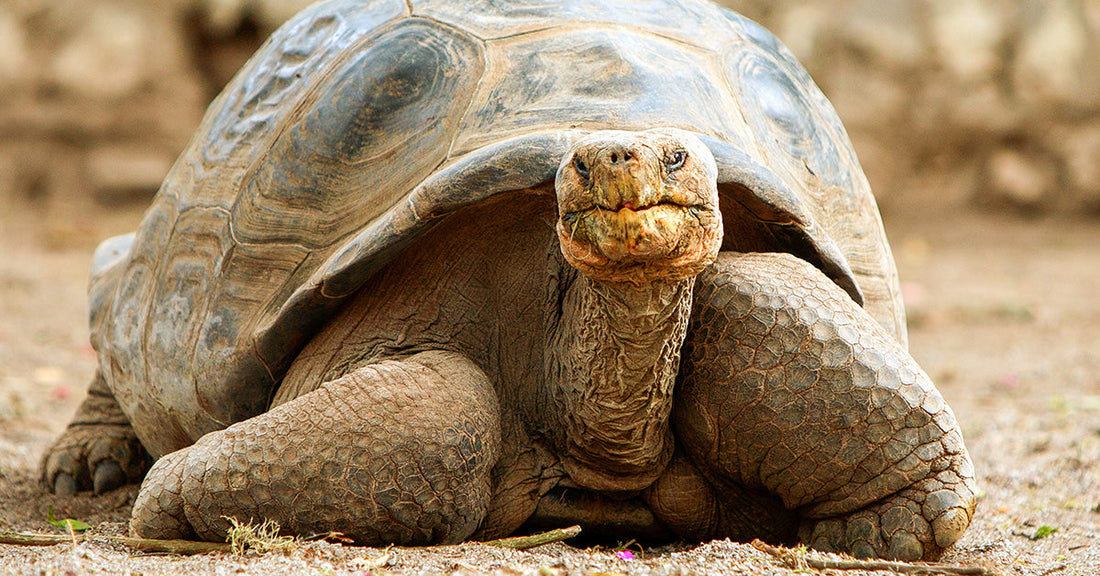
At Philadelphia Zoo, a nearly 100-year-old Galapagos tortoise named Mommy has become the unlikely star of a conservation success story. In a development that has delighted staff and visitors alike, nine more critically endangered Western Santa Cruz Galapagos tortoises hatched at the zoo in 2025, bringing Mommy’s total to 16 hatchlings. For a species facing severe threats in the wild, and for a first-time mother approaching a century of life, this is a rare and hopeful milestone in Galapagos tortoise conservation.
The new arrivals represent only the second successful clutch of this species to hatch in the zoo’s 150 plus year history. Their parents, Mommy and her companion Abrazzo, are the zoo’s oldest residents and are estimated to be close to 100 years old. The latest group of nine hatchlings includes six males and three females, all eating and growing well. They join seven other babies that hatched earlier in the year and first placed Mommy in the history books as the oldest first-time mom of her species.
The babies are part of the Association of Zoos and Aquariums (AZA) Species Survival Plan breeding program, designed to help ensure the survival of threatened and endangered species and maintain a healthy, genetically diverse population. Including these hatchlings, there are now 60 Western Santa Cruz Galapagos tortoises in the managed AZA population, underscoring just how important each successful clutch is. Western Santa Cruz Galapagos tortoises are listed as critically endangered by the International Union for Conservation of Nature, with pressures that include human-wildlife conflict, invasive species, and the degradation of their native habitat.
Zoo leaders have emphasized how deeply this story resonates beyond the reptile house. President and CEO Dr. Jo-Elle Mogerman described the family’s journey as one that invites people to think about legacy, conservation, and what it means to protect what is precious over the very long lives these tortoises can lead. The zoo has framed its mission around ensuring that these hatchlings inherit a healthy planet more than a century from now when they could be raising offspring of their own, a perspective that matches the famously long lifespan of Galapagos tortoises.
Vice President of Animal Well-Being and Conservation Rachel Metz noted that what motivates the team is creating meaningful connections between animals and guests. The sight of baby Galapagos tortoises has become a powerful way to inspire interest in herpetology and to draw attention to the many critically endangered reptiles and amphibians that often receive less notice than larger mammals. I found this detail striking, because it highlights how individual animals and compelling stories can help spark future conservation careers.
Behind the scenes, this success has been years in the making. Abrazzo arrived at Philadelphia Zoo in October 2020 from Riverbanks Zoo and Garden in South Carolina on a breeding recommendation from the Species Survival Plan. In 2021, donor support on Giving ZOO Day funded new substrate so that Mommy would have suitable nesting material. In 2022, the animal care and conservation education teams collaborated to create an ethogram of Abrazzo’s behaviors, carefully documenting how he spent his time to better understand and support natural social interactions with Mommy.
Since 2023, Mommy has laid five clutches in total, yet the path to viable eggs was not straightforward. Three earlier clutches did not result in hatchlings. Only in November 2024 did she lay her first successful clutch. That group included four females that hatched between February and March 2025, named after the Golden Girls, and three males that hatched in April 2025. One male, Zee, was named in memory of Midshipman 3/C Justin Zemser. Then, in January 2025, Mommy laid another clutch which produced three females that hatched in May 2025 and six males that hatched from June through July 2025, forming the most recent wave of babies that has now captured public attention.
The biology of Galapagos tortoises added another layer of complexity. Their sex is determined by incubation temperature rather than genetics in the sense humans typically think about it. Temperatures below 82.4 degrees Fahrenheit lead to male hatchlings, while temperatures above 85.1 degrees result in females. Eggs can take four to eight months to hatch, and those incubated at female-producing temperatures usually hatch first. Careful management of these conditions allows the zoo to support a more balanced sex ratio in the managed population.
Many of the hatchlings already carry names with deep meaning. Colette, a female, honors Colette Adams, a respected figure in herpetology and a leader in the Galapagos tortoise Species Survival Plan who advised the zoo throughout the breeding process. Soledad, another female, evokes both the Spanish word for solitude and a tribute to Lonesome George, the last Pinta Island Galapagos tortoise, while also referencing The Solitude Mansion on the zoo’s grounds. Isabelle is named for Isabelle Hunt Conant, the zoo’s photographer in the 1930s and 1940s who illustrated and photographed key reptile publications.
Male hatchlings also carry names rooted in history and place. Roger recognizes herpetologist and former zoo director Roger Conant, who became curator of herpetology just three years after Mommy arrived in the 1930s and later designed the Reptile & Amphibian House. Fausto commemorates Fausto Llerena, the longtime park ranger at Galapagos National Park who cared for Lonesome George for four decades. Caldero nods to the ancient volcanic calderas on Santa Cruz Island, the native home of Western Santa Cruz Galapagos tortoises. Lee honors the grandfather of an animal care specialist who inspired his family’s love of animals and conservation. In a staff drawing, another team member chose to name a male hatchling James after her son, complementing Abby the giraffe, who had already been named for her daughter. Two male hatchlings remain unnamed and may receive their names through the public naming opportunity.
For now, keepers are using small spots of nontoxic nail polish on different areas of each hatchling’s shell as a simple way to tell them apart. The youngsters rotate among their indoor habitat in the Reptile & Amphibian House, an outdoor habitat nearby, and behind-the-scenes spaces where staff can monitor their growth and health. Over time, some of the hatchlings will move to other facilities in coordination with the Species Survival Plan, though they are expected to remain in Philadelphia for at least one year. Decisions on transfers will be made in collaboration with AZA partners beginning in fall 2026.
In the wild, Galapagos tortoises live on the Galapagos Islands in the Pacific Ocean off the coast of Ecuador. They are the largest living tortoise species, with males reaching up to 500 pounds and females averaging around 250 pounds. As cold-blooded reptiles, they spend one to two hours basking in the sun each day, followed by eight to nine hours grazing and resting. Scientists estimate their lifespan to be between 100 and 200 years, an extraordinary timescale that underscores the significance of each new generation. There are currently 13 recognized living Galapagos tortoise species across seven islands.
Philadelphia Zoo has woven this story into its broader outreach. When Mommy’s first hatchlings made their public debut in April, the zoo introduced T-shirts featuring images of the babies and Mommy, with slogans such as “Never Too Late,” “Saving Species Since 1859,” and “Live Long and Grow a Thick Shell.” Proceeds from these shirts support the animal care fund, and they remain available through the zoo’s website. Visitors can also meet Mommy and Abrazzo in person through special behind-the-scenes experiences offered several days a week.
Philadelphia Zoo is home to three adult Galapagos tortoises, Abrazzo, Mommy, and Little Girl, along with the 16 Western Santa Cruz hatchlings, as well as two giant Aldabra tortoises named Wilma and Betty. For guests, seeing these tortoises up close can turn abstract concepts like species survival and habitat loss into something personal and immediate. For the zoo’s team, the sight of 16 tiny shells moving steadily across the habitat is proof that careful planning, collaboration, and persistence can yield results once thought nearly impossible.
They are still celebrating over a year after the miraculous hatching with four of the hatchlings named after the "Golden Girls".