
🚨Urgent: Missile Strikes Shelter in Ukraine! Rush Emergency Aid!
New Guinea Singing Dog: The Haunting Voice of the Highland Wilds
Guest Contributor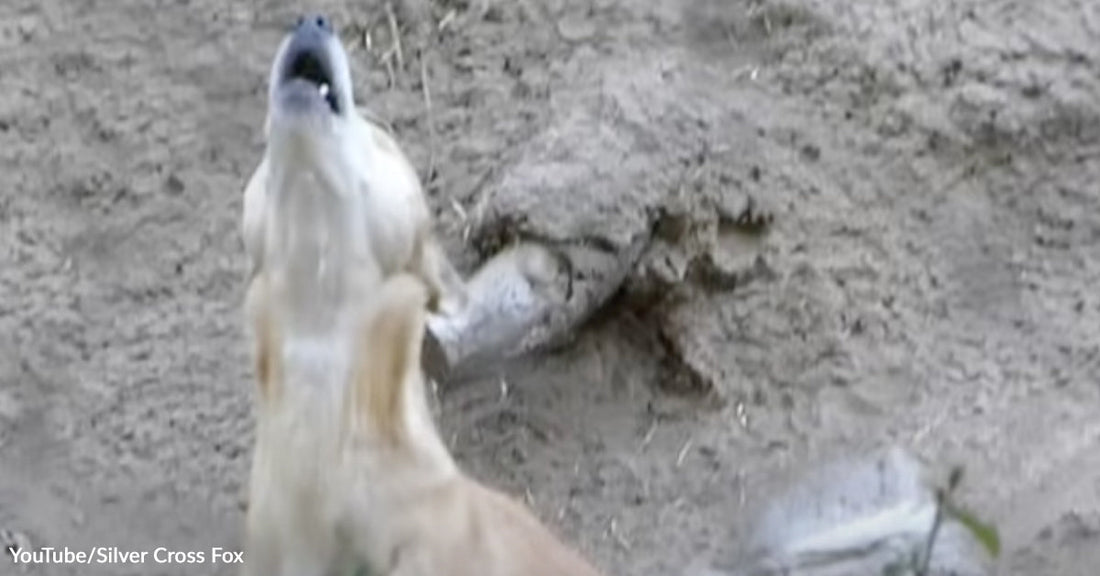
Deep in the misty highlands of Papua New Guinea, there is a dog that does not bark, lives on the edge between wild and domestic, and greets the sunrise with a haunting song. This is the New Guinea singing dog, often called the oddest dog in the jungle, and it has fascinated zoologists, dog lovers, and curious travelers alike. Closely related to the Australian dingo yet distinctly its own creature, the New Guinea singing dog is a rare example of a canine that still carries many of its ancient traits, including a voice like no other.
The New Guinea singing dog, also known as the New Guinea highland dog, originated thousands of years ago in the rugged mountains of New Guinea. According to the source article, when Papua New Guinea separated from mainland Australia roughly 12,000 years ago, the common ancestral population of wild dogs was split in two. To the south, those dogs gradually evolved into the modern dingo. To the north, in the isolated highlands, they developed into the dogs known today for their eerie, melodic howls. Smaller than dingoes and unusually agile, these canines spent most of their history as wild hunters before gradually moving closer to human communities.

Although they began as wild dogs, New Guinea singing dogs have, over time, become partially domesticated. In many local households, they now live as working companions rather than fully tamed pets. The article notes that genuinely wild highland dogs are now almost extinct in the forests and mountains of Papua New Guinea. Instead, most remaining New Guinea singing dogs live in or around villages. Even when they share homes with people, though, they keep a distinctly untamed air. Their sandy coats, sharp, upright ears, and striking, reflective eyes give them a lean, wild look that sets them apart from more familiar pet breeds.
In temperament, the New Guinea singing dog is not a typical family dog. These animals are highly intelligent and energetic, with a strong need for both physical exercise and mental challenge. The article emphasizes that they are not well suited to inexperienced dog owners. They require serious training from a young age and thrive best when given agility tasks and long, demanding walks. Without this structure and stimulation, their natural hunting instincts and intensity can easily become overwhelming in an ordinary household setting.
Part of what makes the New Guinea singing dog so intriguing is its combination of wild traits and domestic interactions. In reproductive behavior, for example, the article explains that these dogs usually form pairs rather than large packs. In a domestic context, a male may remain after the birth of puppies and help care for them. Out in the wild, however, dynamics can turn tense. Females sometimes attack males they perceive as a threat to their young, a reminder that protective instincts still run deep. This tension between cooperative parenting and defensive aggression reflects the species’ hybrid status between wild and domestic life.
Their diet and hunting style also reveal those roots. New Guinea singing dogs are carnivorous, focusing on small to medium birds and animals that match their size and speed. Occasionally, they have been observed eating fruit as well. Historically, their hunting habits brought them into conflict with human communities. The article notes that as these dogs preyed on livestock and poultry, local farmers began keeping their own dogs both for protection and as a way to manage or interbreed with the highland dogs. The result over generations was a closer relationship between people and New Guinea singing dogs, even as the animals retained their independent streak.
For anyone curious about the New Guinea singing dog lifespan, the article reports that individuals in captivity or domestic situations often live to around fifteen years. This is on the higher end for dogs of their size, comparable to some long-lived small breeds. Their lean build, high activity level, and protein-rich diet likely play a role in this longevity. The author notes that they are generally strong, agile animals that are less prone to accidental injury than some more fragile breeds, which may also contribute to their longer lives.
Despite all of these remarkable traits, the New Guinea singing dog is not recommended as a household pet. The article is clear that they can be dangerous when mishandled or misunderstood and that they should not live in homes with small children or with owners who lack experience with high-drive, primitive-type dogs. Their rarity adds another complication. Outside Southeast Asia, it is extremely difficult to find a New Guinea singing dog for sale, and any legitimate efforts to keep them in captivity usually focus on conservation or research rather than casual ownership. The article ultimately advises that these dogs be allowed to fill their specific roles in their homeland rather than being treated as exotic pets abroad.
Of course, the most unforgettable feature of this animal is its voice. Unlike most domestic dog breeds, the New Guinea singing dog does not rely on barking. Instead, it produces a resonant, yodel-like howl that rises, falls, and levels out in a way that can sound almost musical. This unique vocalization is what earned it the “singing” name. According to the article, individuals may hold a note for at least five seconds, often starting at a higher pitch before sustaining a stable tone. Even more astonishing, they can harmonize with one another, layering their calls into what the author describes as near melodies. Their howls have been likened to birdsong, and they often perform them at dawn. They are also capable of mimicking other dogs’ sounds, adding another layer of complexity to their communication. Researchers still do not fully understand why their vocalizations are so elaborate, but it is widely agreed that hearing them in person is unforgettable.
Because of their superficial resemblance and shared ancestry, the New Guinea singing dog is often compared to the dingo. The article cautions that this comparison has limits. While both species trace back to the same ancient dog population and were once categorized as “dogs” under the USDA’s Animal Welfare Act, they are now listed as “exotic animals” and recognized as distinct. Dingoes live primarily in Australia, where they occupy a different ecological niche and are considered vulnerable as a wild population. New Guinea singing dogs, by contrast, exist on the brink of extinction in the wild and survive mainly in domestic and captive contexts. The key difference is that the singing dogs have undergone a slow, partial domestication over time, whereas dingoes remain primarily wild canines that have not followed the same path.
The article also clarifies a common naming question. The terms “New Guinea singing dog” and “New Guinea highland dog” refer to the same animal, with the latter highlighting its original mountain habitat. There is also a related population known as the New Guinea highland wild dog, thought to be an ancestor to both the singing dog and the dingo. Their shared history stretches back to when the land masses of Australia and Papua New Guinea collided, forming the highlands that later became home to these remarkable dogs. That deep geological and evolutionary background gives modern New Guinea singing dogs a direct living link to a very old lineage.
In the end, the New Guinea singing dog is an animal that challenges the usual categories of “pet” and “wildlife.” It is a hunter that sleeps by the hearth, a village companion that can revert to fierce independence, and a dog that chose a song instead of a bark. For those who care about rare canines and the fragile ecosystems they inhabit, its story is a reminder that some of the world’s most extraordinary animals live quietly at the edges of human settlements, carrying ancient histories in their genes and their voices. Read more at TAG24 NEWS USA INC