
🚨Urgent: Missile Strikes Shelter in Ukraine! Rush Emergency Aid!
Pit Bull Found Dead and Decomposing After Being Left for Weeks Without Food or Water
Guest Contributor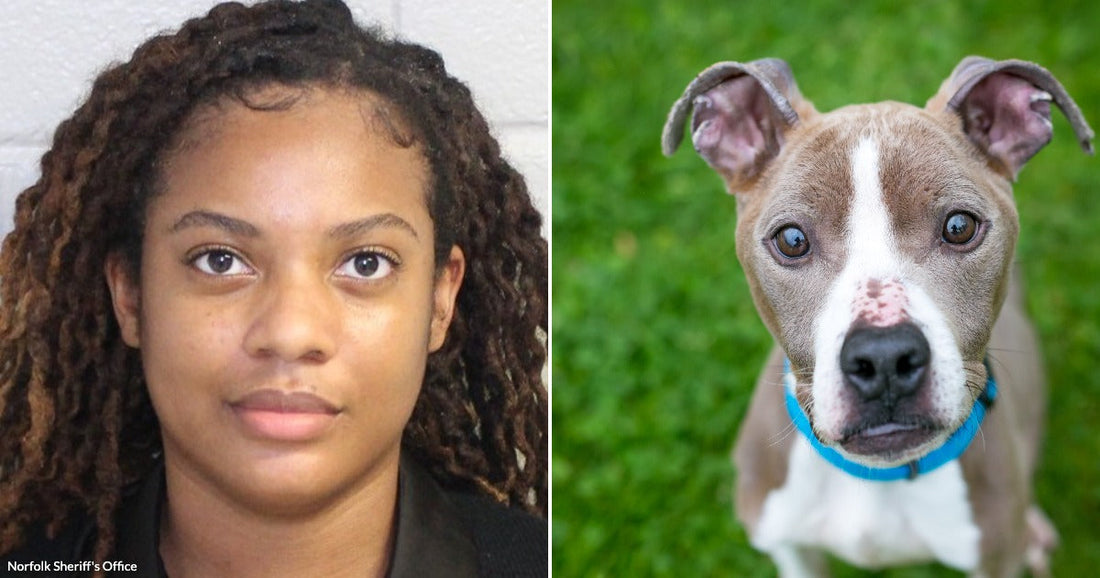
The recent sentencing of a Norfolk woman to one year in prison for felony animal cruelty has drawn renewed attention to how communities respond when pets are left to suffer behind closed doors. According to court documents, a dead pit bull and a severely malnourished pit bull were found inside her apartment, a discovery that turned a routine maintenance visit into a criminal investigation. Cases like this resonate far beyond a single city, touching on issues of animal welfare, community responsibility, and the very basic obligations that come with adopting a pet.
The incident in Norfolk, Virginia began on October 23, 2024, at the Oakmont North Apartments. A maintenance worker noticed a strong rotten odor and a swarm of flies coming from one specific unit. Looking through a window, he saw two extremely thin dogs confined to a room that was covered in filth, and he believed one of them might already be dead. Recognizing that something was terribly wrong, he contacted the Norfolk Police Animal Protection Unit to request a well-being check. That decision set in motion a response that revealed the full reality of what the dogs had endured.

When a humane officer arrived, the situation inside the apartment was far worse than anyone had hoped. The officer found a male pit bull mix that was already deceased and in an advanced state of decomposition. Nearby, a female pit bull was still alive but in critical condition. Court documents described her as severely malnourished, sick, and covered in sores. The room where both dogs had been kept contained no food or water. The floor was soiled with urine and feces, and the space was infested with maggots and flies, a sign that the living conditions had been terrible for quite some time.
Both animals were removed from the apartment as part of the animal cruelty investigation. A seizure notice was also posted on the tenant’s door, documenting that the animals had been taken into custody. The female pit bull was transported to an emergency veterinarian for urgent treatment. There, according to the court documents, she received care for her sores, ear infections, and hypoperfusion, a condition related to dangerously reduced blood flow often connected with severe neglect and malnutrition. She was placed on a strict feeding schedule due to her extremely low weight.

Norfolk Sheriff's Office
For the male pit bull mix, veterinarians and investigators could only piece together what had happened. Based on his advanced state of decay, experts estimated that he had been dead for several weeks or even months before being discovered. It was suggested that he may have suffered from skin ulcers and arthritis in his spine before his death. While those details cannot fully capture the reality of his final days, they underscore the level of suffering that likely took place before authorities intervened.
Court records identified the tenant as 29-year-old Celeste Dion Curtis. The documents indicated that she had adopted the male pit bull mix from the City of Norfolk’s Animal Care Center in February 2023. That detail is particularly striking because it highlights how a dog that began with the promise of a new home and a fresh start ultimately experienced neglect that the criminal justice system found severe enough to warrant a felony conviction. Adoption is generally seen as a compassionate choice, yet this case shows how fragile that promise can be if the adopter is not prepared or willing to provide proper care.

The legal process unfolded over the next two years. On April 7, 2026, Curtis entered into an agreement to plead guilty to felony animal cruelty resulting in serious injury or death. In exchange for her guilty plea, the Commonwealth agreed to withdraw a second count of the same charge. Plea agreements like this are common in criminal court. They allow prosecutors to secure a conviction while avoiding the uncertainty and emotional toll of a trial, especially in cases that involve graphic evidence of suffering and neglect.
On June 12, the court formally sentenced Curtis to serve one year in prison for felony animal cruelty. The length of the sentence reflects how seriously Virginia law treats cases in which animals suffer significant harm or death. Although some might debate what an appropriate punishment should be in such circumstances, the conviction itself sends a clear message that severe neglect leading to death will not be treated lightly. It also places this case among the more serious examples of animal cruelty addressed through the criminal courts rather than only through civil penalties or fines.
For many readers, one of the most important aspects of this Norfolk animal cruelty case is what it reveals about early intervention. The role of the maintenance worker was crucial. He noticed an abnormal smell, saw the condition of the dogs through the window, and chose to call the Norfolk Police Animal Protection Unit. Without that call, the surviving pit bull might not have received emergency veterinary care in time. Situations like this reinforce the idea that neighbors, staff members, and community workers can sometimes be the first line of defense when animals are at risk behind closed doors.
The response by animal control and veterinary staff also illustrates how public systems and private professionals intersect in animal welfare cases. Humane officers are responsible for removing animals from dangerous environments, while veterinarians provide the medical expertise needed to stabilize and rehabilitate survivors. In this case, the female pit bull’s treatment for sores, infections, and severe undernourishment shows the complexity of recovery after extended neglect. Strict feeding schedules and careful medical oversight are often required so that emaciated animals can gain weight safely without additional complications.
Beyond the legal outcome, the story encourages a broader reflection on what it means to take responsibility for a pet. Adopting an animal from a shelter carries an implicit promise to provide not only food and water, but also a safe, sanitary environment and necessary medical care. When those obligations are ignored, the result can be profound suffering for animals who are entirely dependent on humans. I found this detail particularly sobering because it shows how quickly conditions can deteriorate when that basic duty of care breaks down.
While this specific case centers on a single apartment in Norfolk, its implications extend to any community where animals live in private homes, out of public view. People who suspect that an animal is in distress can contact local animal control or law enforcement authorities rather than attempting to confront a situation alone. Even something as simple as reporting persistent odors, constant barking, or visible signs of neglect may give authorities the information they need to conduct a welfare check. In the Norfolk case, one person’s decision to speak up made the difference between continued suffering and a chance at recovery for the surviving dog.
Ultimately, the one-year prison sentence in this Norfolk felony animal cruelty case stands as both a legal resolution and a stark reminder. It highlights the serious consequences that can follow when pets are left to suffer and die in isolation, and it emphasizes the vital role of community awareness, humane law enforcement, and veterinary care. The story of these two pit bulls is difficult to read, but it also reinforces a basic truth about animal welfare: preventing cruelty often begins with a single observation, a single call, and a shared understanding that animals deserve far more than mere survival behind closed doors. Read more at https://www.aol.com/articles/norfolk-woman-receives-one-sentence-133550000.html