
🚨Urgent: Missile Strikes Shelter in Ukraine! Rush Emergency Aid!
Homeowners Discover Stuck Opossum And End Up Saving An Entire Family
Guest Contributor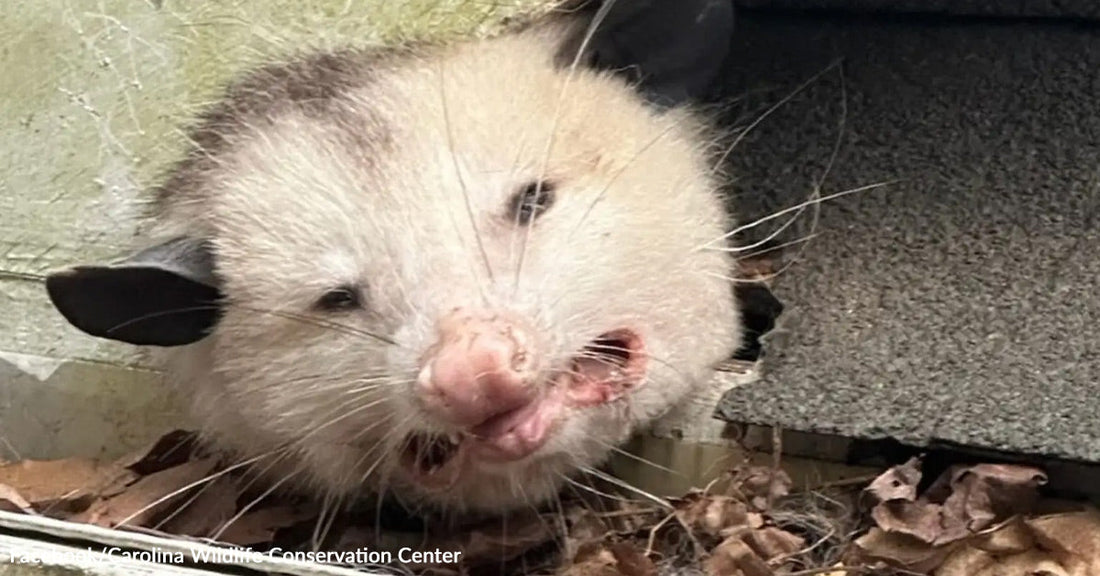
When a pair of homeowners glanced up at their roof and saw an opossum’s head sticking out of a tiny hole, they knew something was very wrong. What they did not realize was that their quick call for help would end up saving not just one trapped opossum, but an entire little family. This unusual rescue story from the Carolina Wildlife Conservation Center (CWCC) quickly turned into a powerful reminder of how much is at stake whenever we encounter an injured wild animal, especially a mother opossum with joeys.
On February 19, CWCC was already stretched to its limit. The organization’s hotline was ringing nonstop with reports of injured and distressed wildlife. Staff and volunteers were fielding emergencies one after another, coordinating transport and care for animals that needed immediate help. In the middle of this hectic day, one call stood out. A concerned caller described a startling sight on their roof. An opossum’s head was protruding from a small opening, and the animal appeared completely stuck.

The situation sounded urgent enough that CWCC transporter Sonia and her father did not hesitate. They jumped into their car and raced to the scene, prepared for the kind of tricky wildlife rescue they do not see very often. Once they arrived at the home and saw the opossum up close, they realized that the challenge was even more serious than they had expected.
According to the account shared by CWCC, the opossum had made her way into the home’s attic. At some point she attempted to escape through a tiny hole in the roof and managed to squeeze her head through, but her body did not follow. Each attempt to pull herself back only made the opening clamp more tightly around her neck. The animal was fully trapped, unable to move forward or backward, and visibly in distress.
Fortunately, the rescuers saw that she was still breathing. They began working carefully to free her, mindful that any rough handling could cause further injury. The scene was precarious. An adult opossum caught in a roof is not a common call, and the family’s safety and the animal’s well-being both had to be considered. With patient maneuvering, Sonia and her father were finally able to loosen the tight space and gently pull the opossum out of the hole.
They transported her immediately to CWCC’s headquarters so that the rehabilitation team could assess her condition. Because the timing was late and there were concerns about possible injuries to her neck or spine, CWCC staff stayed after hours to complete the emergency intake. The team needed to know if she had suffered damage from being wedged in the roof for so long, and if she would require extensive treatment to recover.
During the exam, the veterinary and rehabilitation staff followed a crucial step they apply to every opossum that comes through their doors. They checked her pouch. This is standard practice for wildlife professionals. Opossums are marsupials, and mothers often carry a litter of joeys in their pouch even when their own distress is the only thing that is obvious at first glance. CWCC notes that they perform this check even if an opossum has already passed away, since joeys can sometimes survive for a period in the pouch and may still be able to be saved.
In this particular case, the pouch check revealed something heartening. The stuck opossum was not alone. Tucked inside her pouch was a litter of tiny joeys that had been riding along through the entire ordeal. Sonia and her father, thinking they were racing to save a single trapped animal, had in fact rescued an entire opossum family.
That discovery turned the story from an isolated incident into a broader lesson in compassionate wildlife rescue. CWCC shared that this find was a vivid reminder of why it is so important for people who encounter opossums in distress to consider that there may be hidden babies involved. A seemingly solitary animal might be the sole guardian of multiple young lives that depend entirely on her for survival. I found this detail striking, because it highlights how an act of kindness toward one animal can quietly ripple outward to protect many more.
The center used the opportunity to educate the public further. They pointed out where an opossum’s pouch is located so that people who come across a deceased opossum on the roadside or in their yard can check for joeys. Their message encouraged readers not to feel self-conscious about stopping to look. They urged everyone to, in their words, be willing to be “the crazy person who stops to check opossum pouches.” That simple action can mean the difference between life and death for a litter of babies that would otherwise go unnoticed.
As for the rescued mother, the exam results were cautiously optimistic. Aside from swelling around her neck from being lodged in the roof opening, she appeared to be doing well. Her joeys were also in good condition. With rest, medication, and ongoing monitoring at CWCC, her prognosis looked positive. In the secure environment of the rehabilitation center, she and her joeys had the chance to recover together without the additional threats that life outdoors can bring to a weakened animal.
The team at CWCC, exhausted after a long day of taking call after call about injured wildlife, could add one more entry to their list of successful rescues. The story of a trapped opossum in an attic roof, transformed into a tale of an opossum family saved, brought a sense of relief and accomplishment. According to CWCC, this type of rescue is not something they encounter often, which made the outcome all the more memorable.
There are also wider takeaways from this story that resonate beyond a single day at a wildlife center. It illustrates how community members, from homeowners who notice an animal in trouble to transport volunteers who act quickly, form a critical link in the chain of animal rescue. It also underscores how organizations like CWCC depend on that vigilance to reach animals in time. The opossum’s ordeal in the roof could have ended very differently if the homeowners had ignored the strange sight or if the call for help had been delayed.
For people who care about wildlife, this rescue highlights a few simple and humane steps. If someone encounters a wild animal that appears hurt or trapped, contacting a licensed wildlife rehabilitator or local animal control agency is often the safest and most effective move. For opossums specifically, remembering that they may be carrying joeys can guide how carefully we observe and report what we see. Even in cases where an animal has sadly not survived, checking an opossum’s pouch can offer young joeys a second chance with professionals trained to care for them.
In the end, the sight of an opossum stuck in a roof became a hopeful story about awareness, quick action, and the hidden lives that ride along quietly in a mother’s care. That one phone call to CWCC, made on a busy day filled with emergencies, did more than free a single animal from a painful trap. It safeguarded the future of an entire family of joeys and reminded everyone involved that compassion often begins with simply noticing, and then choosing to act. Read more at The Dodo