
Shelter Staff Put Six Heartbreaking Words on a Cat's Door
Guest Contributor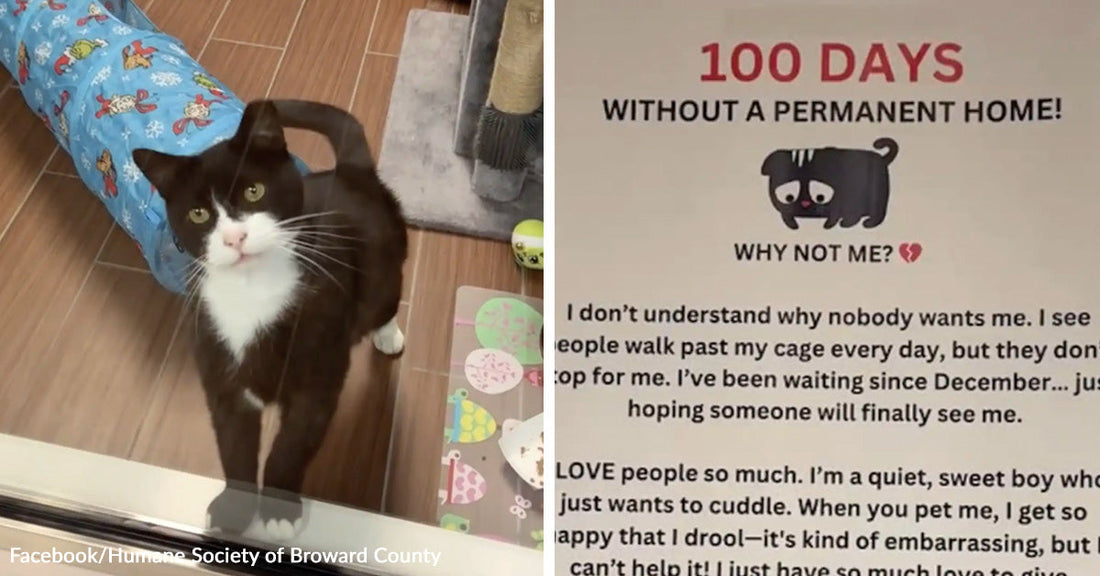
Every day, shelter animals wait behind glass and metal, hoping that someone will finally see them. One recent story from the Humane Society of Broward County captured that quiet heartbreak in a few simple words and reminded people everywhere how easy it can be to overlook a truly wonderful companion. For anyone interested in pet adoption or curious about cats with FIV, this story of patience, creativity, and kindness offers a powerful example of how lives can change when someone chooses to look a little closer.
At the Humane Society of Broward County, staff members noticed that one particular cat named Rio had been passed by again and again. Visitors would walk the aisles, pausing at some kennels, crouching to meet the gaze of certain animals, then moving on. Yet Rio, waiting since December, watched people walk past his kennel without stopping. To speak up for him, a staff member taped a handwritten note to his door that read, “I don’t understand why nobody wants me. I see people walk past my cage every day, but they don’t stop for me. I’ve been waiting since December … just hoping someone will finally see me.”

Facebook/Humane Society of Broward County
Behind that note, on the other side of the glass, lounged Rio. He was just another shelter cat to many hurried visitors, but for over 100 days, he had been searching for a family of his own. The sign gave voice to what countless shelter animals might feel if they could explain their confusion and longing. I found this detail striking because it captures in one sentence the emotional distance between a quick shelter visit and the lifelong impact of choosing to adopt.
One reason potential adopters might have hesitated with Rio is his medical diagnosis. Rio lives with feline immunodeficiency virus, or FIV. FIV is a condition that weakens a cat’s immune system, which can make them more vulnerable to certain infections. Despite this, the Humane Society team emphasized that cats with FIV can still live long, happy lives and are just as deserving of love as any other pet. In many cases, with proper care, they thrive in stable, indoor homes. For Rio, the diagnosis did not define his personality, affection, or ability to bond with people.
The staff and volunteers at the shelter clearly saw something special in him. They described Rio as a cat who may not enjoy being picked up, yet finds many other ways to show closeness. According to the Humane Society of Broward County’s vice president of marketing, Cherie Wachter, Rio loves affection and will actively seek out attention. He asks for pets, rubs against people, and happily soaks up interaction. Wachter shared that he is sweet, cute, meows for attention, and even drools when he is happy. Those vivid details paint a portrait of a cat with a distinct personality, full of quirks and warmth, waiting for someone to recognize that he was already a wonderful companion.
Still, the reality of shelter life can work against animals like Rio. Visitors can feel overwhelmed by the number of pets, uncertain about medical conditions, or drawn toward younger or more outgoing animals. The heartfelt kennel sign was one way the team tried to change that pattern and help Rio’s story stand out. It turned an anonymous cage into a specific narrative: a cat who had waited 100 days and simply could not understand why no one chose him. In a crowded shelter environment, that kind of storytelling can be the difference between blending into the background and finally being noticed.
The Humane Society did not stop at the handwritten note. To give Rio an extra boost, they turned to a local partnership with the Florida Panthers hockey team. Player Sam Bennett supports a program called “Benny’s Buddies,” which helps fund adoption fees for pets at the shelter. When Rio was labeled a “Benny’s Buddy,” his story reached a much wider audience, especially on social media. Photos of his fuzzy face, paired with his narrative of waiting and hoping, were shared beyond the shelter walls and into the feeds of people who might never have visited in person.
This kind of creative outreach highlights how modern shelters increasingly rely on digital storytelling and community partnerships. By aligning Rio’s search for a home with a recognizable name like Sam Bennett and a supportive initiative like Benny’s Buddies, the humane society gave potential adopters a new way to connect with him. It reframed him as not only a shelter pet with FIV, but as a featured “buddy” whose adoption fee was supported, whose story mattered, and whose happiness had become a shared local effort.
Among the many people who saw Rio’s picture online was a woman who felt an immediate connection. She saw his image, read about his wait, and decided that he was the one. When she arrived at the shelter, she did so wearing her Florida Panthers shirt, a quiet but meaningful nod to the program that had brought his story into her life. After completing the adoption, she chose to rename Rio as Bennett, in honor of Sam Bennett and the path that had led them together.
From there, his life changed dramatically. No longer watching people pass him by, Bennett went home to a family that had chosen him specifically. According to updates sent back to the shelter, he settled in well and is described as very happy. Those follow up messages, telling the staff that a once overlooked cat is now thriving, carry deep meaning for the people who cared for him through his long wait. They also serve as an encouraging reminder that even animals who spend months in shelters can find the perfect home when the right adopter appears.
Stories like Bennett’s gently challenge assumptions about what makes a “perfect” pet. A cat with FIV, who does not like to be picked up, might initially seem less adoptable to some. Yet, as the Humane Society staff demonstrated, it only takes one person to see beyond a diagnosis and recognize the affectionate, expressive animal in front of them. Shelter pets with special medical needs or particular preferences still have so much to offer in terms of companionship, personality, and love.
For people thinking about pet adoption, Bennett’s journey is an invitation to slow down and truly see the animals behind the kennel doors. Paying attention to the signs, asking questions about medical conditions like FIV, and listening to staff who know the animals well can open the door to connections that might otherwise be missed. As this story shows, a cat who waited over 100 days for someone to stop at his kennel is now a cherished family member, all because one person saw his story, walked into the shelter, and chose him. Read more at https://www.thedodo.com/daily-dodo/shelter-staff-put-up-heartbreaking-sign-for-pet-whos-waited-100-days