
🚨Urgent: Missile Strikes Shelter in Ukraine! Rush Emergency Aid!
Business Owner Looks Outside and Finds a Young Fox Hopelessly Trapped
Guest Contributor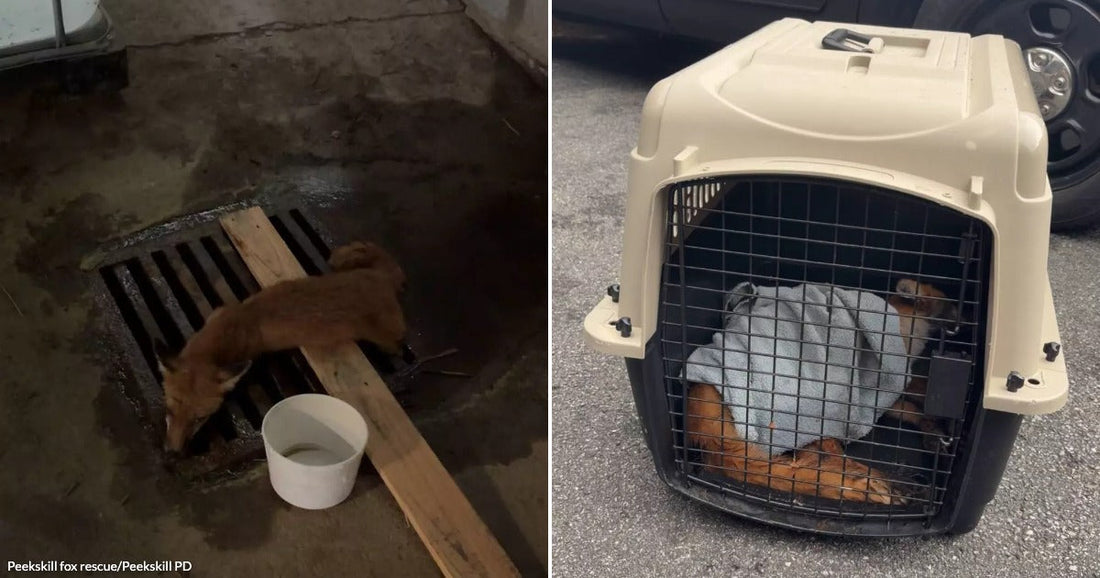
A young fox in Peekskill, New York, is getting a second chance at life after a dramatic and carefully coordinated rescue from a storm drain on Central Avenue. The incident brought together a team effort from Peekskill Police, the Peekskill Fire Department, and a local animal rescue group. This kind of cooperation is not only heartening to hear about, it also highlights how a community can mobilize quickly when a vulnerable animal is in distress. The story of the Peekskill fox rescue on Central Avenue feels both uplifting and quietly heroic, and it is an example of how everyday people in uniform, along with volunteers, can make a real difference for local wildlife.
According to the report, the rescue began with a call to the Peekskill Police Department from a business owner on the 400 block of Central Avenue. The caller described a situation involving an animal from the local wildlife population that was clearly in trouble. When officers responded and investigated, they discovered that the animal in distress was a young fox. The fox had become trapped in a storm drain cover and was unable to free itself. It was a scenario that could have ended very differently without timely intervention.

Peekskill fox rescue/Peekskill PD
An Animal Control Officer was dispatched to the scene to assess the situation more closely. Once there, it quickly became clear that this would not be a simple one-person job. The fox was stuck in such a way that careful planning and additional hands would be necessary in order to free it safely and avoid causing further harm. Recognizing the urgency and complexity of the situation, the Animal Control Officer called in the Peekskill Fire Department for assistance. That decision marked the start of a coordinated operation to rescue the trapped fox from the storm drain.
Firefighters arrived and joined the Animal Control Officer in evaluating the safest approach. Together, they developed a plan that would allow them to remove the fox without causing injury to the already exhausted animal. The article emphasizes that this planning stage was deliberate and cooperative. It was not simply a matter of pulling the fox free, but of ensuring the animal’s welfare in the process. For anyone who cares about humane treatment of animals, that attention to safety stands out as an important part of the story.

Peekskill fox rescue/Peekskill PD
Once their plan was in place, the team moved quickly. Within seconds of beginning the rescue effort, they were able to pull the young fox free from the storm drain cover. After what must have been a terrifying ordeal for the animal, the fox was finally out and no longer trapped in the metal grating. The report notes that the animal had been exhausted, and it is easy to imagine that the stress and physical strain of struggling to escape would have taken a toll. The swift and coordinated response by police, fire, and animal control meant that the fox did not have to endure that situation for any longer than necessary.
The rescue at the storm drain was not the end of the story. Recognizing that the fox needed more than just freedom from the metal cover, the responders reached out to Animal Nation, a nonprofit, volunteer-run organization focused on animal rescue and rehabilitation. A representative from Animal Nation arrived at the scene to take over the next phase of care. This transition from emergency response to professional animal rehabilitation created a full chain of support for the young fox.
From there, Animal Nation transported the fox to an emergency veterinary clinic for immediate treatment. At the time of the report, Peekskill Police noted that the fox was in stable condition and receiving IV fluids. That detail suggests that the animal was indeed in significant distress when found, and that prompt medical attention was crucial to its recovery. The account does not provide further medical specifics, but the description of the fox as stable and under professional care offers a hopeful picture.
Stories like this one about Peekskill Police and Firefighters rescuing a fox trapped in a drain can feel small compared with large-scale news events, yet they carry their own quiet importance. They illustrate how public safety agencies are prepared not only to respond to human emergencies, but also to address the needs of local wildlife when called upon. It is also a reminder that residents, such as the business owner who made the call, play a meaningful role in protecting animals by reporting what they see.
Community involvement is a central thread in this narrative. A single person noticed something was wrong and chose to reach out for help. Law enforcement responded and treated the situation seriously. The fire department lent critical expertise and manpower. A nonprofit group specializing in animal rescue stepped in to provide follow-up care and transportation to a veterinary clinic. Each step depended on the last, and taken together, they resulted in a successful animal rescue in Peekskill that might not have been possible without collaboration across different groups.
Another noteworthy aspect of this rescue is the way it underscores the value of specialized roles working in concert. Animal Control Officers bring specific training in handling wildlife. Firefighters are skilled in technical rescues and navigating challenging physical spaces such as drains and confined areas. Veterinary professionals and rescue organizations like Animal Nation know how to stabilize and rehabilitate injured or stressed animals once the immediate danger has passed. In this case, each role contributed to a positive outcome for an animal that could not help itself.
There is also a subtle message here about urban and suburban coexistence with wildlife. Foxes and other animals often move through developed areas, using drainage systems, green spaces, and back lots as part of their habitat. Incidents like a fox trapped in a storm drain on Central Avenue are a reminder of how infrastructure interacts with the natural world. While the article does not take a position on wildlife management, it clearly shows that when an animal becomes stuck or injured in a human-made environment, compassionate intervention is possible.
For those who follow human interest and local news stories, this Peekskill fox rescue stands out as an example of cooperation, quick thinking, and care. It combines the practical skills of first responders with the mission-driven work of animal rescue volunteers and veterinarians. The outcome, at least as reported at the time, is a young fox that is alive, stable, and receiving the care it needs. I found this detail striking, because it demonstrates how routine calls can sometimes turn into moments of quiet heroism that do not always make front-page headlines, yet matter greatly to the living beings involved.
In the end, the rescue of the fox from the storm drain on Central Avenue shows how a community’s concern can extend beyond its human residents to the wildlife that share the same streets and waterways. It highlights Peekskill Police, Peekskill Firefighters, and Animal Nation as partners in a story that began with a simple phone call and ended with an animal receiving lifesaving care. Anyone who appreciates stories of successful animal rescues and public service can find something meaningful in this account of cooperation and compassion. Read more at https://wpdh.com/peekskill-police-fire-rescue-fox/