
💜 Thanksgiving Food Drive for Shelter Pets Help Us Feed 1 Million Shelter Pets!
Foster Dad Gets Into the Water to Help Rescue Dog Take the Steps She Could Not
Guest Contributor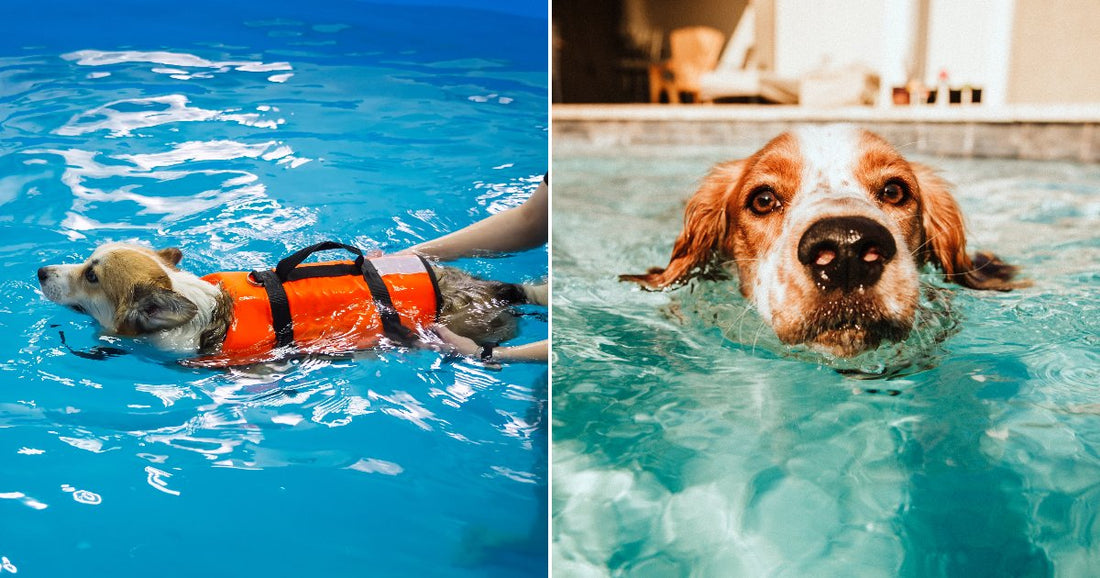
Some stories about rescue animals are quietly powerful in the way they show what patience and belief can do. The story of Azra, a surrendered dog in Springfield, Missouri, is one of those. She arrived at the nonprofit Rescue One able to move only on her two front legs, yet now she is learning to walk again on all four. Her journey with her foster dad, Stephen Brewster, is a reminder of how thoughtful rehabilitation, consistent care, and compassion can completely change a dog’s life. For anyone interested in dog rehabilitation, water therapy for dogs, or the work of animal rescue organizations, Azra’s transformation is both instructive and deeply moving.
When Azra first came into Rescue One’s care, she was not paralyzed, but she refused to put any weight on her back legs. That created both concern and curiosity. The team pursued X-rays and scans, looking for neurological damage that might explain her condition. According to Brewster, those tests did not reveal any clear neurological issues. That absence of visible damage offered something important. It opened the door to hope that with the right approach, Azra might be able to regain her mobility.

From the beginning, Brewster approached Azra’s case with both realism and optimism. He initially outfitted her with a special wheelchair along with a stroller so that she could get around more easily and still engage with the world. Tools like wheelchairs can be crucial in dog rehabilitation, especially for pets coming from situations where their mobility has been limited for a long time. Yet Brewster did not see these devices as a permanent solution. He saw them as a bridge toward something better, describing his ultimate goal as helping her walk normally again.
That is where water therapy came in. Brewster explained that it is natural for dogs to want to paddle with all four legs when they are in water. That instinct provided a starting point for Azra’s rehab. Rather than forcing her to bear weight on her back legs on land right away, he began by introducing controlled, therapeutic sessions in the pool. In the water, Azra could move without the same level of strain on her joints and muscles. This approach aligns with widely recognized principles of canine rehab, where water buoyancy supports the body while still allowing meaningful exercise.

Brewster described how those early pool sessions became the foundation for Azra’s progress. As she paddled, he and the rehab team focused on encouraging movement and function in her back legs. Gradually, they began to see more motion and responsiveness. The more they worked in the pool, the more movement they began to get out of both of her back legs. It was not a dramatic overnight recovery, but a series of small, consistent steps in the right direction.
The timeline of her progress turned out to be even more remarkable than anyone expected. Brewster had originally imagined that meaningful improvement might take about six months. Instead, what he had hoped to achieve across half a year unfolded in roughly two months. In just a matter of weeks, Azra moved from tentative motions underwater to actually using her back legs on dry land. That shift is a powerful example of how targeted water therapy for dogs can accelerate recovery when a dog still has underlying capacity in their muscles and nerves.

There is also an emotional dimension to Azra’s story that feels just as important as the physical one. Brewster noted that when she first arrived, she seemed content enough with her life, but something was missing. She lacked that spark that many people recognize in a confident, engaged dog. She did not fully interact with her environment or other animals in a way that suggested joy. Brewster shared that he did not think she even understood what she was capable of, largely because no one had really focused on her potential before.
As her mobility improved, that began to change. With each gain in movement and strength, Azra’s personality started to unfold. Brewster observed that she became more playful and began to engage more with his other dogs. Her world effectively grew larger every time she learned she could do something new with her body. Increased mobility did not just mean she could walk better. It also meant she could participate more fully in daily life, socialize, and express herself in ways that had not been possible when she was confined to using only her front legs.
For Brewster, watching that transformation has been deeply rewarding. He described their progress in terms that reflect both pride and gratitude, noting the leaps in her ability and mobility and calling the experience incredibly fulfilling. I found this detail striking because it captures how fostering and rehab work can benefit both the animal and the human caregiver. Azra’s recovery is about her resilience and capacity for change, yet it is also about the satisfaction that comes from investing time and care into an animal others might have overlooked.
Now that Azra has made such promising strides, the focus has shifted to building up her muscles on land. This stage is about strengthening her back legs so that she can not only walk but eventually run and play with confidence. Muscle building after initial rehabilitation is critical for maintaining gains and preventing regression. It also helps prepare an animal like Azra for the next chapter of her life, one that ideally will take place in a permanent, loving home.
Brewster explained that the long term plan is to continue working with her until she is functioning well, walking steadily, and ideally able to run. Once her development has progressed to a point where he and the rescue feel comfortable with her stability and strength, the organization plans to list her on platforms such as Petfinder. That step will be about finding a forever family that can appreciate not only her needs but also her extraordinary journey from two legs to four.
Stories like Azra’s highlight the essential role of animal rescue organizations in giving dogs a second chance. They also remind people of the impact of foster homes, where individualized attention and creativity can unlock potential that might otherwise remain hidden. Not every dog will experience such a rapid or dramatic recovery, but Azra’s experience shows what is possible when medical evaluation, adaptive equipment, and focused rehabilitation come together with patience and kindness. For anyone considering fostering or supporting local rescues, her progress offers tangible proof that this work changes lives in visible and lasting ways.