
EXTRA Good Points All Week for Guardians! Become a Guardian!
Former Street Dog Finally Sleeps Peacefully After Rescue
Guest Contributor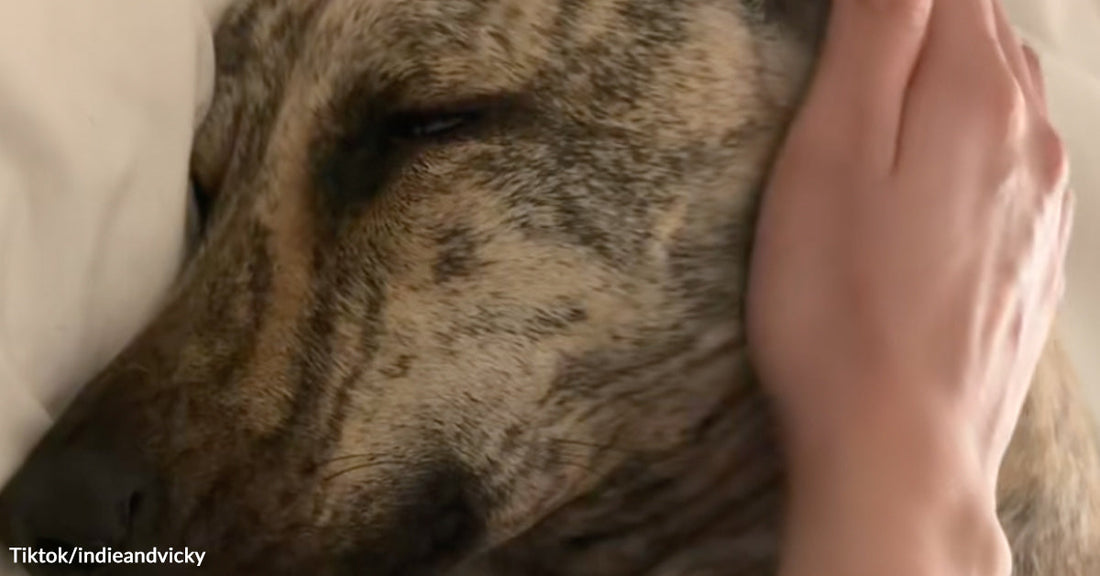
The quiet clip of a rescue dog sleeping under warm blankets has captured something many animal lovers feel but rarely see so clearly: the moment a once frightened stray finally realizes he is safe. In a TikTok video that has drawn tens of thousands of views, a pup named Indie lies peacefully in bed while his adopter gently strokes his head. For anyone interested in rescue dogs, shelter adoptions, or what it takes to help a traumatized animal relax, this simple scene speaks volumes.
The video, posted by 22-year-old Vicky on her account @indieandvicky, opens on Indie tucked under the covers, eyes closed, completely at ease. Text over the footage reads, “and to think this is the same dog that used to have to sleep in the street.” The caption below adds, “my sweet boy will never have to worry about that again.” Viewers immediately understood the emotional weight behind that promise. Many have lived with dogs who once shivered through the night outside or anxiously paced in a shelter kennel. Seeing Indie sink into soft bedding and gentle affection is a powerful symbol of how a single decision to adopt can change a life.

Vicky has shared that Indie was in “rough shape” when he was first found. In an earlier TikTok on the same account, he appears as a visibly thin, malnourished puppy. His ribs are pronounced, his expression uncertain. It is a stark contrast to the content dog napping in recent posts. Now he is often described by Vicky as a “Velcro dog,” a term many guardians of rescue animals know well. It refers to those dogs who stick close to their person, following them from room to room, seeking constant contact as if to make sure this safe, loving world does not vanish.
Commenters on the viral video responded with emotion and gratitude. The official PETA account wrote, “From cold streets to warm sheets. Thank you for giving this sweet soul the love, warmth, and care he’s always deserved!” Vicky replied that adopting Indie was the “Best decision I’ve [ever] made!” Another viewer noted simply, “He looks so content. Thank you for your compassion.” Someone else shared a photo of their own rescue dogs and added, “They are safe now.” That phrase, “they are safe now,” is at the heart of why this clip has resonated so strongly. It encapsulates what so many people hope to offer when they choose to adopt from a shelter or rescue.
Indie’s story is touching on a personal level, yet it also sits within a much larger landscape of animal welfare. According to data from the American Society for the Prevention of Cruelty to Animals, around 2 million dogs were adopted from shelters in 2024. That is a significant number of animals moving into homes, but it does not tell the full story. Overall shelter intake remains high. An estimated 5.8 million animals entered shelters nationwide that year, and roughly half of them were dogs.
Most dogs do not arrive at shelters because they are “problem” animals. The ASPCA reports that approximately 60 percent of canine intakes in 2024 were strays. Another 29 percent were surrendered by owners facing unforeseen barriers, such as financial challenges, housing restrictions, health issues, or other circumstances that made continued care impossible. Only a portion of dogs end up in the system due to behavior concerns, and even many of those can improve markedly with training, patience, and a stable environment.
One growing challenge in animal welfare is the amount of time dogs, especially larger breeds, are staying in shelters. Compared with five years ago, these dogs tend to wait longer for adoption or reunification. That extended stay can strain an already overburdened system and place stress on the animals themselves. In 2024, more than 500,000 dogs were reunited with their owners, a hopeful figure that underscores the importance of microchips, identification tags, and lost pet reporting. At the same time, about 334,000 dogs were euthanized. While that number has declined over time, it remains a sobering reminder that every successful adoption story, like Indie’s, sits next to countless others that end without a home.
Understanding how a formerly homeless animal transitions into a calm, deeply attached companion can help more adoptions succeed. Many people in the rescue community refer to the “3-3-3 rule” of dog adoption. It is not a strict scientific formula, but rather a helpful framework for what guardians might see as a dog settles in. During the first three days, many dogs feel overwhelmed and stressed. They may hide, sleep more than usual, refuse food, or test boundaries. Some might appear shut down, while others seem hyper-alert, unsure of what is expected of them in this new environment.
By around three weeks, patterns begin to emerge. As the dog learns the household’s daily rhythm and starts to feel safer, their true personality often comes forward. Playful quirks, preferences, and social habits reveal themselves. At the same time, behavioral challenges can appear, whether it is separation anxiety, reactivity, or resource guarding. This is typically the phase when patient training, consistent routines, and appropriate support make a crucial difference in whether a guardian feels prepared to continue.
After roughly three months, many dogs have built enough trust and familiarity to feel fully at home. They develop a sense of security in their new surroundings and a clear bond with their person. For some, like Indie, this may be when those deeply restful sleep moments become possible. Instead of curling up on concrete or constantly scanning for threats, they stretch out on a bed or couch, breathing slow and even. Watching that transformation can be moving not only because it is adorable, but because it signals the healing of past fear and uncertainty.
Indie’s account first appeared on social media in May 2025, and while the exact date of his adoption has not been publicly detailed, recent videos show a dog who appears to have passed through that adjustment curve into genuine comfort. He clings to his person in the way many rescue guardians recognize, yet he also relaxes enough to sleep deeply, snuggled under blankets he clearly trusts will still be there when he wakes up.
For anyone considering adoption, stories like this illustrate both the emotional rewards and the broader impact. Bringing a rescued animal home does not mean every moment will be easy. The early days may involve setbacks, messes, or anxious behaviors that reflect an animal’s history. Yet with time, compassion, and structure, many dogs move from uncertainty to the kind of calm that Indie shows in that viral clip. Every successful match also helps ease pressure on crowded shelters and opens space for the next animal in need.
I found it striking that a 20-second video of a dog asleep could carry so much meaning. It quietly bridges the gap between statistics, such as the 2 million dogs adopted in a year, and the lived reality of one animal who no longer has to search for a safe place to rest. For Indie and dogs like him, a warm bed is more than a comfort. It is evidence that their world has changed.