
💜 Thanksgiving Food Drive for Shelter Pets Help Us Feed 1 Million Shelter Pets!
Mamdani Sets June 2028 Deadline to End Horse-Drawn Carriage Rides as New York Plans Support for Workers
Guest Contributor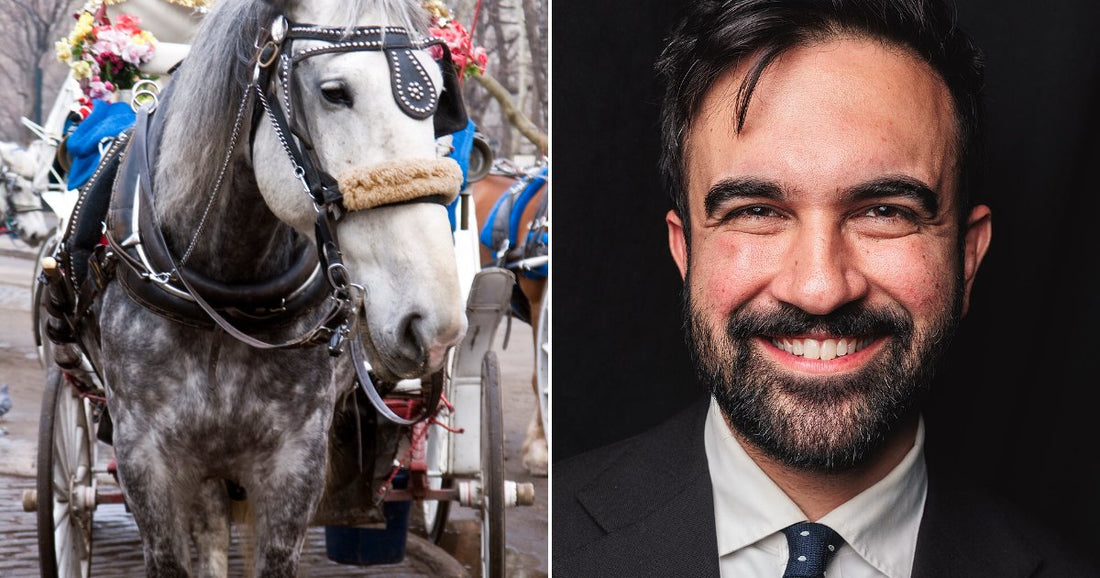
New York City has taken a decisive step that will reshape one of its most recognizable tourist experiences. With the signing of Romanch’s Law, a bill that will ban horse-drawn carriages by 1 June 2028, the city is formally committing to a future without this long-standing industry. For many people around the world, horse-drawn carriage rides in Central Park have symbolized classic New York romance and nostalgia. Now, as the city pivots away from this tradition, it faces the intertwined questions of public safety, animal welfare, and worker livelihoods that give this story its sober weight.
The legislation is named after 18-year-old Indian tourist Romanch Mahajan, who was killed in June after being thrown from a carriage in Central Park when a horse became startled. His death is at the heart of this policy shift, and Romanch’s Law serves as both memorial and mandate. The city’s leaders have framed the bill as a necessary response to a tragedy that highlighted the risks inherent in horse-drawn carriage operations in a dense, modern urban environment.

Zohran Mamdani, New York City’s mayor, signed the bill surrounded by the history it will eventually close. He acknowledged that for roughly 150 years, horse-drawn carriages have been a fixture of Central Park and an emblem of the city’s tourism economy. At the same time, he was clear that this historic chapter is ending. He framed the decision as a responsibility not only to public safety and horse welfare but also to the roughly 200 workers whose livelihoods are bound up with the industry.
At the signing, Mamdani stressed that the city must honor that responsibility. He spoke of working alongside affected workers to ensure they have financial support and real career opportunities as the phaseout proceeds. That commitment is not just rhetorical. The administration has already outlined a transition plan and is promising more detailed support as the 2028 deadline approaches.

The debate around horse-drawn carriages in New York City has been emotionally charged for years. Workers’ unions have opposed a ban because they fear the disappearance of stable, familiar jobs in a sector that has operated for more than a century. These workers include medallion owners who invested heavily in their licenses, carriage drivers who have often spent decades in the business, and stable hands whose skills are closely tied to equine care and tourism. The prospect of a full ban comes with understandable anxiety about job loss, identity, and family security.
On the other side, animal rights advocates have long campaigned against the use of horses in city traffic. They point to the stress and dangers horses face among cars, noise, heat, and congestion. Advocates have cited cases where horses collapsed or died from exhaustion, arguing that no amount of regulation can fully remove the risks posed by mixing large, sensitive animals with modern urban streets and crowds. For them, Romanch’s Law represents the culmination of years of organizing that prioritized animal welfare and rider safety.
New York City Council Speaker Julie Menin characterized the legislation as a historic milestone nearly two decades after the council first considered ending the horse-drawn carriage industry. That timespan hints at how contentious and complex this issue has been. A ban was never going to be a simple matter of passing a bill. It required sustained public debate, shifts in public opinion, and a plan to address the human impact of closing an industry so deeply woven into the city’s image.
Menin reflected on Romanch Mahajan during the announcement, emphasizing that he should still be alive and that his death underscores the urgency of the law. She framed the legislation as a way to protect both horses and humans while still respecting the workers who depended on carriage rides for their income. The careful balance of her remarks reflected the broader tone of city leaders, who recognize that celebration for some will be accompanied by grief, worry, and loss for others.
In practical terms, the Mamdani administration has begun outlining what an orderly transition away from horse-drawn carriages will look like. Officials announced a framework for supporting the approximately 200 affected workers. This group encompasses medallion owners, drivers, and stable staff, all of whom will need new paths forward. The city plans to roll out a full transition plan by April 2027, which will provide more specifics as the deadline nears.
Among the key elements already identified is a medallion buy-back initiative. For many carriage operators, these medallions are not just permits but major financial investments. Buying them back can soften the economic blow and acknowledge the value that workers put into building the industry under earlier rules. In addition, the city intends to offer stipends and career assistance, signaling that it sees this not as a simple shutdown but as a managed transition into new forms of employment.
City officials have also committed to working with the Transport Workers Union, which represents carriage industry workers. That collaboration is intended to ensure that worker perspectives shape the details of the transition rather than leaving those directly affected on the sidelines. Involving the union can help address concerns about fairness, timing, and the suitability of proposed alternative jobs.
To support long-term outcomes, Mamdani’s administration plans to establish a Horse Carriage Worker Industry Program. This initiative is expected to offer job training, career counseling, entrepreneurship support, and connections to potential employers. Tuition assistance is also part of the plan, recognizing that some workers may wish to retrain for entirely new fields. By framing these services as a comprehensive program rather than one-off benefits, the city is signaling an intent to help workers navigate a complicated professional and personal transition.
Alongside the ban itself, the city is exploring what might replace horse-drawn carriages as a visitor experience. Officials have announced a feasibility study into electric carriages and electric pedal-assist bicycles as possible alternatives within Central Park and around its perimeter. Such options could preserve a sense of leisurely touring while aligning with modern standards of safety and animal protection. The study will need to consider cost, practicality, infrastructure, and how any new vehicles would share space with pedestrians, cyclists, and existing park traffic.
The end of horse-drawn carriages in New York City illustrates how urban traditions evolve as values and realities shift. What once symbolized elegance and romance is now seen by many through the lens of risk and responsibility. The story of Romanch’s Law is ultimately about how a city balances heritage with safety, economic livelihoods with ethical concerns, and mourning with the search for a more secure future. As the 2028 deadline approaches, the success of this transformation will likely be measured not only by the absence of horses on city streets, but by the well-being of the workers and communities whose lives are changing alongside the law itself.
Read more at https://www.theguardian.com/us-news/2026/nov/19/nyc-horse-drawn-carriage-ban-mamdani