
22-Year-Old Senior Dog Returned to Shelter After 15 Years
Guest Contributor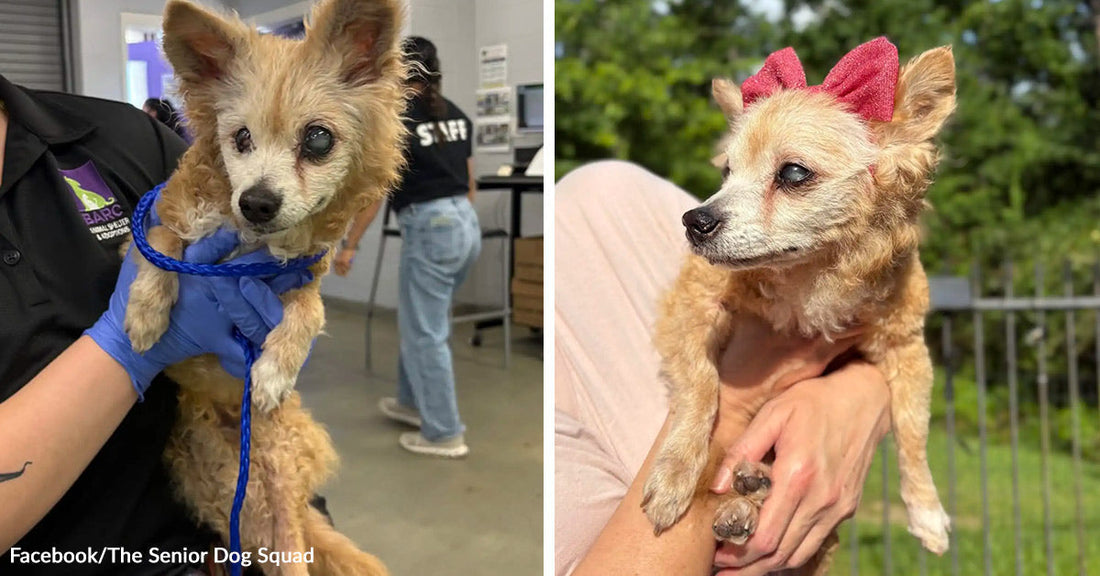
When a 22-year-old dog named Agatha was carried back into the same Texas shelter where she had once been saved, the staff immediately understood they were witnessing something both heartbreaking and rare. Senior dogs in shelters often face an uncertain future, and a very old dog like Agatha, now blind and deaf, was especially vulnerable. Her story shines a light on what can happen to aging pets, but it also shows how compassionate people can completely transform the final chapter of an animal’s life.
Agatha’s journey began at that shelter in 2011. She arrived as a 7-year-old stray, anxious and unsure in a loud building full of other dogs and cold concrete kennels. For many animals, that first entrance into a shelter is terrifying. According to shelter volunteer and senior dog advocate Maddie Cantrell, Agatha fit that picture of a worried newcomer. Yet back then, hope quickly appeared. Agatha was adopted not long after her arrival and left the shelter with a family who, it seemed, would be hers for life.

For 15 years, that assumption appeared to hold true. The details of those years are not fully known, but what is clear is that Agatha aged in that home. As time passed, she lost her vision and hearing. Her muzzle likely grayed, her pace slowed, and she grew into one of the very oldest dogs around. By the time she turned 22, a milestone most dogs never reach, she had already beaten the odds. That is what makes what happened next so difficult to process for many animal lovers.
At 22, Agatha’s family brought her back to the same shelter where her life as a rescued dog had begun. The reason they gave for surrendering her was simple and blunt: she was old. For Cantrell, who encountered Agatha at the shelter, the moment was unforgettable. She later shared that when she first saw the tiny senior dog, she gasped, struck by how beautiful and gentle Agatha still was in spite of her frailty. The idea of a blind, deaf dog finding herself once again in a strange, echoing place after so many years in a home felt especially painful.
Those who work or volunteer in shelters know that stories like this are not isolated. Senior dogs are often surrendered when they become frail or when caring for them becomes more complex. Medical needs can increase, mobility may decrease, and people sometimes feel unprepared for the changes that aging brings. Cantrell acknowledged that it is sadly common for older pets to be dropped off near the end of their lives. In a system already strained by overcrowding, this makes life particularly precarious for geriatric animals. They are frequently overlooked by adopters who find younger dogs more appealing or who worry about vet bills and shorter remaining lifespans.
Agatha’s situation could have ended there, quietly and anonymously, in a kennel that felt nothing like home. Instead, she received exactly the lifeline a senior rescue dog needs. With help from Houston-based Pippy’s Pals Rescue and the efforts of The Senior Dog Squad, Agatha was pulled from the shelter and given a new place to belong. She did not return to a concrete run. She went into a home.
Now living with Cantrell and her family of senior rescue dogs, Agatha is spending her days in safety and comfort. Cantrell described how Agatha has been resting a great deal and slowly integrating into the household, which is often how older animals adjust to new surroundings. Even without sight or hearing, dogs can take in a space through smell, touch, and routine. Agatha has already chosen a favorite spot in the home, something that suggests she is settling into a sense of security again.
In Cantrell’s words, Agatha will remain with her for the remainder of her life. Cantrell believes that despite Agatha’s age and limitations, she still enjoys a real quality of life and has love left to give. That belief underpins much of senior dog rescue. The idea is not simply to extend life at all costs, but to ensure that whatever time remains is comfortable, dignified, and filled with small daily joys.
Over the last three years, The Senior Dog Squad has taken in more than 20 older dogs as fosters, hospice cases, or permanent family members. Each dog receives careful attention, respect, and the recognition that age does not lessen an animal’s worth. I found this detail striking because it illustrates a quiet, consistent commitment rather than a single heroic act. It suggests that there are people willing to meet senior dogs exactly where they are, with all their medication schedules, mobility challenges, and softer energy levels.
Agatha is now part of that group, one of many older animals who might have been overlooked but instead are cherished. Her story highlights how often older animals are discarded and how much harder it can be for shelters and rescues to find adopters for them. Puppies and younger dogs are usually adopted quickly. Senior dogs, by contrast, may wait for months or never leave the shelter at all. That is why individuals who agree to foster or adopt these seniors can have an outsized impact.
Cantrell hopes that sharing Agatha’s experience will inspire more people to become hospice fosters or volunteers. Hospice fostering for animals means providing care, comfort, and love for pets who may not have long to live or who have serious medical needs. It is not an easy role, and it often involves grief, but it also allows animals like Agatha to spend their final days in a peaceful home rather than in a noisy kennel. Beyond hospice care, there is a widespread need for fosters for dogs and cats of any age. Every foster placement opens room in shelters and gives individual animals a better chance.
For readers who care deeply about animal welfare, Agatha’s story offers both a challenge and an invitation. It challenges assumptions about what makes a pet “adoptable” and invites people to imagine what it might look like to welcome a senior companion, even knowing that the time together may be limited. A senior pet’s gratitude often shows in quiet ways: contented naps nearby, gentle tail wags, or the slow comfort of shared routines. These animals may not have the exuberance of youth, but they have the weight of long lives and the capacity to attach deeply once more.
In the end, Agatha will not spend her remaining days as an anonymous elderly dog forgotten in a shelter. She is living in a real home, eating well, resting deeply, and surrounded by people who see her as worthy of care, not in spite of her age but with full awareness of it. Senior dogs like Agatha remind us that loyalty and compassion do not have an expiration date. By paying attention to their stories and considering how to support senior dog rescue efforts, more people can help ensure that no animal spends its final chapter feeling unwanted or alone. Read more at https://www.thedodo.com/daily-dodo/22-year-old-dog-was-returned-to-the-shelter-after-15-years-with-her-family