
Service Dogs for Veterans: Bonding, Mental Health, and Hope
Guest Contributor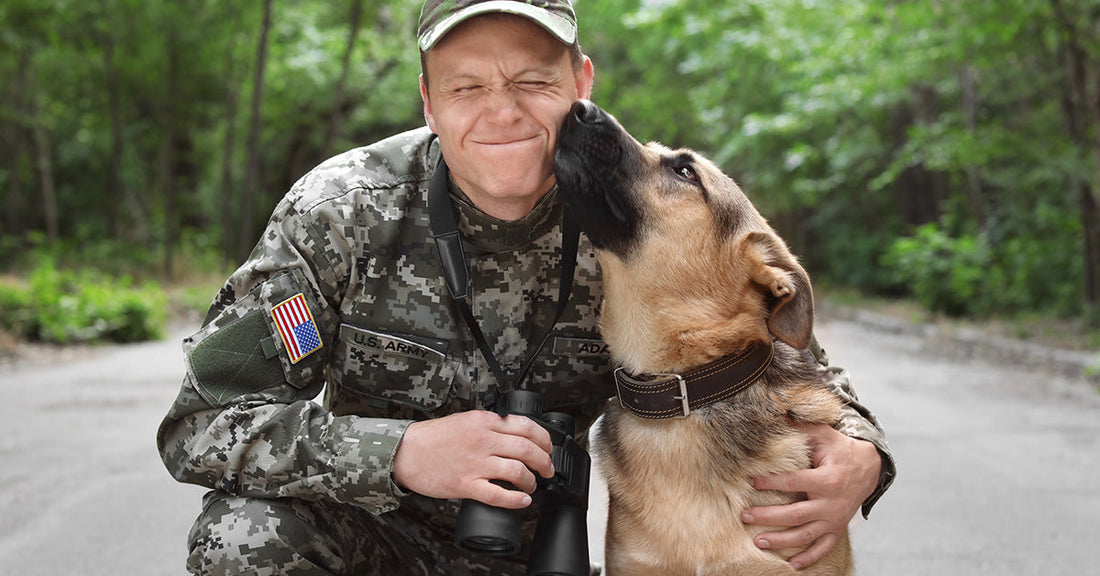
Many veterans return home carrying invisible wounds: post-traumatic stress disorder (PTSD), depression, anxiety, loneliness, and chronic stress that can linger long after military service ends. A growing body of research suggests that dogs might offer meaningful, non-pharmacological support for some of these challenges. A new study, “Veterans with Service, Emotional Support, and Companion Dogs: Examining the Relationship Between Demographics, Health Characteristics, and Intensity of Human–Dog Relationships,” takes a close, systematic look at how different functional dog types relate to veteran well-being and the human–dog bond.
The researchers focused on three categories of dogs that many people hear about but may not clearly distinguish: service dogs, emotional support dogs, and companion dogs. All three can positively influence mental health and veteran well-being, yet they serve different roles and carry different legal protections. Understanding those differences is important for clinicians, veterans, and families who are considering how dogs might fit into a care plan for PTSD or other mental health concerns.
Service dogs (SDs) in this study are highly trained working animals that perform specific tasks for owners with physical or psychiatric disabilities. For veterans with PTSD or anxiety, these tasks might include deep pressure therapy during panic, interrupting nightmares, or helping reduce hypervigilance in public spaces. Under the Americans with Disabilities Act, these dogs are allowed access to most public places. Emotional support dogs (ESDs) are different. They may or may not be formally trained. Their central role is to offer comfort and alleviate emotional distress simply through their presence and relationship with their human. While emotional support dogs can receive certain housing accommodations, they do not have the broad public access rights that service dogs do. Companion dogs (CDs) are the dogs most people would simply call “pets.” They are not trained for disability-related tasks and do not receive special access, yet they often provide companionship, structure, and emotional comfort that can be valuable to veterans.
The research team used a cross-sectional online survey design to explore the lives of 242 U.S. military veterans who lived with one of these three dog types. Participants had an average age of nearly 47 years, were mostly male and white, and represented every branch of the armed forces, with Army veterans being the largest group. Just under half had been exposed to combat. Alongside questions about demographics and military history, veterans completed a robust set of validated questionnaires measuring PTSD symptoms, anxiety, depression, positive affect, loneliness, perceived stress, suicidal ideation, and self-reported physical and mental health. The researchers also examined companionship and, crucially, the intensity of the human–dog relationship.

The intensity of that relationship was measured using the Cat/Dog–Owner Relationship Scale, which evaluates interaction, emotional closeness, and perceived financial cost of pet ownership. By pairing this with mental health and well-being scores, the study could explore how strongly bonded veterans were to their dogs and how that bond related to psychological outcomes.
Across the full sample, PTSD symptom severity was high. The average score on the PTSD Checklist for DSM-5 was well above the cutoff that signals probable PTSD, highlighting the substantial mental health burden in this group. Yet important differences emerged when the researchers compared veterans according to the functional type of dog they owned. Veterans with service dogs tended to have the greatest mental health needs. They were more likely to report combat exposure than those with companion dogs, and their PTSD and anxiety scores were generally higher. Physical well-being was also significantly lower in the service dog group compared with veterans who had emotional support or companion dogs. In contrast, veterans living with companion dogs had less severe PTSD symptoms than those with either service or emotional support dogs, and they reported lower anxiety than service dog owners.
The intensity of the human–dog relationship also varied by dog type. Overall, veterans with service dogs reported the strongest relationships with their animals. Their scores for total relationship strength, interaction, and even perceived financial cost were all significantly higher than those of veterans with emotional support or companion dogs. Interestingly, emotional closeness scores did not differ significantly among the groups, suggesting that many veterans, regardless of dog type, felt deeply attached to their animals. What did differ was how frequently and intensely they interacted with them, and how much they perceived they were investing financially in that relationship.
One finding that stood out in the analysis is that higher intensity in the overall dog relationship was associated with greater mental health challenges when looking at the entire sample. Veterans who reported stronger bonds with their dogs tended to have higher PTSD symptoms, anxiety, depression, loneliness, and perceived stress, along with lower physical and mental well-being. At first glance, this could seem counterintuitive. The authors suggest, however, that this pattern may reflect the reality that veterans who are struggling the most are also those who lean hardest on their dogs for support. The dogs might not be causing greater distress; rather, veterans with heavier burdens may form more intense bonds because they rely more on their animals as a source of comfort, regulation, and companionship.
When examining specific aspects of the human–dog relationship, a more nuanced picture appeared, especially around suicide risk. Across all dog types, greater emotional closeness with the dog was linked with lower suicidal ideation. Higher interaction with the dog was also associated with lower suicidal ideation among veterans who had service or companion dogs. Greater perceived cost and closeness, again across functional types, were similarly related to reduced suicidal thinking and increased feelings of companionship. These patterns suggest that even for veterans with substantial mental health difficulties, feeling emotionally connected to a dog and spending time with that animal may help protect against some of the darkest thoughts.

For veterans with service dogs in particular, emotional closeness carried additional associations. In this group, higher emotional closeness scores were linked with lower anxiety, less depression, reduced loneliness, and lower perceived stress. This aligns with other research indicating that psychiatric service dogs can help reduce PTSD symptom severity and improve quality of life and social functioning. Here, the relationship itself, especially its emotional dimension, appears intertwined with those rehabilitative benefits.
The study also surfaced an interesting gender pattern. More women veterans in the sample owned service dogs compared to men. This finding aligns with previous work suggesting that women are more likely than men to seek support for mental health concerns, while male service members may underutilize mental health care. The authors recommend further research to understand what may discourage some men from seeking support that includes service dogs, and how to ensure all veterans feel comfortable accessing tools that could benefit them.
Like any cross-sectional survey, the study cannot prove cause and effect, and the authors are careful to note several limitations. The sample was drawn through convenience methods and required internet access, so results may not fully represent all U.S. veterans. Some of the physical and mental health subscales demonstrated lower internal reliability in this dataset and should be interpreted cautiously. The study also did not deeply examine breed differences, which could influence behavior and interaction patterns. Even with these constraints, the work offers valuable early insight into how dog functional type and relationship intensity might interact with veteran health.
From a practical standpoint, the implications are clear. For clinicians, mental health professionals, and rehabilitation teams, dogs can be thoughtfully integrated into personalized care plans for veterans. Veterans with more severe PTSD, greater anxiety, and a history of combat exposure may benefit particularly from highly trained service dogs that can perform specific mitigating tasks. Others might find meaningful support in emotional support dogs or companion dogs that encourage social interaction, daily structure, physical activity, and emotional comfort. Across all groups, fostering safe, supportive human–dog relationships that encourage interaction and emotional closeness may be especially important when suicidal ideation is a concern.
The study’s biopsychosocial lens is also worth noting. By recognizing dogs as a form of social support that can influence biological, psychological, and social aspects of health, the authors frame canine companionship not as a simple add-on but as a potentially powerful component of whole-person care. They call for future research into cost effectiveness, optimal “dose” of dog interaction, and how best to match specific functional dog types to veteran needs. As evidence grows, clinicians and veterans will be better equipped to select the right type of canine partner to support long-term health, resilience, and quality of life.
Read more at https://pmc.ncbi.nlm.nih.gov/articles/PMC12838331/