
🚨Urgent: Missile Strikes Shelter in Ukraine! Rush Emergency Aid!
Shy Rescue Dog Wins Over His Neighborhood With One Honest Sign And A Tennis Ball
Guest Contributor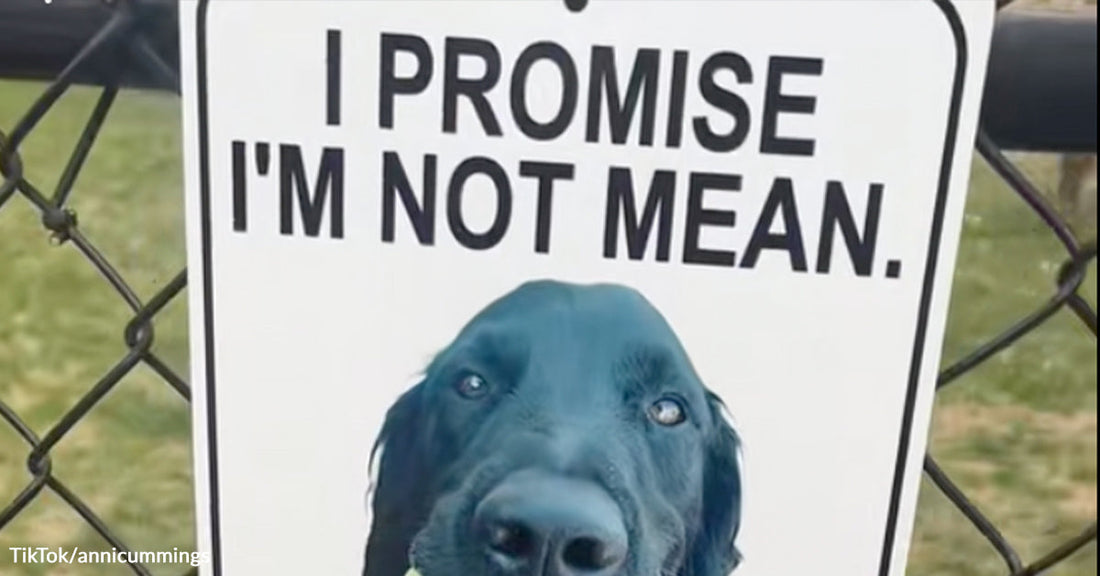
Some dogs are fearless greeters, racing to the fence to say hello to every passerby. Others, like Mojo, are a little more complicated. Mojo’s story is a tender, uplifting example of how understanding a shy dog and meeting them where they are can transform fear into friendship, one tennis ball at a time. For anyone looking for gentle, practical ideas to help an anxious dog, this shy dog who was scared of his neighbors offers a surprisingly simple lesson.
Mojo’s life with his adopter, Anni Cummings, began in 2022. From the start, the bond between them was strong. The article describes how they connected quickly and deeply, yet one thing stood out. Mojo was nervous around strangers. His adopter did not know exactly what shaped his social anxiety. She suspected that something in his life before the shelter might have contributed, which is a familiar story for many rescue dog parents. Dogs often carry invisible histories, and their reactions to new people or environments can be a quiet echo of past experiences.

After a few years together, Cummings and her boyfriend moved into a new house. A new neighborhood, new routines, and new people walking by the yard meant a fresh set of challenges for a shy dog. Before long, they noticed a pattern. When people passed by their front yard, Mojo would bark. To someone on the sidewalk, it may have sounded like aggression. The people inside the house knew better. The barking was not about being mean or territorial. Mojo was frightened.
Living with a shy dog who barks at strangers can feel stressful. It can also feel misunderstood, both for the person and the dog. Cummings wanted a way to tell the neighborhood that her dog was not dangerous, just scared. She also wanted to help Mojo feel safer around people instead of reinforcing his fear. That is where a very specific detail from Mojo’s personality made all the difference. There was one thing he loved more than anything else in the world. Fetch.
For Mojo, playing fetch with tennis balls is pure joy. The article describes how, when Mojo has a tennis ball to chase, his anxiety melts away and he becomes a different dog. Anyone who has seen a nervous dog light up at the sight of a favorite toy will recognize that shift. It is not only play. It is a way to feel comfortable, focused, and confident. By centering interactions around what Mojo loves, Cummings found a path toward socialization that respected his feelings instead of ignoring them.
With this in mind, Cummings came up with a simple but creative idea. She hung a bucket of tennis balls on her front fence and posted a handwritten note. The sign did exactly what she could not easily explain over and over to every passerby. It read, “I promise I’m not mean. Just throw the tennis ball and we will be friends!” In a few short lines, the sign reframed Mojo’s barking for neighbors. Instead of seeing a “scary” dog, people were invited to see a nervous dog asking, in his own way, for a game of fetch.
This gesture did more than soften Mojo’s image. It was also a structured invitation to help a shy dog build positive associations with new people. Barking at a stranger turned into watching for someone to pick up a ball. A tense moment at the fence became the beginning of a game. What I found striking is how such a small environmental change, rooted in one dog’s favorite activity, created a safe bridge between fear and trust.
Cummings hoped that neighbors would be open to the idea, read the sign, and give it a try. The response was almost immediate. According to the article, within about 20 minutes of putting the sign and bucket out, someone stopped, picked up a tennis ball, and started to play. That person ended up throwing the ball for Mojo for an entire hour. For a dog who used to feel threatened by strangers outside the fence, an hour of joyful fetch with a new friend is a major emotional shift. The bark that once signaled fear now marked the start of fun.
Word spread. Over time, Mojo went from being the shy dog who barked at people to a local favorite. The article shares that neighbors of all kinds joined in. Children walking by, people out with their own dogs, and even postal workers started to look forward to tossing a tennis ball to Mojo. Instead of hurrying past the fence, they paused to connect. The dynamic between neighborhood and dog changed. Mojo was no longer seen as a potential problem. He became a familiar, beloved presence.
As often happens with heartwarming dog stories in the age of social media, Mojo’s charm did not stay local. Cummings shared his story online, and Mojo gained an audience far beyond his street. Viewers embraced the idea that a shy dog who is scared of neighbors might just need a different kind of introduction. One commenter joked that if they passed that house on the way to work, they would be late because they could not resist stopping to play fetch. Another person wrote that they wanted to know where Mojo lived so they could book a flight to meet him and throw a ball for him themselves.
These reactions capture something important. People are often eager to connect with animals when given a clear, kind way to do it. The sign on the fence did not ask for sympathy. It offered participation. It also communicated boundaries and needs. Mojo was not advertised as a cuddly extrovert. The note did not encourage people to pet or approach him directly. It simply provided a low-pressure, positive way to interact from a respectful distance. A ball over the fence became the language Mojo understood best.
The story of Mojo offers a gentle model for others living with anxious dogs. While every dog is different and some may need the support of trainers or behavior professionals, the underlying idea here is widely applicable. Start with what the dog loves and feels confident doing. Then, build social experiences around that activity so new people become part of something the dog already associates with safety and fun. For one dog, it might be tennis balls; for another, it could be a favorite squeaky toy or a simple sniffing game in the yard.
Mojo’s journey from fearful barking to neighborhood celebrity does not erase his past or the roots of his anxiety. What it does show is how compassion, creativity, and a bit of patience can transform daily life for a nervous pet. Instead of trying to suppress his fear or hide him away, his family chose to explain his behavior, invite understanding, and give both their dog and their neighbors a new way to relate. Sometimes, as this story suggests, the path from scared pup to happy one is not a complex training plan. It starts with a bucket, a sign, and a bright green tennis ball flying over a fence. Read more at The Dodo