
Teacher Spots A Hairless Dog By School And Gives Him The Life He Was About To Lose
Guest Contributor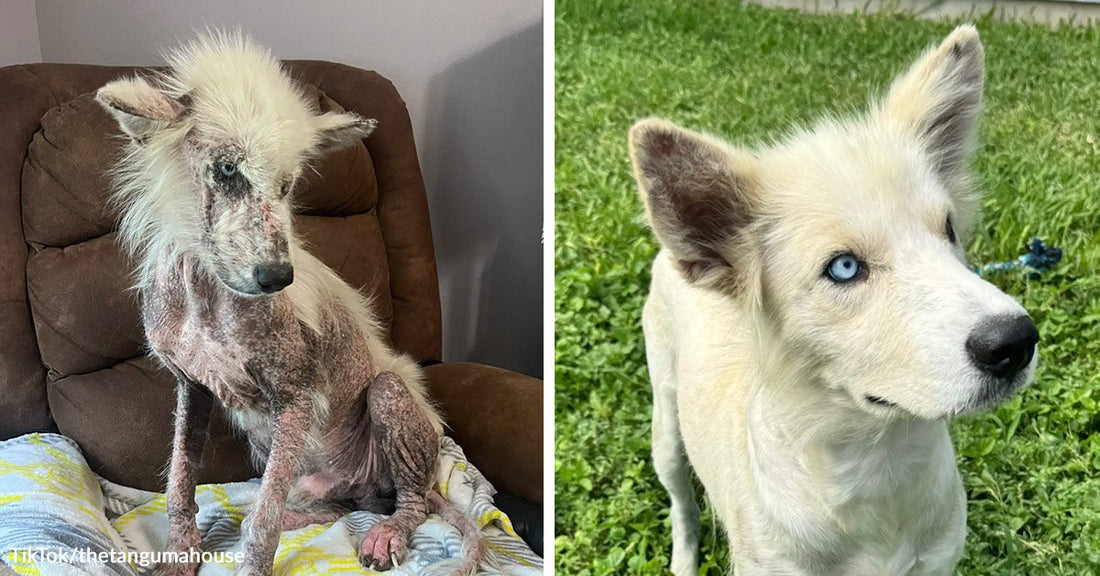
Sometimes the most remarkable rescue stories start in the most ordinary places. In this case, it was a Texas high school bathroom where a teacher spotted a hairless dog and quietly set in motion one of the most heartwarming transformation stories I have seen. The journey of Apollo, the once hairless dog wandering near a school, shows how a single act of compassion can completely change a life.
It began with a text message. Teacher Aaron Tanguma received a note from a coworker about a dog hiding out in an outdoor bathroom at the high school where he taught. Curious and concerned, he went to see for himself. There, he found a dog in heartbreaking condition. The animal that would later be named Apollo was extremely thin, hairless and clearly suffering from a severe case of mange. His appearance was so altered that he barely looked like a dog at all. Yet despite his condition, Apollo accepted food from Tanguma with gentle gratitude, as if he had been waiting for someone to notice him.

That small moment of connection was the turning point. Later the same day, Tanguma took Apollo home. He and his fiancée, Renee Gonzales, were experienced rescuers who already shared their home with four rescue cats. Their concern for Apollo was matched by concern for their existing pets, and they knew they had to move carefully. Because of Apollo’s severe mange and overall poor health, they were worried about the risk to their cats and also about how a veterinarian might respond to such an extreme case.
The couple feared that if they brought Apollo to a clinic right away, his condition might lead a vet to recommend euthanasia. They were not ready to accept that outcome. Instead, they chose to take on the challenge of treating his mange themselves. They got medication, committed to a long recovery process and did everything they could to support his healing while keeping everyone in the household safe.
According to Gonzales, Apollo’s recovery was not quick. She explained that it took around three months for his skin to fully heal and another three to four months for his fur to grow back completely. Apollo was rescued in May 2024 and lived outside for a substantial period while he recovered and posed less risk to the cats. Only in February 2025, many months after that first encounter at the high school, did he officially become an indoor dog and full member of the family home.
Those first months were difficult on Apollo not just physically, but emotionally. While his body fought to heal, he spent much of his time sleeping and appeared deeply sad. He seemed shut down, as if the hardship of his time as a neglected stray had taken away his sense of safety and joy. His caregivers offered stability and care, but they had to wait for his personality to emerge at its own pace.
As his skin improved and his fur slowly returned, Apollo’s behavior began to shift. Once he was finally cleared to come indoors and live alongside Gonzales, Tanguma and their cats, the transformation was as emotional as it was physical. Gonzales shared that his personality completely changed from those early, depressed days. The once withdrawn dog became cheerful and engaged. She described him as always smiling and happy to see his people, a companion who now radiates the affection and security he once lacked.
Perhaps the most astonishing part of Apollo’s story is how unrecognizable he is compared with the dog first found at the school. In the early days of his rescue, without fur and with his skin ravaged by mange, his family could not predict what he would look like when he healed. There was no clue that underneath that raw, fragile exterior was a dog who would become fluffy, bright-eyed and unmistakably adorable. The visual transformation has captured the attention of many people who have followed his story, and Gonzales reported that some admirers have called it the best transformation they have ever seen.
There is a powerful contrast at the heart of this story. When he was first discovered, Apollo appeared to be a dog who had almost given up. He was alone on school grounds, sick, hairless and exhausted. By the time his skin healed, his fur grew in and he moved indoors, he had become a thriving, joyful pet. The difference lies not only in medical treatment but also in time, patience and a willingness to see potential where others might have seen only hardship.
Apollo’s journey speaks to the broader impact of animal rescue and the value of giving neglected animals a second chance. Mange and extreme hair loss can make a dog look frightening or unapproachable, yet in many cases these conditions are treatable with consistent care. Stories like this illustrate that behind a rough appearance there may be a gentle, resilient animal waiting for kindness. In my view, one striking detail is how long the process really took. It was not an overnight change but many months of quiet commitment before Apollo became the fluffy, confident companion he is today.
The story also highlights the role everyday people can play in rescue work. Tanguma was simply a teacher responding to a coworker’s message, yet his decision to walk over to that outdoor bathroom and then bring Apollo home reshaped the course of a life. Gonzales’s careful, ongoing care and the couple’s willingness to adapt their home for an ailing dog turned what could have been a sad footnote into a lasting happy ending. They did not know exactly what Apollo would look like or how his personality would develop, but they chose to invest in him anyway.
Now, Apollo’s days of wandering a schoolyard as a hairless stray are firmly in the past. He lives as part of a family, loved and cherished, his once-bare skin now covered in fur and his once-dim spirit now bright. His transformation reminds readers that compassion can begin with something as small as responding to a text or offering food to a frightened animal. From those simple acts, an entire new life can unfold. Read more at The Dodo