
🚨Urgent: Missile Strikes Shelter in Ukraine! Rush Emergency Aid!
Teen Hears Cries While Tubing And Pulls Week-Old Baby Beaver From Water
Guest Contributor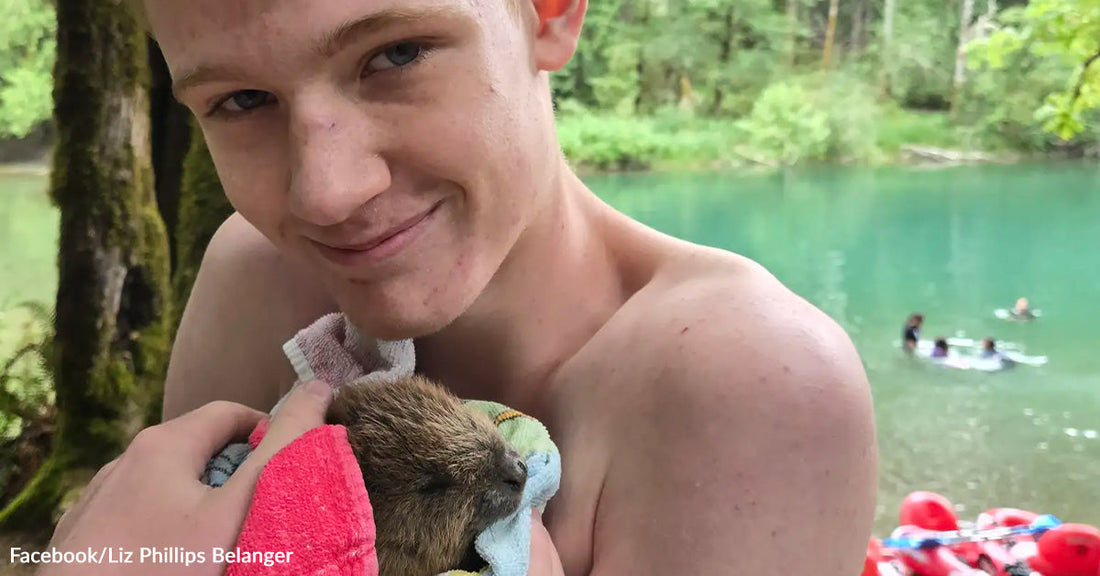
While tubing down the Cowichan River in British Columbia, a Canadian family experienced an unforgettable moment that turned a leisurely summer day into a life-saving rescue. The story, which centers around a 16-year-old boy and a baby animal in distress, has since captured hearts online—and for good reason. This remarkable encounter highlights the power of compassion and quick thinking in the face of nature's unpredictability. It also brings attention to the vulnerability of baby wildlife and the importance of organizations dedicated to their recovery.

The Belanger family was enjoying a peaceful float down the river when Liz Belanger, the mother, heard an unusual sound. It was a faint, high-pitched cry coming from the water. Moments later, her teenage son Connor floated through the same rapids and heard it too. That’s when he spotted a tiny beaver kit struggling to stay afloat. Without hesitation, Connor reached into the water. The baby, later named Timber, instinctively grabbed onto his hand.
According to Liz Belanger, the young beaver immediately nestled into Connor’s chest, seeking warmth and comfort. She closed her eyes and snuggled in, showing a level of trust that deeply moved the family. For the next hour, Connor refused to let go, determined to protect the tiny creature who had clung to him so desperately. The family spent nearly four hours with Timber before transferring her into the care of the North Island Wildlife Recovery Association (NIWRA), a local wildlife rehabilitation center.
Timber’s condition upon arrival confirmed how critical the rescue had been. Joanna Smith of NIWRA reported that the kit was cold, dehydrated, and completely exhausted. At only about one week old, Timber was still entirely dependent on her mother for survival. Smith emphasized that without the Belangers’ intervention, the baby beaver’s chances of making it on her own were extremely slim.
“She arrived cold, dehydrated and completely exhausted,” Smith told The Dodo, adding that Timber’s survival in the wild would have been highly unlikely without immediate help. These details underscore how vital it is for people to remain aware and responsive when encountering wildlife in distress, especially animals as young and vulnerable as Timber.
Over the following hours, Timber began to show signs of recovery. Liz Belanger described how the kit would open her eyes briefly, then calmly snuggle back into their arms. During the drive to the wildlife center, Timber even made soft nursing sounds while curled up in Liz’s lap. These small, tender moments reflected both the animal’s trust and her fragile state.
Now in the care of NIWRA, Timber is thriving. Smith noted that despite her young age, Timber has shown a strong will to survive. She’s described as determined, confident, and curious—traits that will serve her well as she grows and prepares for life back in the wild. Beavers typically stay with their mothers for over a year, so Timber will remain under human care for the foreseeable future. When the time is right, she’ll be released near the area where she was found, giving her the best chance of adapting to her natural habitat.
I found this detail striking: even in her weakened state, Timber demonstrated an innate will to live and a remarkable capacity to trust. It’s a reminder of the resilience found in nature, and the impact humans can have when they choose to help rather than turn away.
This story also highlights the essential role of wildlife rehabilitation centers like NIWRA. Their work ensures that animals like Timber not only survive but eventually return to their rightful place in the wild. It also serves as a gentle reminder that while encounters with baby wildlife can be heartwarming, they should always be handled with care and responsibility. Contacting professionals, as the Belanger family did, is key to giving these animals the best possible outcome.
As Timber continues to grow, her journey from a near-tragic start to a hopeful future stands as a testament to the difference a single act of kindness can make. For those floating down rivers or hiking through forests, it’s a powerful example of what can happen when we stay alert to the world around us—and choose to act with empathy.