
🚨Urgent: Missile Strikes Shelter in Ukraine! Rush Emergency Aid!
Before Balto There Was Togo The True Hero Of The Serum Run
Guest Contributor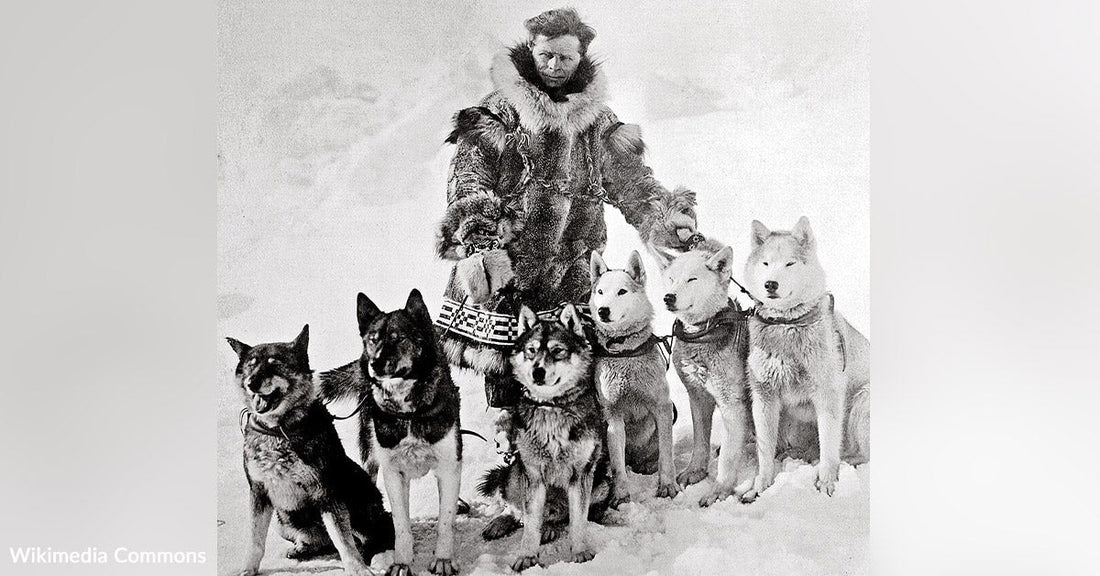
In 1925, a remote Alaskan town stood on the brink of disaster as diphtheria spread through its residents and winter cut it off from the outside world. Many people have heard of Balto and the dramatic “Great Race of Mercy” that followed, but fewer know that another sled dog, a Siberian husky named Togo, carried the antitoxin through the longest and most dangerous part of the Nome Serum Run. The story of Togo the sled dog is not just a tale of endurance and courage, but also of how history sometimes overlooks its most vital heroes.
The diphtheria outbreak in Nome, Alaska, in January 1925 posed a terrifying problem. The town’s limited supply of antitoxin had expired, and the extra stock that had been ordered failed to arrive before the harbor froze. The nearest usable diphtheria antitoxin sat in Nenana, more than 670 miles away, and modern options were effectively off the table. Ships could not reach Nome through the ice, no trains ran that far, and the few airplanes in Alaska at the time were not equipped for the brutal cold and storms of an Arctic winter.

Local officials were forced to consider an older, riskier method of transport: a dog sled relay. The serum needed to reach Nome in roughly six days, a journey that could easily stretch to a month under normal circumstances. It was a daunting proposal, yet about 20 mushers and some 150 sled dogs agreed to undertake the desperate mission, which would soon be known as the Nome Serum Run or the Great Race of Mercy.
The relay began at 9 p.m. on January 27, 1925, when musher “Wild Bill” Shannon received the precious package of antitoxin at the Nenana train station and set off into the freezing night. Over the next four days, teams of sled dogs relayed the serum across the Alaskan wilderness, each team covering an average of about 30 miles in brutal conditions. Blizzard winds, subzero temperatures, and near whiteout visibility stalked the route. Yet even after 18 teams had done their part, the serum remained more than 150 miles from Nome and time was slipping away.

At this critical point, Leonhard Seppala and his team took over. Seppala’s sled was led by Togo, a Siberian husky who had already spent years proving himself as an extraordinary lead dog. On January 31, near Shaktoolik, Seppala received the serum and immediately turned back toward Nome, even though he had already traveled roughly 170 miles from Nome to reach the handoff.
The leg ahead of them was extremely dangerous. Temperatures dropped to around negative 30 degrees Fahrenheit. Winds whipped up a raging blizzard and the trail crossed treacherous terrain, including exposed ice and stretches where the team faced near-zero visibility. Despite Togo’s age, about 12 years old at the time, he guided the team with exceptional skill and determination. Over approximately three days, Togo led Seppala’s team for more than 260 miles, including a 91 mile push to the next relay point, and brought the serum safely forward.
From there, musher Charlie Olson picked up the antitoxin and carried it on toward Nome. Olson then passed the serum to Gunnar Kaasen, whose team was led by another of Seppala’s dogs, Balto. Kaasen and Balto completed the final 54 mile stretch and arrived in Nome just after 5 a.m. on February 2, 1925. The town rejoiced as the lifesaving serum reached the hospital, and Balto, visible at the front of the last sled, quickly became the face of the mission.
News coverage and public enthusiasm focused heavily on Balto. Statues were soon commissioned, and by December 1925, a monument in his honor stood in New York City. Balto was widely celebrated as the heroic dog who saved Nome. Yet Seppala, who had seen every mile from his own sled, believed that another story needed to be told. In his view, if any dog deserved special mention for true heroism, it was Togo, the husky who had pulled through the longest and most perilous section of the run.
Togo’s path to becoming a legendary lead dog had been unlikely from the start. Born around 1913, he came from a promising lineage, sired by a lead dog named Suggen, and was named after the Japanese admiral Tōgō Heihachirō. Despite his heritage, Togo was initially sickly, small, and mischievous. According to accounts preserved in works like “The Cruelest Miles,” Seppala doubted that this unruly puppy would ever make a good sled dog and gave him to a neighbor before Togo turned six months old.
That decision did not last. Within a few weeks, Togo escaped his new home and made his way back to Seppala, a display of determination that caught the musher’s attention. Even so, raising Togo remained difficult. When Seppala tried to leave the young dog behind during training runs, Togo repeatedly broke out of his kennel and chased down the team, sometimes distracting the lead dogs at critical moments.
One day, when Togo was about eight months old, Seppala again tried to confine him while preparing a run to transport a miner to a gold claim. Once more Togo escaped and followed. To keep him from causing chaos at the front, Seppala finally harnessed Togo in the back position nearest to the sled. The effect was immediate. Togo settled into the work, focused and calm. Over the course of the return journey, Seppala moved him steadily forward in the line until Togo was sharing the lead with another dog named Russky. By the time the team reached home, Seppala recognized what he called a “natural born leader,” something he had long tried to breed.
In the years that followed, Togo became Seppala’s prized leader and excelled in demanding races. By the time of the Nome Serum Run, he was an experienced, older dog who still possessed the stamina and intelligence to guide a team through punishing conditions. Many modern retellings of the event highlight that Togo’s approximately 260 mile effort, including his navigation through dangerous ice and storm, was central to the antitoxin’s safe arrival.
Despite this, public fame eluded Togo during his lifetime. While Balto toured and was honored with statues and public appearances, Togo retired to a kennel operated by Seppala in Poland Spring, Maine. There, at around 16 years old in 1929, he was euthanized because of joint pain and partial blindness. Seppala reportedly continued to feel that his old companion’s role in saving Nome had never been fully appreciated.
Over time, though, perceptions began to shift. As more detailed accounts of the Great Race of Mercy emerged, the narrative expanded beyond the final sprint into Nome. Writers and historians increasingly recognized that Togo the sled dog had led the longest and most demanding section of the expedition. In 2011, TIME highlighted Togo as one of the most heroic dogs of all time, reflecting this reevaluation. More recently, the 2019 Disney+ film “Togo,” with Willem Dafoe portraying Seppala, introduced a wider audience to the husky’s story and the depth of the bond between musher and dog.
Togo even received the kind of permanent tribute that had long been associated with Balto. A statue in Poland Spring, Maine, now honors the husky who braved storms and extreme cold to carry the serum across hundreds of miles. It stands as a reminder that the Nome Serum Run was a collective effort that relied on many mushers and many dogs, yet some contributions were especially remarkable. Remembering Togo alongside Balto enriches the history of the Great Race of Mercy and offers a fuller picture of the courage it took to save a town in the Alaskan winter.