
🚨URGENT: Help People & Pets Affected by Devastating Floods in Texas! Rush Emergency Aid!
Senior Dog Left After 13 Years Trembles In Shelter Confusion
Guest Contributor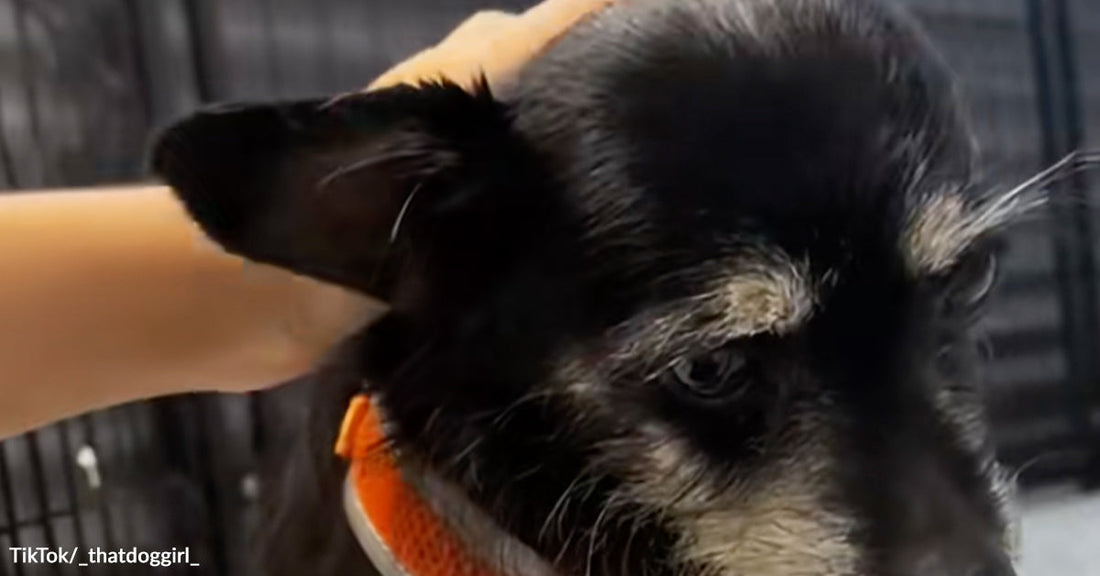
A short video of a senior dog sitting alone in a shelter, looking confused and afraid, has captured the attention of millions. The story behind the clip is simple, yet deeply heartbreaking. After spending 13 years with the same family, a dog named Ammo was surrendered to a shelter following a single incident in which he reportedly bit a baby who had stepped on his tail. Shared on TikTok by an animal rescuer in South Florida, the video has people across the internet grieving for a loyal companion suddenly abandoned in old age and urgently hoping he finds a new forever home.
The original video, posted by @thatdoggirl, opens with a gentle hand resting on Ammo’s head. A note over the footage explains that Ammo had lived with his family his entire life. According to the text, when their baby stepped on his tail, he reacted by biting, and the family responded by leaving him at a shelter. The clip describes him as “confused and scared” and asks viewers to help him find a home where he can live out his senior years feeling safe and loved. The post also emphasizes that “he’s a good boy,” a phrase many dog guardians instantly recognize as both an expression of affection and a plea to see beyond one difficult moment.

The rescuer’s caption adds another layer of sorrow by sharing Ammo’s reaction when his family walked away. According to the post, the elderly dog “cried and cried at the door when they left.” That detail appears to have struck a nerve with viewers, many of whom imagined the distress of an animal who has only known one home for more than a decade suddenly finding himself surrounded by unfamiliar smells, sounds, and strangers. For a senior dog, shelter life can be especially bewildering and stressful.
Ammo’s distress fits with what researchers have learned about the bond between humans and their dogs. A study published in PLOS One in 2013 concluded that the relationship between adult dogs and their owners closely resembles the attachment bond between an infant and a caregiver. Dogs are dependent on humans for care, and their behavior is often geared toward engaging a person’s nurturing instincts. When that bond is suddenly broken, it is not surprising that a dog might experience clear signs of fear, confusion, and grief.
The larger context of animal shelter intake in the United States adds even more weight to Ammo’s story. The American Society for the Prevention of Cruelty to Animals has estimated that around 6.3 million companion animals enter shelters across the country each year. Roughly 3.1 million of them are dogs. Each animal in those figures represents a personal story, sometimes involving hardship or necessity, sometimes preventable outcomes, and far too often involving pets who have spent years or even their entire lives with the same family before being surrendered.
Research on shelter dog welfare suggests that social isolation is one of the biggest stressors for canines in these environments. A 2019 study in the journal PeerJ reported that regular human interaction reduces cortisol, a hormone associated with stress, in shelter dogs. Longer, more consistent interaction through fostering or dedicated volunteer time can further improve wellbeing, at least for as long as that interaction continues. According to the study, dogs’ cortisol to creatinine ratios dropped significantly when they were placed in foster homes, indicating a decrease in stress. Yet once they returned to the shelter environment, those measures rose back to baseline levels. For a senior dog like Ammo, this kind of stress cycle can be particularly hard to navigate.
Viewers who saw Ammo’s video did not simply keep scrolling. Thousands paused to express heartbreak, outrage, or a desire to help. Some TikTok users quickly offered to open their homes, with commenters from Orlando and South Florida saying they would gladly adopt him and even mentioning that they had already submitted adoption applications. Although online promises cannot always be verified, the volume and urgency of the responses illustrated how deeply this senior dog’s situation resonated.
Others focused on the underlying reason for Ammo’s surrender. Many people pointed out that a dog reacting with a bite after having its tail stepped on is a fearful response rather than a sign of unprovoked aggression. One commenter wrote that it felt “terrible” to see a dog abandoned for what they viewed as a normal reaction, especially after 13 years of companionship. Another spoke of feeling both internal rage and heartbreak at the same time, capturing a dual sense of empathy for the dog and frustration over what they perceived as a failure of responsibility.
Some responses broadened the conversation to a familiar theme in animal welfare: that incidents involving pets are often framed as the animal’s fault rather than an issue of human oversight or education. One viewer described it as “always the dog’s fault instead of the human’s,” reflecting a concern that quick decisions to relinquish animals may sometimes overlook opportunities for training, management, or guidance from behavior professionals. While every household and every incident is unique, Ammo’s situation prompted many to reflect on how people might better prepare for the realities of living with animals, especially when young children are involved.
Stories like Ammo’s frequently highlight the special vulnerability of senior dogs in shelters. Younger dogs and puppies tend to be adopted more quickly, while older animals can wait for long periods, even when they have calm personalities and years of experience living in a home. Yet advocates and adopters often note that senior dogs can be deeply rewarding companions. They may already be house trained, familiar with household routines, and content to rest quietly near their people. In Ammo’s case, the rescuer’s description of him as a “good boy” serves as a reminder that a single stressful event should not overshadow an entire lifetime of loyalty.
The viral response to Ammo’s story also underscored how social media can influence animal rescue. A short, emotional clip was enough to rally potential adopters, spark conversations about responsible pet parenting, and direct public attention toward the stress that animals can experience in shelters. Although the original post did not include a documented outcome for Ammo, the number of people stepping forward, at least online, hinted at the possibility of a second chance for a dog who had suddenly lost everything familiar.
For anyone moved by Ammo’s story, there are many ways to support animals in similar situations, from adopting or fostering senior pets to volunteering time at a local shelter. Even sharing verified information about animals in need can help connect them with the right families. I found it striking how quickly a single video about one frightened dog could reach hundreds of thousands of people, reminding viewers of the depth of the human canine bond and the responsibilities that come with it.