
🚨Urgent: Missile Strikes Shelter in Ukraine! Rush Emergency Aid!
Federal Agencies Open The Door To Deadly Cyanide Poison Traps
Matthew Russell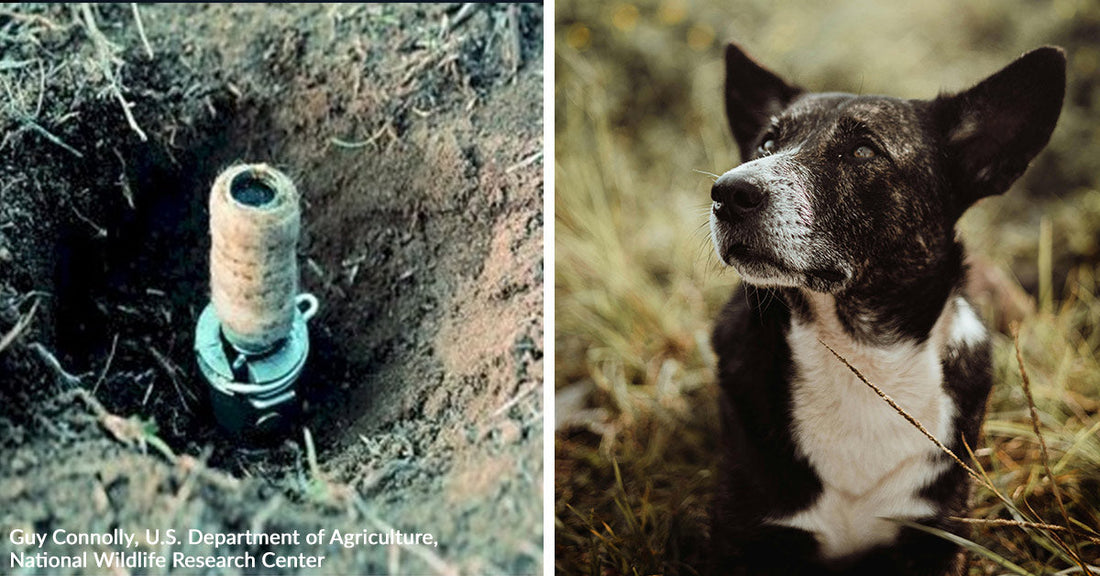
Federal public lands may again face a threat many Americans thought had been pushed out: M-44 sodium cyanide ejector devices.
These traps, often called cyanide bombs, are baited devices used to kill coyotes and other predators. When an animal pulls on the bait, the device releases sodium cyanide. The poison can be lethal within minutes.
A new April 2026 memorandum between the Bureau of Land Management and USDA Wildlife Services no longer includes the clear prohibition that kept M-44s off BLM land, Public Domain reports. The memo instead allows restricted-use pesticides, including M-44s, to be considered under existing review processes.

Photo: Wikimedia Commons/Guy Connolly, U.S. Department of Agriculture, National Wildlife Research Center, License: Public Domain

M-44 devices are spring-loaded traps that release sodium cyanide when triggered.
A Device That Does Not Know Its Victim
M-44s are meant for predators accused of threatening livestock. But a baited poison device cannot tell the difference between a coyote, a fox, a pet dog, or a child.
That danger is not hypothetical. Public concern grew after a 2017 Idaho incident in which a family dog died and a teenager was hospitalized after contact with one of the devices, according to Hoodline.
Public lands bring people and animals into shared space. Families hike there. Dogs travel along trails. Wildlife crosses grazing allotments, open fields, and rural edges. A hidden poison trap changes the risk for everyone.

A 2017 Idaho incident killed a family dog and hospitalized a teenager.
The Ban Was A Public Safety Line
LM’s earlier policy barred M-44 devices from land managed by the agency. That restriction followed years of concern from animal welfare and conservation groups, as well as public pressure after accidental poisonings.
Now that protection appears weaker. E&E News by POLITICO reported that BLM and USDA agreed to allow cyanide bombs to be considered on a case-by-case basis. The same report noted that the devices had been banned from federal lands in 2023.
Agency review and warning signs are not a substitute for safety. Once a poison device is placed in the open, the public must trust that every notice, boundary, and safeguard will work perfectly. History shows that is too much to ask.

Cyanide traps can cause severe harm before victims understand what happened.
A Larger Fight Over Public Lands
The cyanide bomb dispute comes amid a broader fight over how federal lands should serve wildlife, livestock, and the public. In Montana, the Trump administration’s move to remove bison from federal grasslands drew national attention, according to The New York Times.
These conflicts raise the same core question: who benefits when public lands are managed for narrow industry demands instead of public safety, wildlife, and ecological health?
Predator conflict deserves serious attention. Ranchers need tools that work. But poison traps that can kill pets and wildlife without warning do not belong on lands held in trust for everyone.
Federal leaders should ban M-44 cyanide ejectors from all public lands and require humane, targeted alternatives that reduce conflict without turning shared landscapes into danger zones.
Click below to make a difference.
