
Scared of Needles? Researchers Are Testing a Dental Floss Vaccine
Michelle Milliken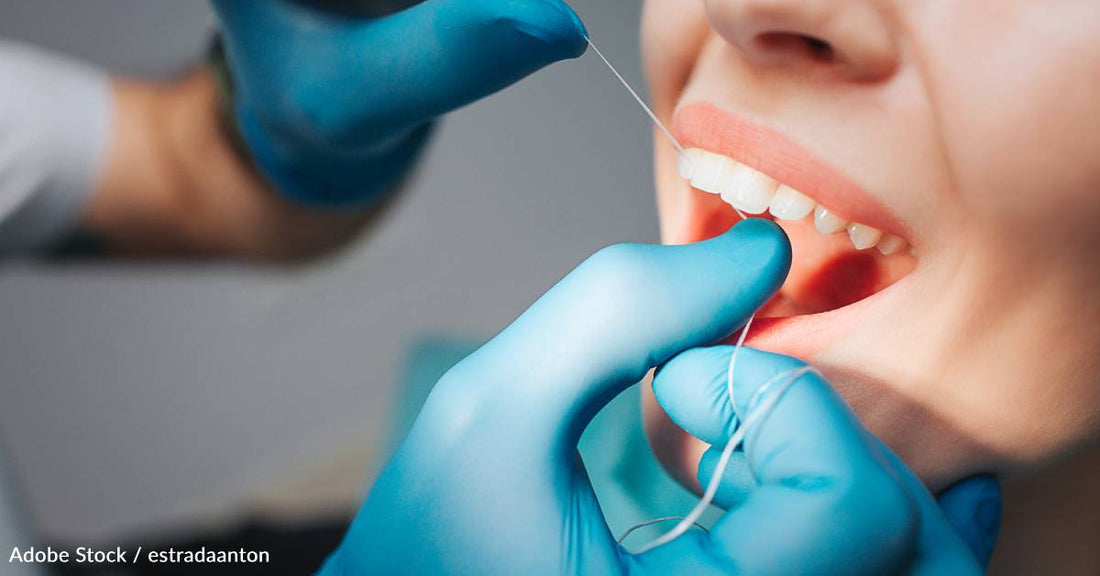
When people have to get their annual flu shot or any other vaccine, the needle often increases nerves and, in some cases, may cause people to skip it altogether. In fact, a survey in 2020 found that about 1 in 8 people who were unsure about getting the COVID-19 vaccine didn’t want to in part because they didn’t like needles or injections. A new method may help.
Researchers at North Carolina State University recently tested a vaccine delivered to mice via dental floss. The idea behind it is that the junctional epithelium, a type of tissue between the teeth and gums, lacks the barrier of other epithelial tissue that protects the blood stream from foreign objects, so it may be a promising point of delivery. The other primary oral administration method, under the tongue, is also not as effective as it could be.

The findings, published in the journal Nature Biomedical Engineering, showed the dental floss method could be a viable alternative to needles because it provided long-lasting protection against the human flu. It did this through stimulating lymph nodes; increasing helper T cell levels in the lymph nodes, lungs, and spleen; and increasing antibody secreting cells in bone marrow. It also had a strong mucosal antibody response in parts of the body like the nose and lungs, which is key.
Harvinder Singh Gill, study co-author and nanomedicine professor at North Carolina State University, explains, “Mucosal surfaces are important, because they are a source of entry for pathogens, such as influenza and COVID. However, if a vaccine is given by injection, antibodies are primarily produced in the bloodstream throughout the body, and relatively few antibodies are produced on mucosal surfaces.
“But we know that when a vaccine is given via the mucosal surface, antibodies are stimulated not only in the bloodstream, but also on mucosal surfaces. This improves the body’s ability to prevent infection, because there is an additional line of antibody defense before a pathogen enters the body.”
The findings back that up, as the dental floss vaccine was about as effective as a nasal vaccine, which also takes advantage of mucosal surfaces and was included in the study. The researchers also tried under the tongue administration, which wasn’t as effective as the other two.

While the actual vaccine wasn’t given to people in this study, the researchers did have human participants use a dye-covered floss pick to see if it could also get through the junctional epithelium. They found that about 60% of the dye made it to the gum pocket, suggesting this may be feasible for humans, as well.
Gill says, “This is extremely promising, because most vaccine formulations cannot be given via the nasal epithelium – the barrier features in that mucosal surface prevent efficient uptake of the vaccine. Intranasal delivery also has the potential to cause the vaccine to reach the brain, which can pose safety concerns. However, vaccination via the junctional epithelium offers no such risk.”
However, the researchers do point to some limitations, including that it wouldn’t work for infants, as they don’t have teeth, and it may be problematic for people with gum disease. You can read the whole study, which was funded in part by the National Institutes of Health, here.
