
EXTRA Good Points All Week for Guardians! Become a Guardian!
Michigan Fireflies Thriving This Summer Thanks to Favorable Weather Conditions
Guest Contributor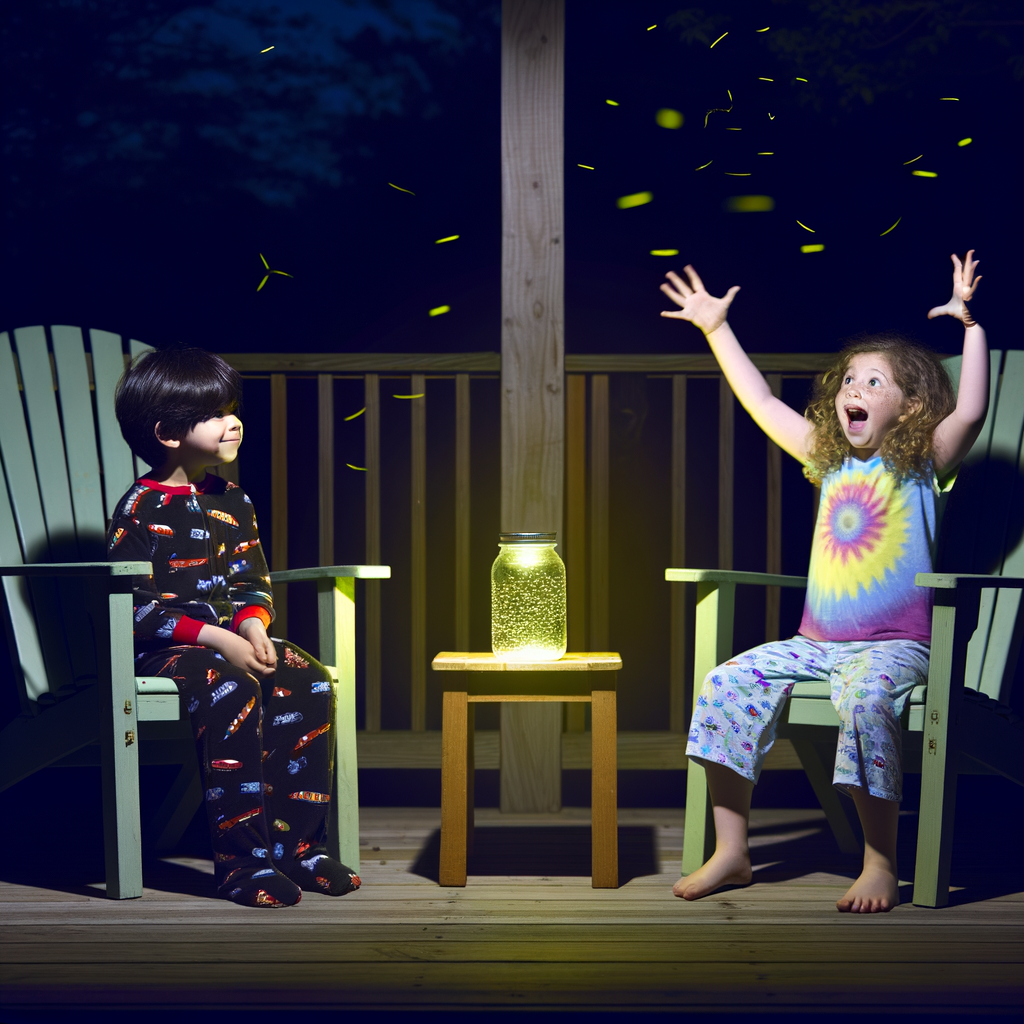
Summer nights across Michigan have taken on a nostalgic glow this year, thanks to a remarkable surge in firefly activity. For those who remember chasing these luminous insects through backyards as children, the current display offers a rare opportunity to relive those memories. This resurgence, researchers say, is largely due to favorable weather conditions—a warm and wet climate that has created ideal circumstances for fireflies to thrive.

Fireflies, also known as lightning bugs, are more than just a charming part of summer evenings. They are a valuable part of the ecosystem, and their presence—or absence—can signal broader environmental trends. In Michigan, the recent boom in firefly visibility has prompted both delight and reflection, as experts caution that such abundance may not be guaranteed in the years to come.

According to Nathaniel Walton, a consumer horticulture educator with the Michigan State University Extension, fireflies have a two-year life cycle. Most of that time is spent as larvae living near the ground, feeding and developing before emerging as adults for a brief few weeks. Because of this extended development period, any disruption—such as a dry late summer or early fall—can have long-lasting effects on their population. “We can’t necessarily count on them being good again this year just because they were good last year,” Walton explained.

Richard Joyce, an endangered species conservation biologist with the Xerces Society, echoed this sentiment. He noted that fireflies face multiple threats beyond weather, including habitat loss, pesticide use, and light pollution. While these insects play a role in pest control and are part of the food chain, Joyce emphasized that their cultural and aesthetic value is equally significant. “Maybe we experienced fireflies at our grandparents’ house, and... I would love as a grandparent to be able to... share that experience with my grandkids,” he said.
For many Michiganders, this year's firefly display has sparked a sense of wonder and community. Jamie Sparks, a bicyclist in the Lansing area, described his evening rides as otherworldly. “When they are out, they’re out en masse, and they’re out around you, so I kind of just see them like stars in space,” he said, likening the experience to a scene from a Star Wars movie. His recollections of catching fireflies in jars to light up childhood forts add a personal dimension to the broader environmental story.
Heidi Schaetzl, a Lansing resident who recently purchased a home, shared a similar sense of joy. She had hoped to cultivate a garden that would support pollinators like bees, butterflies, and fireflies. Her efforts appear to be paying off. “Seeing everyone in... different spaces online, saying, look at the fireflies, go outside, spend time in nature and just watch something from our past come back has been very rewarding,” she said.
I found this detail striking: the way Schaetzl and others have intentionally shaped their landscapes to support firefly populations. It speaks to the growing awareness of how individual choices can influence local biodiversity. Letting parts of a yard grow wilder—with tall grasses in summer and fallen leaves in autumn—can provide the habitat these insects need. Reducing pesticide use and limiting outdoor lighting are also recommended steps for those hoping to see fireflies return to their neighborhoods.
Despite the current glow, long-term monitoring of firefly populations remains a challenge. Joyce pointed out that there is no systematic, year-to-year data collection for fireflies. Instead, researchers rely on crowdsourced observations through platforms like Firefly Atlas, a project of the Xerces Society. This method has limitations, especially since only 17 of the 24 firefly species found in Michigan produce the visible glow that draws attention at night.
Walton noted that many people have commented on a perceived decline in firefly numbers over the decades. “Those of us who were younger in the 80s and 90s remember seeing a lot of fireflies in their yard in Michigan and then, you know, not as many,” he said. This year’s resurgence may be a hopeful sign, but it also underscores the importance of continued observation and conservation efforts.
The firefly phenomenon in Michigan this summer is more than a seasonal delight. It’s a reminder of the delicate balance that supports even the most familiar aspects of the natural world. As climate patterns shift and human development continues, the fate of fireflies will depend in part on how communities choose to engage with their environment. Through conscious landscaping, reduced light pollution, and active participation in citizen science, residents can help ensure that future generations will also marvel at the soft, flickering lights of fireflies on warm summer nights.